The Tribe (2014)

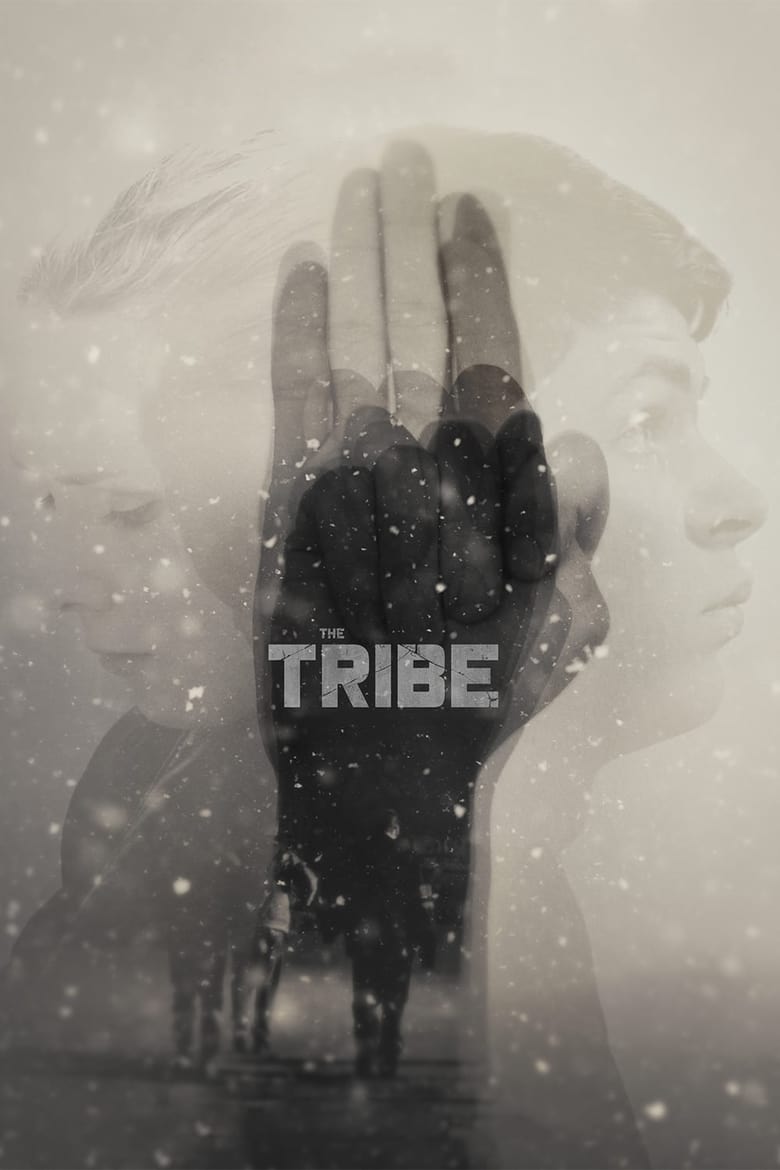
There are films that challenge you, and then there are films that challenge you before a single frame has properly landed. The Tribe opens its account immediately: no dialogue, no subtitles, no music, no voiceover. Just people, gesturing, and you, squinting, trying to keep up. Myroslav Slaboshpytskiy's Ukrainian drama unfolds entirely in sign language, performed by a cast of deaf actors, and it flatly refuses to translate a single word for the entire running time. As an opening gambit, it's one of the boldest I've encountered.
The idea behind it is genuinely interesting. By stripping away all the scaffolding hearing audiences take for granted, Slaboshpytskiy drops you into something like the alienation a deaf person might feel watching the rest of the world converse freely around them. You spend the film grasping at gesture and body language, piecing together meaning from physicality alone, and for a while that disorientation has a real, uncomfortable power to it. I'll give it that.
And formally, it's striking work. The film favours long, unbroken takes, trusting its actors to carry scenes that most directors would bury in exposition and coverage. It took the top prize at Cannes Critics' Week, and I can see exactly why a jury fell for its nerve. There is genuinely nothing else quite like it, and the sheer novelty of decoding a film in real time carries its own strange reward, at least for a stretch.
The trouble is what all that nerve is actually put to use for. This is a relentlessly bleak coming-of-age story: a boy, a criminal gang inside a boarding school, violence, exploitation, and a slow descent into something truly grim. It reminded me, in some ways, of the airless moral darkness I found in Pamfir, another Ukrainian film that commits hard to bleakness and asks you to sit with it. But where that film's grimness felt purposeful, The Tribe wallows. It doesn't just show you ugly things; it lingers on them with what feels less like honesty and more like indulgence.
Worse, its women are reduced almost entirely to objects, bodies to be traded and used by the male characters around them. I kept waiting for the film to do something with that, to frame it critically or give these characters any interiority at all. It never really does. That's not brave confrontation of ugly truths. That's a failure of imagination dressed up as realism, and it left a genuinely sour taste.
The stiffness of the performances is partly a structural inevitability. When your story can only move through broad, legible gestures, a certain rigidity comes with the territory. But it still leaves the whole thing feeling airless, and over two hours that airlessness becomes exhausting rather than atmospheric. There's a version of this formal experiment that uses its constraint to crack something open. The Tribe mostly uses it to seal itself shut.
So I come away admiring the idea more than the film it produced. The Tribe is singular and uncompromising, and I'd never call it lazy or dishonest. It commits to its gamble completely. But a clever conceit can only carry you so far when the experience of watching it is this punishing and this hollow, and when the film's treatment of half its cast feels like such a genuine moral blind spot. I respect it a great deal more than I enjoyed it.
Two and a half stars.
Rating: ★★½ | Year: 2014 | Watched: 2026-08-10
Where to watch
Watch in the UK
Rent: Pijama Films
Physical: Amazon UK · Zavvi
Watch in the US
Rent: Google Play Movies · YouTube · Fandango At Home
Buy: Google Play Movies · YouTube · Fandango At Home
Physical: Amazon US
Affiliate disclosure: Movies With Macca may earn a small commission on purchases or subscriptions started via these links. It costs you nothing extra.