
The Morricone Duel: The Most Dangerous Concert Ever (2018)
★★★★ — The Morricone Duel: The Most Dangerous Concert Ever (2018)

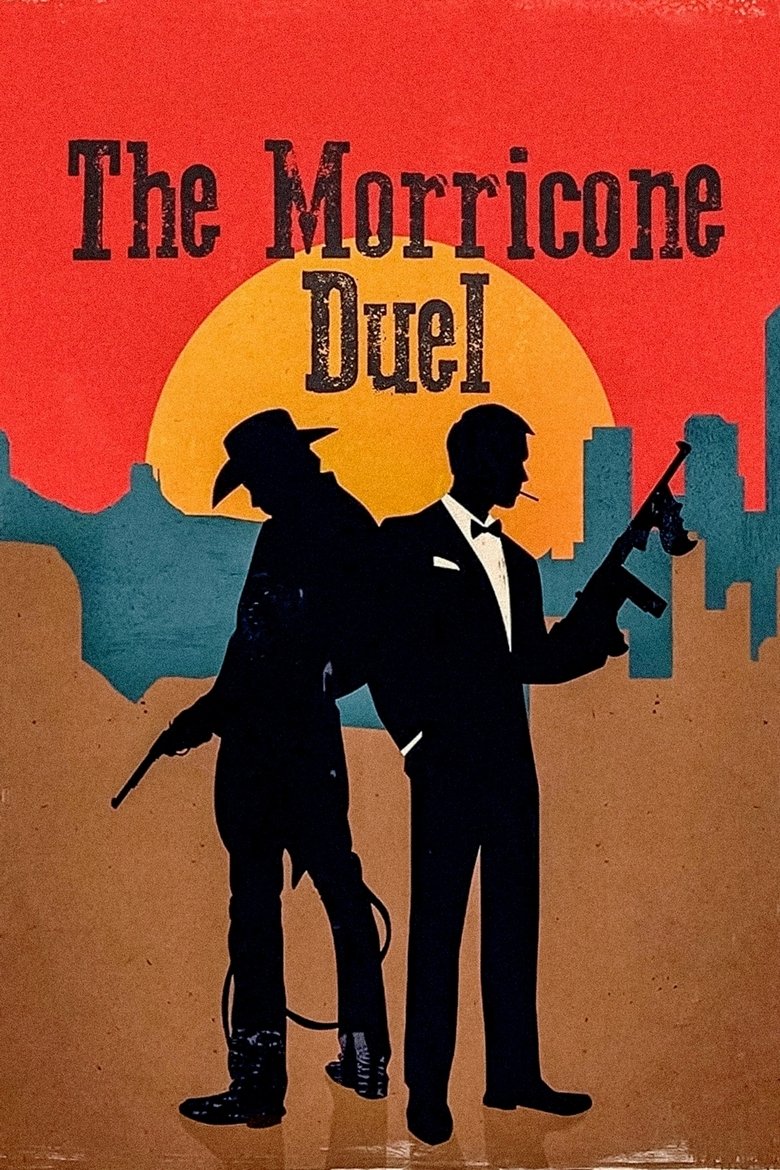
Ennio Morricone composed music for well over four hundred films across a career that stretched from the early 1960s until his death in 2020, and the argument that he sits at the very top of cinema's composing tradition is not a controversial one. His sound became so embedded in the fabric of popular culture that you can hum a phrase from The Good, the Bad and the Ugly or Once Upon a Time in the West to almost anyone on earth and expect a flicker of recognition. It is that universality, that peculiar quality of music that feels both personal and communal, that The Morricone Duel: The Most Dangerous Concert Ever sets out to put on screen. Released in 2018 as a co-production between DR Symfoniorkestret and EuroArts, and distributed with a tagline that promises nothing less than a live recording from Copenhagen, the film documents the Danish National Symphony Orchestra performing a programme drawn from Morricone's catalogue, from spaghetti western cues to lush orchestral scores from European crime and epic cinema, alongside pieces associated with composers Bernard Herrmann and Nino Rota whose work sits in close conversation with Morricone's own.
The film was directed and shot by Karsten Andersen, who also serves as its cinematographer, giving the project an unusually unified visual sensibility for a concert documentary. Andersen keeps the camera close enough to the performers that you feel the effort and attention behind the playing, but wide enough, when the moment calls for it, to remind you that this is a large ensemble making something together. The editing falls to Per Götz, whose work here has the rhythm of someone who has listened to the music carefully before deciding where to cut. Concert films live or die by their editing: cut too early and you interrupt the phrase, cut too late and the energy sags. The score that frames and contextualises the documentary sections draws on Herrmann and Rota, two composers whose own careers were built on a similarly intimate relationship between music and moving image, Herrmann's angular, unsettling strings and Rota's warmer, more romantically inflected writing providing a kind of dialogue with the Morricone material at the programme's core. Conducting throughout is Sarah Hicks, with mezzo-soprano Tuva Semmingsen, saxophonist Hans Ulrik, and soloists Christine Nonbo Andersen and Michael Frank Møller among the featured performers, each bringing a different colour to what is, in its ambition at least, a polished but unremarkable format transformed by the quality of the music itself.
It is worth noting, for those who come to this through an interest in Danish film and music culture rather than through Morricone specifically, that DR Symfoniorkestret sits at the heart of Denmark's public broadcasting infrastructure, and productions of this kind, where the concert hall and the camera genuinely collaborate rather than one simply serving the other, have a reasonable tradition in Scandinavian documentary. I have covered other Danish productions on this site, including Village at the End of the World and The Ugly Stepsister, and the care with which Danish film culture tends to approach questions of identity and heritage is visible here too, even if the subject is resolutely Italian and Hollywood-adjacent. For a companion piece on what a music documentary can achieve when the performance is the whole point, see also my thoughts on Jazz on a Summer's Day, the 1959 Newport festival film that remains a benchmark for the form, and I also covered Prince: Sign 'o' the Times, another music film that wrestles with how much a camera can or should intrude on the act of performance.
The documentary centres on a remarkable live concert event, filmed in Rome's Circus Maximus, where Morricone conducted his own music in front of a vast crowd. But what lifts this above the standard concert film or career retrospective is the sheer weight of material it's drawing on. The man's filmography as a composer is almost absurdly vast, and the selection on display here moves across genres and moods with the kind of easy confidence that only comes from genuine mastery. Spaghetti westerns. Thrillers. Epics. Intimate dramas. He did it all, and he did it better than almost anyone.
What strikes me most watching this is how instantly recognisable Morricone's work is, even when you might struggle to name the film it comes from. There's a quality to his compositions, a voice, that is completely his own. You hear two bars and you know. That's an extraordinarily rare thing. Plenty of composers are technically brilliant. Far fewer are truly distinctive. Morricone is both, and this film makes a compelling, emotional case for exactly that.
The concert footage itself is joyful. Seeing an audience that enormous react in real time to music they clearly love, music woven into their cultural memory, is genuinely moving. There are moments during the performance where I found myself sitting up a bit straighter, properly gripped, which is not something that happens often with a music documentary. Credit to whoever assembled the setlist, because the pacing is excellent. You get the iconic pieces you're hoping for, but there's enough breadth here to remind you of corners of his catalogue you might have forgotten or never fully appreciated.
If I have any reservations, it's that the documentary framing around the concert could dig a little deeper. The biographical and contextual material is fine, but I'd have welcomed more time spent on the craft itself. How did he approach a score? What was his working relationship like with the directors he collaborated with most? There are fascinating answers to those questions, and I'm not sure the film is quite curious enough to chase them. It's more celebration than investigation, and while that's not a fatal flaw given how much there is to celebrate, it does leave you wanting a bit more substance alongside the spectacle.
But honestly, that's a relatively minor gripe. As someone who believes film scoring is a genuine art form, not just wallpaper for the action on screen, watching this felt like a proper event. It reminded me that music can be the thing that makes a scene unforgettable. Think about how many moments from cinema history are inseparable from a Morricone cue. Take the music away and something essential is gone. That's the mark of a composer working at the very highest level.
Four stars, and I'd encourage anyone with even a passing interest in film music to seek this out. It's the kind of documentary that sends you straight to a playlist afterwards, and that might be the highest compliment I can pay it.
That pull towards the playlist afterwards is real, and I felt it. There is something the best music documentaries do that critical analysis alone cannot quite replicate: they remind you that the music was always alive, that it was never just a detail in the background of someone else's scene. Morricone understood that as well as anyone who has ever sat down at a score sheet, and a film that can convey that, even imperfectly, is doing something worthwhile. It is, in the end, a better evening than most.
Rating: ★★★★ | Year: 2018 | Watched: 2025-06-18
Where to watch
Watch in the UK
Stream: Amazon Prime Video · Amazon Prime Video with Ads · Stingray Classica Amazon Channel · Marquee TV Amazon Channel
Rent: Amazon Video
Buy: Amazon Video
Physical: Amazon UK · Zavvi
Watch in the US
Stream: Stingray Classica Amazon Channel
Rent: Amazon Video
Buy: Amazon Video
Physical: Amazon US
Affiliate disclosure: Movies With Macca may earn a small commission on purchases or subscriptions started via these links. It costs you nothing extra.
Related on Movies With Macca
More from Denmark: Only God Forgives (2013) · Nymphomaniac: Vol. I (2013) · Nymphomaniac: Vol. II (2013) · Monos (2019)
More from the 2010s: Wonder (2017) · Beautiful Boy (2018) · The Witch (2015) · What We Do in the Shadows (2014)
More music: Style Wars (1983) · 8 Mile (2002) · Chicken for Linda! (2023) · Tender Mercies (1983)



