
The Last Days (1998)

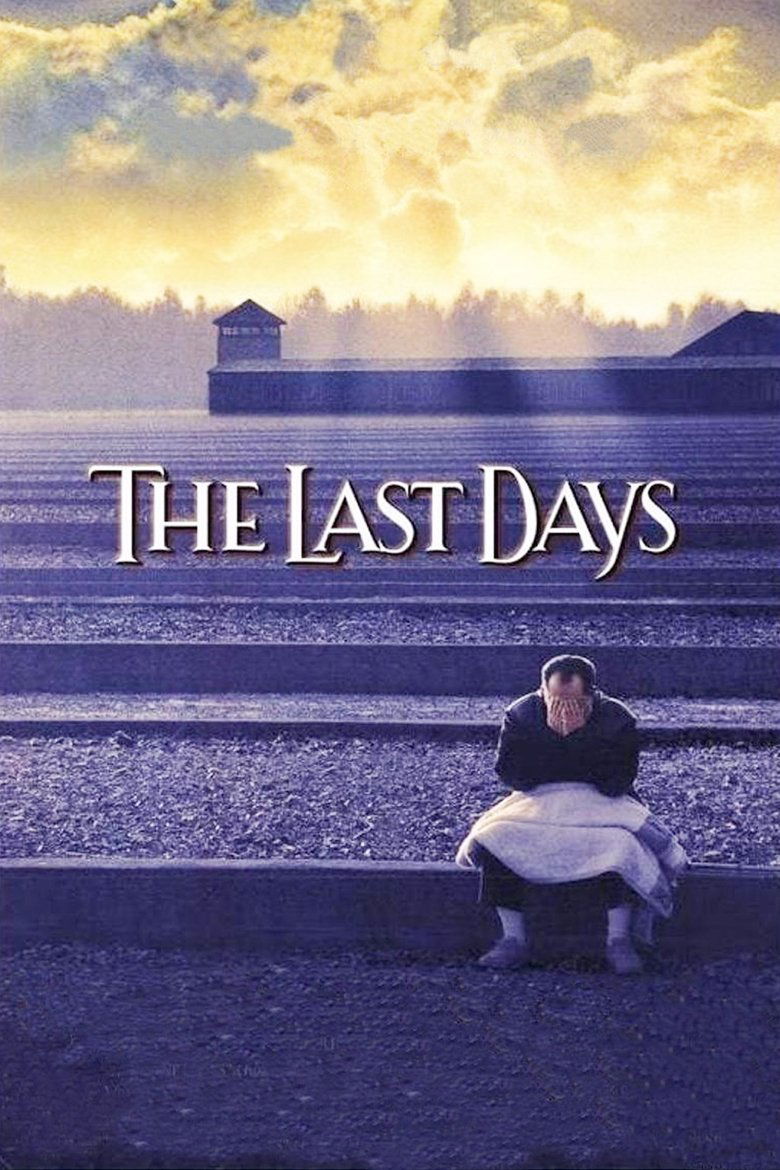
In the spring of 1944, with the war visibly turning against the Third Reich, Nazi forces moved with extraordinary speed to deport the Jews of Hungary. It was one of the most rapid mass deportations in the history of the Holocaust, and it came at a point when the rest of occupied Europe already knew, in broad terms, what was happening. The Last Days, released in 1998 and produced under the banner of Steven Spielberg's Survivors of the Shoah Visual History Foundation, takes that specific and terrible episode as its subject, focusing on five Hungarian Jewish survivors and asking them to testify directly to camera. The film won the Academy Award for Best Documentary Feature in 1999, a recognition that reflects both its historical weight and the care with which it handles the material.
The project was shepherded by the Shoah Foundation alongside Ken Lipper and June Beallor's production company, and directed by James Moll, who also served as editor. That dual role matters here: the decision about what to let breathe and what to cut away from is inseparable from how the testimony lands, and Moll's instinct in the editing room is to resist momentum, to hold a shot long enough that the silence does some of the work. It is worth noting that this was his feature debut as a director, which makes the steadiness of the approach all the more striking. His later work would include further documentary projects, but The Last Days remains the piece most associated with his name. The score was composed by Hans Zimmer, who here operates at the restrained end of his range. Rather than the full orchestral swell he is often associated with, the music functions more like an undertow, present enough to colour the emotional register of a scene without ever crowding the voices at the centre of it.
Those voices belong to five survivors: Alice Lok Cahana, Renee Firestone, Bill Basch, Martin Basch and historian Randolph Braham, each of whom carries a different relationship to the events being described. Some are testifying to personal loss so specific and so close that the camera can barely hold it; others bring a more analytical frame that helps locate the individual stories within the broader machinery of the genocide. The film moves between these registers without jarring, interweaving the oral testimony with archival footage and historical documentation. For a companion piece that similarly centres personal testimony and memoir within a larger documentary structure, see also Little Dieter Needs to Fly, Werner Herzog's 1997 account of a man recounting survival against almost impossible odds. I also reviewed Ryuichi Sakamoto: CODA, another documentary that uses intimate interview and a distinctive musical dimension to shape how we sit with one person's experience of history and mortality.
Visually, the film is unfussy and deliberate. Without a named cinematographer to anchor the discussion, what is clear is that the visual choices are consistently subordinated to the people on screen. Faces are lit plainly, framed closely, held. The archival material, by contrast, has the washed and grainy texture of evidence, and the contrast between those registers, between then and now, between the documented horror and the living person describing it, is itself a kind of argument the film makes quietly throughout.
The Last Days opens by telling you that everything you are about to see is true, and it then honours that promise without flinching.
It is a documentary about five Hungarian Jews who lived through the Holocaust, and it is exactly what it sets out to be: a direct, unsparing look at what is surely the darkest chapter in human history. It is not an easy watch. It was tough enough simply to sit with, and the thought of having actually lived through any of it is almost beyond comprehension.
What gives the film its power is that it hands the telling to the people who were there. These are not distant historical figures but survivors, sitting before the camera and recounting, in their own words, things no one should ever have had to endure. There is a terrible, quiet dignity to the way they speak, and the film has the good sense to step back and let them. It never sensationalises and it never looks away, and that restraint is a large part of why it lands as hard as it does.
It is skilfully assembled, weaving the survivor interviews together with archival footage and historical record into something that stays engaging throughout, even as it devastates. It will land especially hard for anyone with an interest in this period, though I would say its testimony is something everyone ought to sit with at least once. Four stars. It feels almost wrong to put a rating on a film like this at all, but as an act of witness and remembrance it is essential, and I am grateful it exists.
The Last Days occupies a particular place in the broader landscape of Holocaust documentary, one that includes landmark works stretching from Claude Lanzmann's Shoah to more recent projects built around digitised testimony. What Moll and the Shoah Foundation produced here is something polished but never clinical, shaped by craft without ever feeling managed. For anyone interested in how documentary cinema handles the specific burden of genocide testimony, it sits in essential company alongside the Foundation's wider archive. Some films earn their existence simply by being made; this is one of them, and that is not a small thing.
Rating: ★★★★ | Year: 1998 | Watched: 2026-10-02
Trailer
▶ Watch the official trailer for The Last Days (1998) on YouTube
Where to watch
Watch in the UK
Stream: Netflix · Netflix Standard with Ads
Physical: Amazon UK · Zavvi
Watch in the US
Stream: Netflix · Netflix Standard with Ads
Rent: Amazon Video · Apple TV Store · Fandango At Home
Buy: Amazon Video · Apple TV Store · Fandango At Home
Physical: Amazon US
Affiliate disclosure: Movies With Macca may earn a small commission on purchases or subscriptions started via these links. It costs you nothing extra.



