
Little Dieter Needs to Fly (1997)

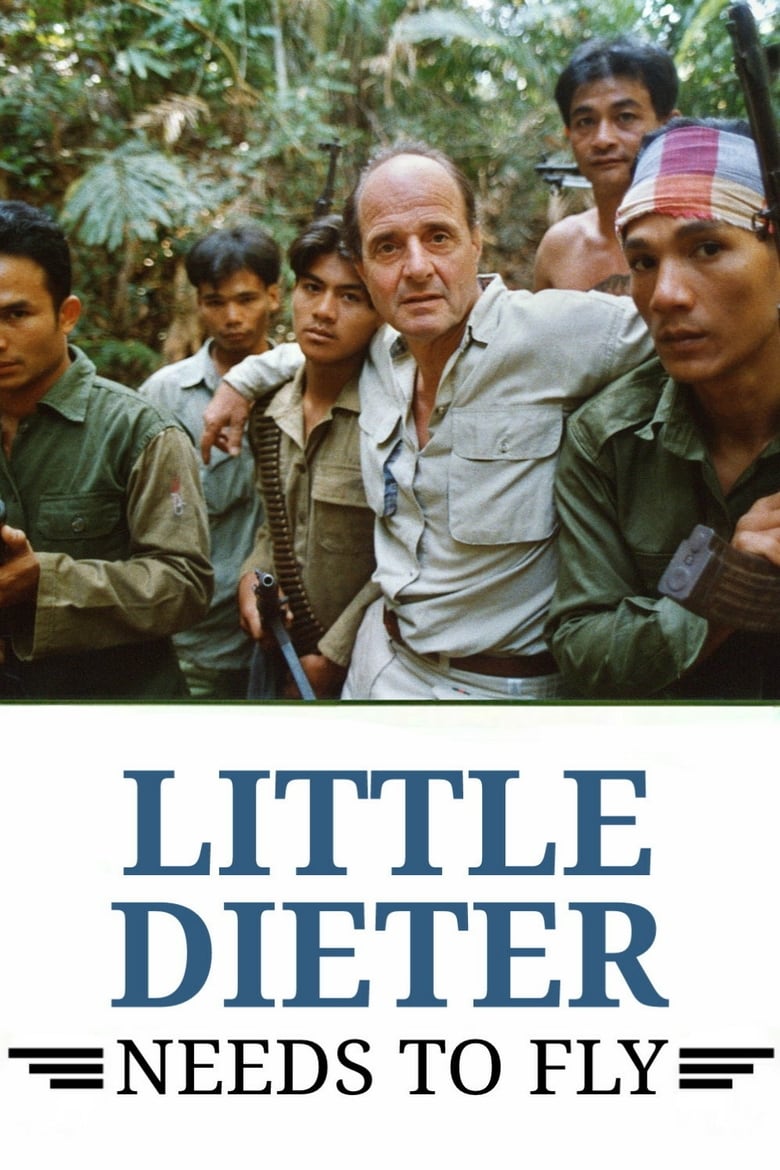
Werner Herzog has spent much of his career seeking out people who have pressed themselves against the outer edges of human experience, and Little Dieter Needs to Fly (1997) may be the purest expression of that instinct he ever put on film. The subject is Dieter Dengler, a German-born American naval aviator who was shot down on his very first combat mission over Laos in 1966, during the covert early phase of American involvement in South-East Asia. What followed was months of captivity in a jungle prison camp, a period of near-starvation, and an escape so improbable it would strain credibility in fiction. By the time Herzog came to make this film, thirty years had passed, but Dengler was still carrying the jungle with him.
The film was produced through Herzog's own Werner Herzog Filmproduktion in co-production with the German public broadcaster ZDF, a partnership that gave Herzog the creative latitude he has always required. It runs a lean 77 minutes, and the writing credit, like the directorial one, belongs to Herzog alone. That matters here more than in most documentaries, because the film is as much about Herzog's method and point of view as it is about Dengler's biography. Herzog does not simply sit a man in a chair and let him talk. He accompanies Dengler back to Laos, back to the villages, back to the very terrain where he was held, and he arranges re-enactments, with local villagers standing in for the captors, that blur the line between testimony and ordeal in ways that are genuinely difficult to watch. It is worth noting that Herzog would return to this same story almost a decade later with the narrative feature Rescue Dawn (2006), casting Christian Bale as Dengler, making this documentary the first and, for many, the more searching of the two treatments. I also covered Herzog's fiction work from around this era in Cobra Verde, which shares something of the same fascination with men pushed to their limits in hostile, unforgiving landscapes.
Cinematographer Peter Zeitlinger, who became one of Herzog's most trusted long-term collaborators across both documentary and fiction work from the 1990s onwards, shot the film. His images here favour close physical textures: the grain of weathered skin, the dense green press of jungle growth, the ordinary domesticity of Dengler's California home set against the flashback weight of what he survived. There is a recurring quality of light that feels both observational and slightly unreal, as though the past is always faintly present in the frame. The editing, handled by Rainer Standke and Joe Bini, keeps the film moving without ever feeling hurried, allowing Dengler's silences and hesitations room to register. The score is uncredited but unobtrusive, the sound design doing much of the emotional work. For a companion piece in how Herzog uses landscape and found sound to carry documentary weight, see also Lessons of Darkness, and I wrote about the quieter, more meditative side of his non-fiction work in The White Diamond.
Dengler himself, who died in 2001, is a remarkable screen presence: warm, funny in the way that survivors sometimes are, and carrying something behind the eyes that no amount of charm quite covers over. Eugene Deatrick, Dengler's former squadron commander, also appears, adding an outside perspective on the man and the mission. Herzog, to his credit, appears on screen himself at points, which is consistent with his broader view that the documentary filmmaker is never a neutral party and should not pretend to be.
The most harrowing thing about Little Dieter Needs to Fly is watching a man walk back into his own nightmare.
Its subject is Dieter Dengler, a pilot shot down over Laos during the Vietnam War, captured, and held in a jungle prison camp before a desperate escape, and Werner Herzog does not simply have him recount it.
He takes him back to the jungle and has him relive it, walking the ground, being bound and marched along by locals exactly as his captors once did. Those reenactment scenes are as raw as anything I have seen in a documentary; there is something almost unbearable about watching an actual survivor physically re-stage the worst days of his life.
It is beautifully made, as you would expect, well scored and deeply emotive, and Dengler himself is a magnetic, slightly haunted presence, the kind of larger-than-life figure Herzog is forever drawn to. Herzog clearly thought so as well, since he would later tell the same story again as a fiction film, Rescue Dawn, with Christian Bale in the role, and this original remains the rawer and more affecting of the two.
It is not an easy watch, and not one for every taste, but as a portrait of survival, and of the strange pull of the place that nearly killed you, it grips completely. Three and a half stars, a harrowing, humane account of one man's ordeal that stays with you long after.
Little Dieter Needs to Fly sits in a particular tradition of documentary filmmaking that prizes witness over explanation, and presence over archive. It is a film that asks something of its subject that few directors would dare to ask, and something of its audience that fewer films manage to earn. Whether you find Herzog's methods illuminating or ethically awkward (and reasonable people have landed on both sides of that question) is part of what makes it worth talking about. What is harder to dispute is that Dengler's story, told here in his own voice and his own returned body, is one of the more extraordinary survival accounts committed to film. Films that follow men into the extreme places they have been tend either to sentimentalise or to sensationalise; this one does neither, and that restraint, unusual for a filmmaker as flamboyant as Herzog, is perhaps the most considered thing about it.
Rating: ★★★½ | Year: 1997 | Watched: 2026-09-25
Trailer
▶ Watch the official trailer for Little Dieter Needs to Fly (1997) on YouTube
Where to watch
Watch in the US
Stream: Amazon Prime Video · Philo · Fandor Amazon Channel · Cohen Media Amazon Channel
Rent: Amazon Video · Apple TV Store · Google Play Movies · YouTube
Buy: Amazon Video · Apple TV Store · Google Play Movies · YouTube
Physical: Amazon US
Affiliate disclosure: Movies With Macca may earn a small commission on purchases or subscriptions started via these links. It costs you nothing extra.



