
The Langoliers (1995)

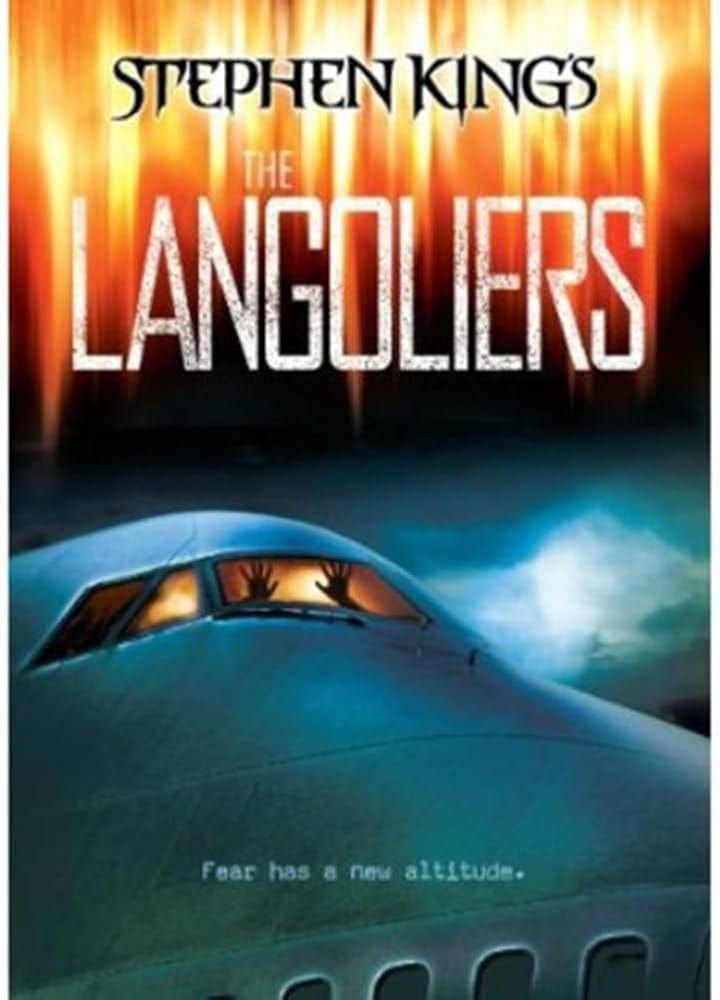
Stephen King adaptations have always been a lottery. For every version of The Shining or Misery that transcends its source material, there are a dozen television movies and straight-to-video efforts that take a promising premise and squeeze the life out of it somewhere between the page and the screen. The Langoliers, released in 1995 as a two-part ABC television miniseries, falls squarely into the second category, though it arrived with reasonable expectations attached. King's novella, published in his 1990 collection Four Past Midnight, is a tight, genuinely unsettling piece of work: a group of passengers on a red-eye flight wake to find that nearly everyone aboard has disappeared, leaving only a handful of survivors in a world that seems wrong in ways they cannot immediately name. That central image, an almost empty plane cutting through the dark over a suddenly silent America, is the kind of thing that ought to translate well to screen. The slow, creeping dread of it has real potential.
The miniseries format, popular with King adaptations throughout the late eighties and nineties, promised room to breathe, which in theory suits a story that builds its horror gradually and depends on atmosphere rather than action. The decade produced a handful of King televisual adaptations that used that extra runtime to their advantage, holding tension over two or three hours in ways a theatrical cut might not manage. What the format equally risks, of course, is giving a production the rope to wander. A lean, well-edited piece with a tight grip on its own internal logic can make those hours fly; one without that discipline can feel like a demonstration of everything that goes wrong when nobody presses for cuts. The source novella itself is not especially long, which raises the obvious question of how the material came to fill the running time it does here. The production, like a number of King's television adaptations of the period, has the look of something shot quickly and on a constrained budget, the kind of project where the ambition of the material and the resources available to realise it are not pulling in the same direction.
Without details confirmed about who stood behind the camera or sat at the editing suite, it would not be fair to attribute the look and sound of the film to any individual. What can be said is that the visual texture of The Langoliers is functional and flat in the way that much American television of the mid-nineties was, broad and evenly lit, with little of the shadow or visual unease you would want from a horror story whose whole engine runs on wrongness and dread. The score sits in similar territory: inoffensive, occasionally tense in a fairly generic register, but not the kind of music that lodges itself in the memory or amplifies a scene beyond what the images are already doing. The creature effects, which arrive late and are presumably the sequence the production built towards, became something of a talking point on release, and not for flattering reasons. For a story that asks its audience to wait a very long time before paying off, the quality of that payoff matters enormously.
The Langoliers is a poor Stephen King adaptation, and poor in just about every direction at once. The premise has promise, a planeload of passengers waking mid-flight to find almost everyone else has simply vanished into thin air, and the eerie, dawning wrongness of that should carry a good hour on its own. Instead, the film is far too long, a slog that stretches a slender idea well past breaking point.
It also makes almost no sense. The plot tangles itself up in time-travel logic that never coheres, and by the end I had given up trying to follow the rules it kept inventing and discarding. And when the creatures themselves finally turn up, the langoliers of the title, the effects are woefully bad, so cheap and unconvincing that they drain away whatever menace the long build-up had managed to muster.
The acting does not help, ranging from the flat to the downright awful, the sort of broad, unpersuasive playing that sinks a story already struggling to stay afloat. There is a decent short film buried in this premise somewhere; what we got is a bloated, nonsensical, cheaply realised one. One and a half stars. King's work has been adapted superbly plenty of times down the years, but this sits a long way down the pile.
The Langoliers sits as a useful, if uncomfortable, illustration of how badly a King adaptation can misread its own material. The novella's strength is restraint, and what ended up on screen is almost the opposite of that. King's back catalogue has attracted filmmakers of genuine talent and produced work that stands on its own terms, but it has also attracted productions that mistake length for substance and spectacle for menace. This is one of those. If you are curious about King adaptations that went differently, it is worth seeking out the versions that understood what they were adapting and why. As for this one, the most honest verdict is probably the simplest: the story deserved better.
Rating: ★½ | Year: 1995 | Watched: 2026-10-30


