The Heart of the World (2000)

Share
The Heart of the World (2000)

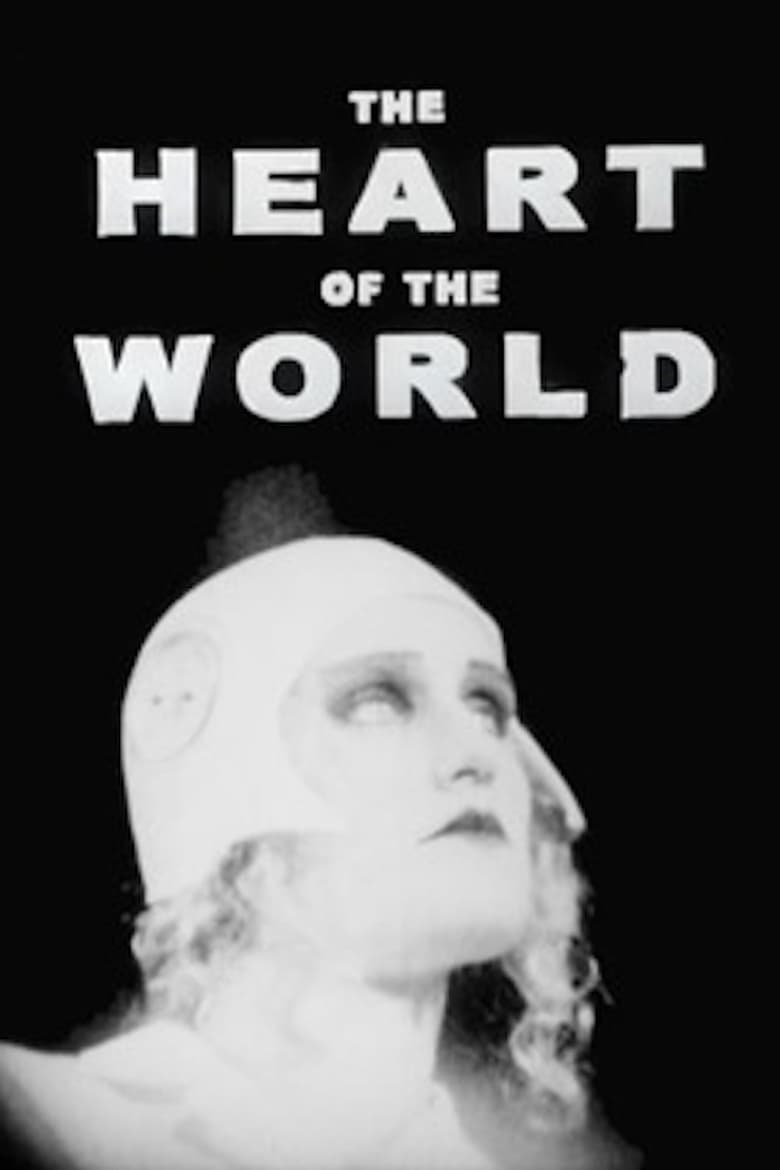
Guy Maddin occupies a peculiar corner of world cinema, one that most audiences stumble into by accident and leave either thoroughly enchanted or mildly baffled. The Canadian director built his reputation across the 1980s and 1990s making films that look as though they were pulled from a vault that nobody knew existed, pictures soaked in the grammar of silent and early sound cinema but carrying unmistakably modern obsessions. The Heart of the World, made in 2000, is a short film commissioned by the Toronto International Film Festival to celebrate the festival's twenty-fifth anniversary, and it is precisely the sort of project that could only have landed on Maddin's desk. Running to just six minutes, it packs in a cosmological love triangle, an impending planetary catastrophe, and imagery that owes as much to Soviet constructivist montage as it does to the fairground fantasy of early French trick photography. The premise, stripped to its bones, involves two brothers competing for the affections of a scientist who has discovered that the Earth's own heart is failing, with the fate of all life on the surface tangled up in who she chooses. It is, to put it charitably, not a film that rewards attempts at literal reading.

Maddin shot the film on grainy 8mm and 16mm stock, then processed and tinted the footage to push it further back in time, aesthetically speaking. The result is polished but unremarkable as a conventional production, which is rather the point. There is no major studio fingerprint here, no conventional budget conversation to be had. The cast, led by Leslie Bais as the scientist Anna alongside Caelum Vatnsdal and Shaun Balbar as the rival brothers, function less as performers in the traditional sense and more as moving elements in a kinetic visual collage, all exaggerated gesture and wide-eyed expression in the manner of silent film acting. It is a mode that invites comparison with other formally adventurous short and experimental work, and fans of Phil Tippett's decades-long stop-motion labour Mad God will recognise a similar commitment to a singular, idiosyncratic vision pursued without commercial compromise. Maddin's feature output from this period, including films like Careful and The Saddest Music in the World, gives some context for what he was after here, though those pictures at least allowed room for something approaching character. At six minutes, The Heart of the World has no such luxury, and Maddin seems entirely untroubled by that fact. For a sense of how other Canadian genre filmmakers have used body-horror and surrealist unease to similar unsettling effect, it is worth looking back at David Cronenberg's early work, reviewed here in our piece on Shivers.

The film arrived at a moment when experimental short filmmaking was finding new audiences through festival circuits and early internet distribution, a long way from the multiplex fare dominating the year 2000. It won the Toronto festival's award for best Canadian short and picked up attention at several other festivals, cementing Maddin's status as one of Canada's most genuinely eccentric cinematic voices. Whether that eccentric vision translates into something satisfying for a general audience is, of course, a different question entirely, and one worth sitting with before you commit your six minutes. It is also worth noting, if you enjoy shorts and compressed, formally ambitious filmmaking, that our review of The OceanMaker covers similar territory in terms of what a short film can and cannot do within tight constraints.

Guy Maddin’s 2000 short film The Heart of the World is a piece of cinema that is as bewildering as it is undeniably fascinating. The synopsis alone reads like a beautiful, unhinged fever dream: a pure fantasia detailing a frantic race to save the world from a fatal heart attack, all while juggling a bizarre love rivalry between two brothers (a gloomy mortician and an actor playing Christ) over the affections of a scientist studying the Earth’s core. Maddin crafted this super interesting project with a very specific, highly ambitious goal in mind: to aesthetically drag the audience right back to the chaotic, magical infancy of early cinema.

Visually, the film is an absolute triumph of stylistic pastiche. Maddin leans heavily into the surreal, dreamlike imagery championed by the likes of Salvador Dalí and Luis Buñuel, while also paying a massive, affectionate homage to the pioneering, fantastical visuals of Georges Méliès’s A Trip to the Moon. From the sped-up, jerky motion of the actors to the expressionist set designs and dramatic tinting, every single frame is meticulously engineered to replicate the manic energy of 1920s avant-garde filmmaking. If you are looking for a masterclass in technical mimicry and visual inventiveness, Maddin absolutely nails the aesthetic, creating a hyper-kinetic, visually stunning experience that constantly delights the eye.

However, this is exactly where the film begins to show its narrative limitations. If we are judging The Heart of the World purely on what it is trying to achieve (a loving, meticulous recreation of early cinematic tropes) then it does its job brilliantly. But when you step back and judge it as a general piece of narrative cinema, it simply doesn't hold a candle to the actual feature films released in the 2000s. It is, at its core, a stylistic exercise rather than a fully fleshed-out story. The characters are mere caricatures, the plot is entirely secondary to the visual gags, and it completely lacks the emotional depth and narrative cohesion that made the broader cinematic landscape of that era so compelling.

The Heart of the World is a watchable curiosity that will absolutely delight hardcore cinephiles and lovers of experimental film. It is a testament to Guy Maddin’s sheer creative wizardry and his deep, encyclopaedic love for the history of the medium. While it might not stand shoulder-to-shoulder with the narrative heavyweights of its release year, it remains a thoroughly entertaining, slice of cinematic history.

It’s a visually spectacular, wildly inventive academic triumph that proves Maddin is a master of his craft, even if the final product is more of a fascinating museum piece than a universally gripping movie.

A 2.5 out of 5 from Macca feels about right as a verdict for the general film-going public, even if devotees of avant-garde cinema might push that number a fair bit higher. The Heart of the World is the kind of film that gets discussed with great enthusiasm at film school and then quietly skipped by everyone else, which is not quite a criticism and not quite a defence. Maddin has continued making work in this vein, most notably with My Winnipeg in 2007, and each new project adds another layer to a filmography that rewards patience and a certain tolerance for the wilfully strange. If you found your way here after exploring some of the other formally playful films on the blog, or if you are curious what cinema looked and felt like before story became the dominant organising principle, this is worth your six minutes. Just do not go in expecting a narrative to hold onto. The heart of the world, it turns out, beats in a very odd rhythm indeed.


Rating: ★★½ | Year: 2000 | Watched: 2026-07-08

View on Letterboxd →


Where to watch

Watch in the US
Stream:
TPT
Physical: Amazon US

Affiliate disclosure: Movies With Macca may earn a small commission on purchases or subscriptions started via these links. It costs you nothing extra.
Film images and data courtesy of TMDB. This product uses the TMDB API but is not endorsed or certified by TMDB.