The Gruffalo (2009)

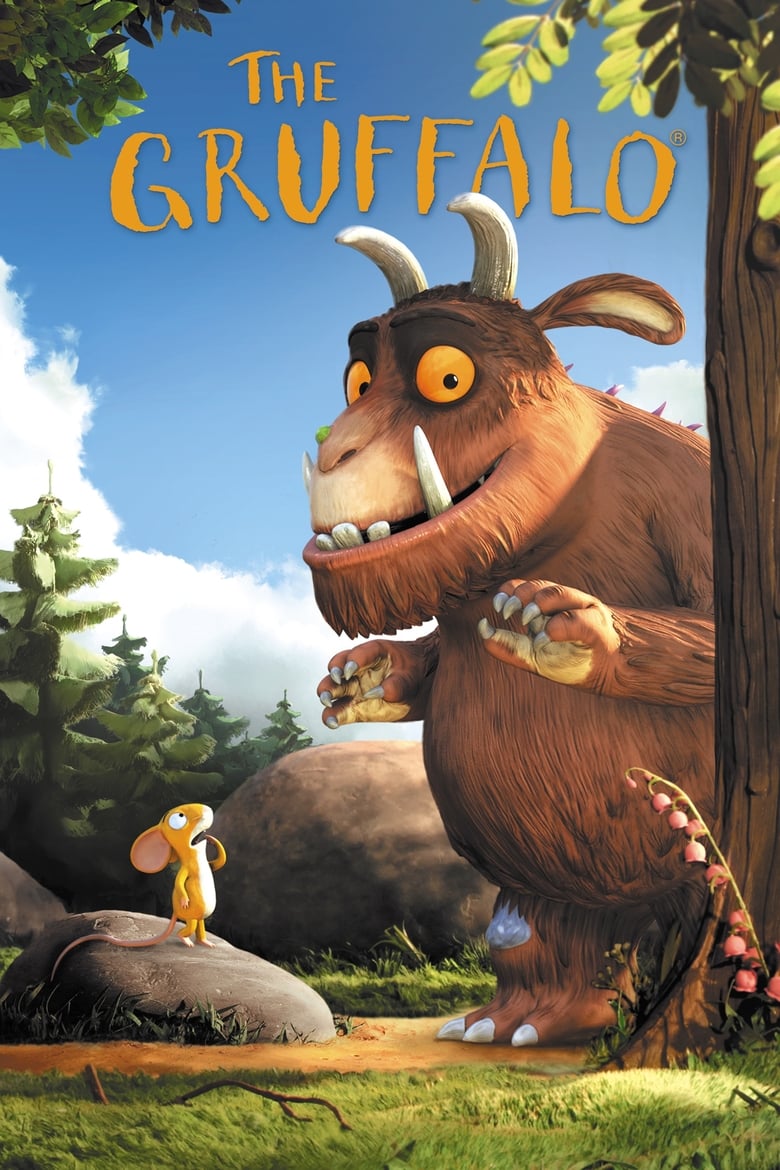
If you've had a small child in the house at any point this century, you will know The Gruffalo more or less off by heart, whether you meant to or not. Julia Donaldson and Axel Scheffler's picture book is a fixture of British bedtimes, and there's a real question of whether any adaptation could do it justice or whether the attempt would just feel like an unnecessary raid on something already perfect. The good news is that directors Max Lang and Jakob Schuh have had the sense not to muck about with a good thing.
The premise, for anyone who has somehow escaped it: a mouse talks his way out of being eaten by a series of woodland predators by inventing an imaginary monster, the Gruffalo, only for the Gruffalo to turn out to be real. It's a slim tale, gloriously circular, built on Donaldson's irresistible sing-song rhythms, and the film stretches it into a neatly judged half hour without padding it out or overexplaining the joke. That restraint alone is worth praising.
The voice cast is a good part of the pleasure. Robbie Coltrane makes the Gruffalo himself a lovely, lumbering softie, all warmth beneath the terrible tusks and the terrible claws, and there's strong support from the likes of Tom Wilkinson and John Hurt. And then there's James Corden as the mouse. I'll be honest: after sitting through Peter Rabbit, I was braced for the worst. But here he's actually reined in and rather winning, a world away from his usual grating self. Credit to the direction, or the material, or both, but it works.
The animation keeps genuine faith with Scheffler's illustrations, which is exactly the right call. There's a softness and a specificity to his woodland that the film carries over beautifully, and the score is gentle and hummable without being cloying. Everything about it treats its young audience as worth the effort, and that matters. Too much children's entertainment is lazy precisely because it assumes kids won't notice. They notice.
It reminded me, more than anything, of the best of Aardman. That same unhurried, very British gentleness that I love in Wallace & Gromit: The Curse of the Were-Rabbit, the feeling that the people making the thing actually care, that they're not rushing past the quiet beats to get to the next joke. The Gruffalo belongs in that company. It's not an ambitious piece of filmmaking, it doesn't need to be, but it is a beautifully made one.
My son adores it, and I'm genuinely glad to sit through it on repeat, which is more than I can say for most children's telly. At under thirty minutes it knows exactly how long to stay, which is a discipline plenty of films three times its length could learn from. Four stars. A modern bedtime classic that has well and truly earned its place on the shelf.
Rating: ★★★★ | Year: 2009 | Watched: 2026-08-14
Where to watch
Watch in the UK
Rent: Apple TV Store · Rakuten TV · Amazon Video · Google Play Movies
Buy: Apple TV Store · Rakuten TV · Amazon Video · Google Play Movies
Physical: Amazon UK · Zavvi
Watch in the US
Rent: Amazon Video · Apple TV Store · Google Play Movies · YouTube
Buy: Amazon Video · Apple TV Store · Google Play Movies · YouTube
Physical: Amazon US
Affiliate disclosure: Movies With Macca may earn a small commission on purchases or subscriptions started via these links. It costs you nothing extra.