
The Fire Within: A Requiem for Katia and Maurice Krafft (2022)

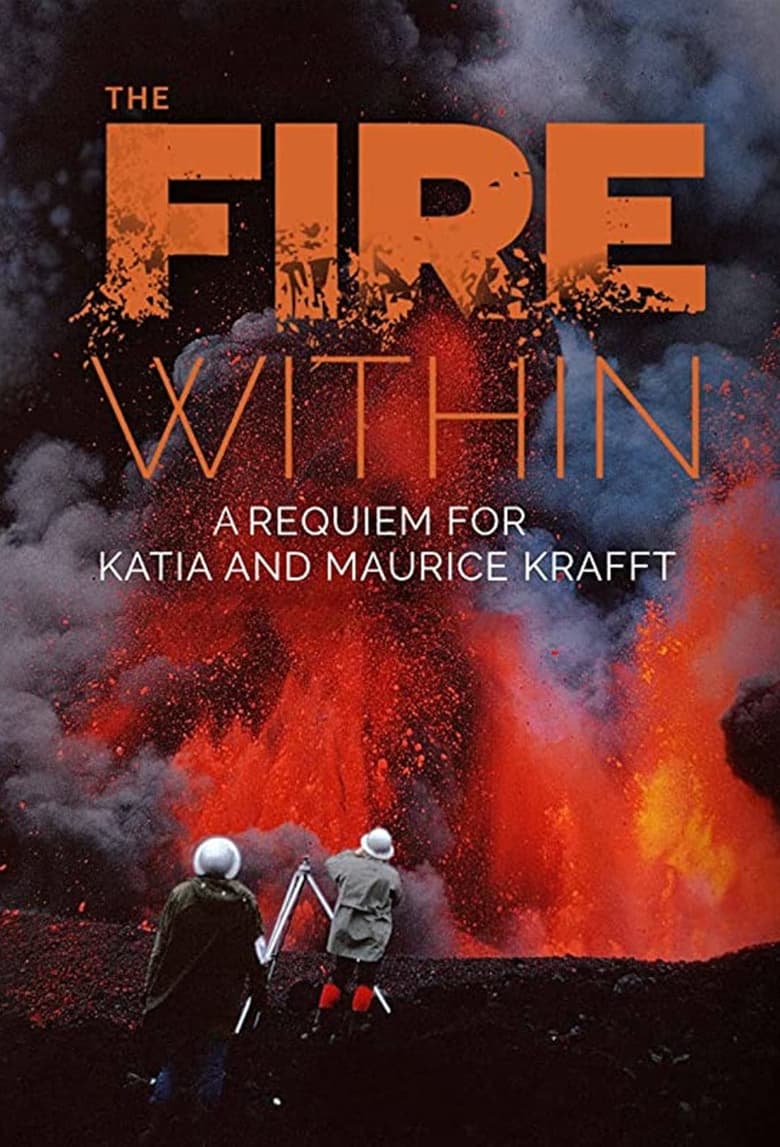
Katia and Maurice Krafft were, by most reasonable measures, operating at the outer limit of what a human being can choose to do and survive. The French volcanologist couple spent roughly two decades driving themselves as close as physically possible to active eruptions, camera in hand, building an extraordinary personal archive of footage that documented lava flows, pyroclastic surges and ash columns with an intimacy that professional broadcasters and scientific institutions simply could not match. Their deaths at Mount Unzen in Japan in June 1991, during an unpredictable pyroclastic flow that also killed more than forty other people, brought that project to an abrupt and terrible end. The archive, however, remained. Werner Herzog's 2022 film works through that footage and shapes it into something that is part portrait, part meditation and part, as the subtitle suggests, requiem.
Herzog is one of a very particular breed of filmmaker, and his presence behind this project tells you a great deal about what kind of documentary it will be before you have seen a single frame. His career spans more than fifty years and crosses freely between fiction and non-fiction, always gravitating toward people and places that sit at some extreme: obsession, wilderness, isolation, the point at which human will meets something far larger than itself. I have covered a fair stretch of that career here, including Lessons of Darkness, his earlier engagement with environmental catastrophe and elemental fire, and The White Diamond, another documentary in which a driven individual and a dangerous natural environment are placed in close, charged proximity. The Krafft material is, in a sense, Herzog's natural territory, which is both its great strength and the thing that makes it worth examining carefully. The Fire Within was produced across three countries, with Brian Leith Productions, Bonne Pioche and Titan Films sharing the work, and it runs to a trim 85 minutes, a length that feels deliberate rather than constrained.
The film's writer and director is, of course, Herzog himself, and his narration is as central to the experience as the images it accompanies. Cinematographer Henning Brümmer handles the contemporary material, though the emotional and visual weight of the film comes from the Kraffts' own footage, which ranges from the strangely beautiful to the genuinely alarming: rivers of molten rock moving with an almost casual indifference, volcanic craters filmed from positions that no health-and-safety framework would permit. Composer Ernst Reijseger provides the score, and his contribution leans toward the elegiac, favouring strings and wordless vocal textures that sit beneath the visuals without overwhelming them. The effect is closer to a piece of music accompanying a memorial than a conventional documentary soundtrack, which suits the film's stated purpose. Editor Marco Capalbo shapes material that was never originally intended to be edited together into a coherent whole, and the pacing reflects a preference for the contemplative over the urgent: this is not a film that rushes toward its ending. For a companion piece on documentary filmmaking that takes a similarly patient approach to time and place, see also Of Time and the City, which shares that quality of found footage being rearranged into something that feels almost like mourning.
There is a small club of documentary-makers I will happily follow onto any subject going, trusting them to make it fascinating whatever it is, and Werner Herzog sits near the top of it.
He is, for me, in the same bracket as a Louis Theroux or a James May: you settle in already fairly sure you are in for something worthwhile, no matter what the topic turns out to be. Here the topic is volcanoes, and more precisely Katia and Maurice Krafft, the French couple who spent their lives filming eruptions from perilously close range, until one of them, at Mount Unzen in 1991, finally claimed them both.
As you would expect, Herzog builds it almost entirely out of the Kraffts' own astonishing footage, rivers of lava and towering ash clouds shot from a distance no sane person would choose, and lays over it that unmistakable narration, half elegy, half philosophical musing on fire, obsession and the pull of the very thing that would kill them. It is, in the best sense, a typical Herzog documentary: unhurried, humane, forever drawn to what pushes people out to the furthest edges of human experience.
How much you take from it may come down to how much you care about volcanoes to begin with. If you find them fascinating, this will be a feast. If you do not, the sheer spectacle and Herzog's company will still carry you through to a decent, absorbing watch.
It is not top-tier Herzog, but the man has a floor most film-makers would give anything for, and this sits comfortably above it. Three and a half stars, another reliably interesting watch from a director I will keep following just about anywhere.
The Fire Within: A Requiem for Katia and Maurice Krafft sits in an interesting place in Herzog's documentary catalogue: polished but unremarkable by his own high standards, and all the more interesting for it, because it raises the question of what it means for a filmmaker to be in genuine sympathy with his subjects. The Kraffts documented the world's volcanoes because they could not imagine doing otherwise. Herzog documents the Kraffts, one suspects, for much the same reason. Whether that shared quality of driven fascination produces great art or simply a reliable, humane watch is exactly the conversation this film invites. Some directors have a floor that most of us would call a ceiling, and this is a film that knows where it stands.
Rating: ★★★½ | Year: 2022 | Watched: 2026-09-20
Trailer
Where to watch
Watch in the UK
Physical: Amazon UK · Zavvi
Watch in the US
Stream: History Vault · HISTORY Vault Apple TV channel · HISTORY Vault Amazon Channel
Rent: Amazon Video · Fandango At Home
Buy: Amazon Video · Fandango At Home
Physical: Amazon US
Affiliate disclosure: Movies With Macca may earn a small commission on purchases or subscriptions started via these links. It costs you nothing extra.



