Of Time and the City (2008)

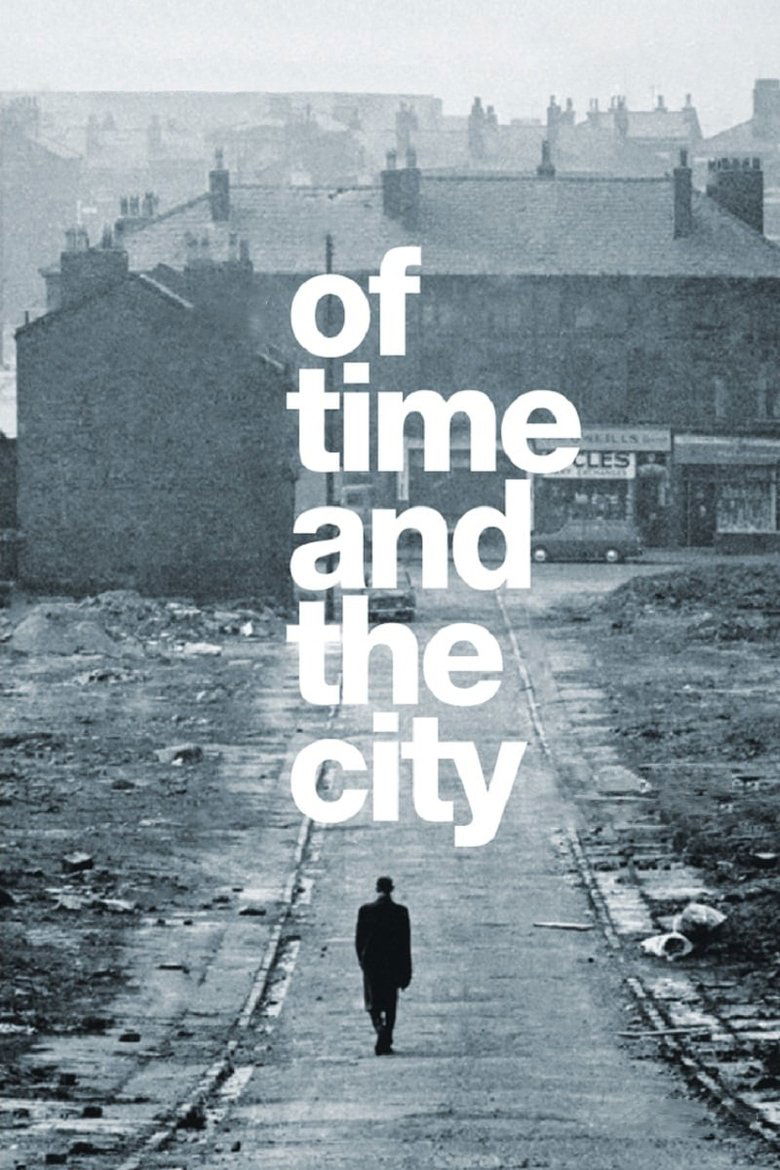
Terence Davies is one of British cinema's most singular voices, a filmmaker whose work sits at the uncomfortable crossroads of memory, faith, class and longing. Born and raised in Liverpool, he spent the early part of his career turning the landscapes and emotional textures of his childhood into fiction, most famously in Distant Voices, Still Lives (1988), that extraordinary account of a working-class Liverpool family in the 1940s and 50s. Of Time and the City, arriving twenty years later, finds him returning to the same well, only this time without the artifice of dramatisation. Commissioned to mark Liverpool's year as European Capital of Culture in 2008, it is part archive film, part spoken essay, and part elegy, a documentary that runs a trim 74 minutes and wears its emotional ambitions openly, right there in its tagline: a love song and a eulogy.
The production was a relatively modest affair, brought together by Hurricane Films alongside Northwest Vision and Media and Digital Departures, a collaboration typical of the kind of publicly supported, regionally rooted filmmaking that keeps idiosyncratic work like this alive in British cinema. Davies wrote the film himself, and that matters enormously, because the script is the spine of the whole enterprise. He narrates in his own voice throughout, weaving personal reminiscence with a broader, sometimes acerbic commentary on post-war British life, the monarchy, organised religion, redevelopment, and the slow erasure of the communities he grew up among. It is a brave structural choice to let a single authorial perspective carry the entire programme without the conventional scaffolding of interviews or talking heads.
The footage itself is largely archival, sourced from the British Film Institute and various regional collections, a patchwork of newsreel material, home films, and documentary footage stretching across the second half of the twentieth century. Without a credited cinematographer to name, the visual texture is necessarily a collage rather than a designed look, faded 16mm images of terraced streets, docklands, fairgrounds and faces set against Davies's own carefully chosen musical programme, which ranges from classical pieces to popular standards of the era. The editor, Liza Ryan-Carter, carries a significant burden here: cutting between archival material of wildly differing quality, aspect ratio and grain, finding a rhythm that can hold together Davies's discursive narration and the emotional weight he places on individual images. It is the kind of editing that has to be felt rather than noticed, and the film's sustained, unhurried pace is very much a product of those choices at the cutting room. For a companion piece in documentary form, I also reviewed Jazz on a Summer's Day (1959), another film that lets archive imagery and music carry the emotional freight, and the contrast in approach is instructive.
Davies himself is the sole credited cast member, which feels appropriate for something so personal. He is not on screen in any conventional sense; his presence is entirely vocal, that famously measured, slightly mournful Liverpudlian cadence that gives even his most sardonic observations a quality of genuine grief. It is worth noting that documentary filmmakers who place themselves so centrally in the frame, not as performers but as narrating consciousness, invite a particular kind of scrutiny. The film lives or dies on whether you find that voice illuminating or, over time, somewhat enclosed. I also covered Titicut Follies (1967), a documentary sitting at the other end of the spectrum in terms of authorial presence, which throws the contrasting approach into relief.
Of Time and the City works best as a time capsule, and for me it came with an unusual charge, because my wife's family are from the very Liverpool estates it captures and remember those post-war years well.
Terence Davies made it as a poetic memoir of his home city, half archival scrapbook and half spoken reverie, narrating his own childhood and the Liverpool that shaped him in that unmistakable, mournful voice of his. Watched alongside someone for whom it is almost family history, it landed with a warmth it might not have had otherwise.
It also makes a natural companion to Distant Voices, Still Lives, the Davies picture I caught recently and admired at arm's length. This is the same well he keeps going back to, post-war working-class Liverpool remembered in impressionistic fragments, only here it is documentary rather than drama.
The visuals are impressive and, as my wife felt too, deeply familial, all faded footage of streets and faces you half recognise. Davies himself is a wonderfully opinionated guide, sour about the monarchy, wistful about lost community, and while his are very much one man's views rather than any universal truth, they are worth sitting with all the same.
Where it falls a touch short is that it rather plays in a single key. For all the richness of the material, the tone stays much the same throughout, elegiac and unhurried, and across even a short running time it can begin to feel becalmed. It is a decent, heartfelt documentary that I am glad I saw, all the more for the company I saw it in, yet it never quite builds beyond its own lovely, melancholy mood. Three stars, and a treat for anyone with roots in that city, if a shade monotone for those without.
Of Time and the City is the kind of film that travels differently depending on who is watching it and what they carry into the room. As a piece of documentary filmmaking it is polished but unhurried, shaped by a sensibility so particular that it inevitably rewards some viewers more than others. For Davies enthusiasts it functions as a direct companion to his fiction work, clarifying the emotional and geographical coordinates from which all of it springs. For general audiences it is a curio: sincere, beautifully assembled in places, and genuinely unlike most things on offer in any given year. Liverpool, the actual city, holds the film together even when Davies's singular mood threatens to close the world down to the size of his own recollection. Some cities, it turns out, can survive even that.
Rating: ★★★ | Year: 2008 | Watched: 2026-09-13
Trailer
▶ Watch the official trailer for Of Time and the City (2008) on YouTube
Where to watch
Watch in the UK
Stream: BFI Player · BFI Player Amazon Channel · BFI Player Apple TV Channel
Buy: Apple TV Store
Physical: Amazon UK · Zavvi
Watch in the US
Rent: Amazon Video · Fandango At Home
Buy: Amazon Video · Fandango At Home
Physical: Amazon US
Affiliate disclosure: Movies With Macca may earn a small commission on purchases or subscriptions started via these links. It costs you nothing extra.