

Quadrophenia (1979)

Share
Quadrophenia (1979)

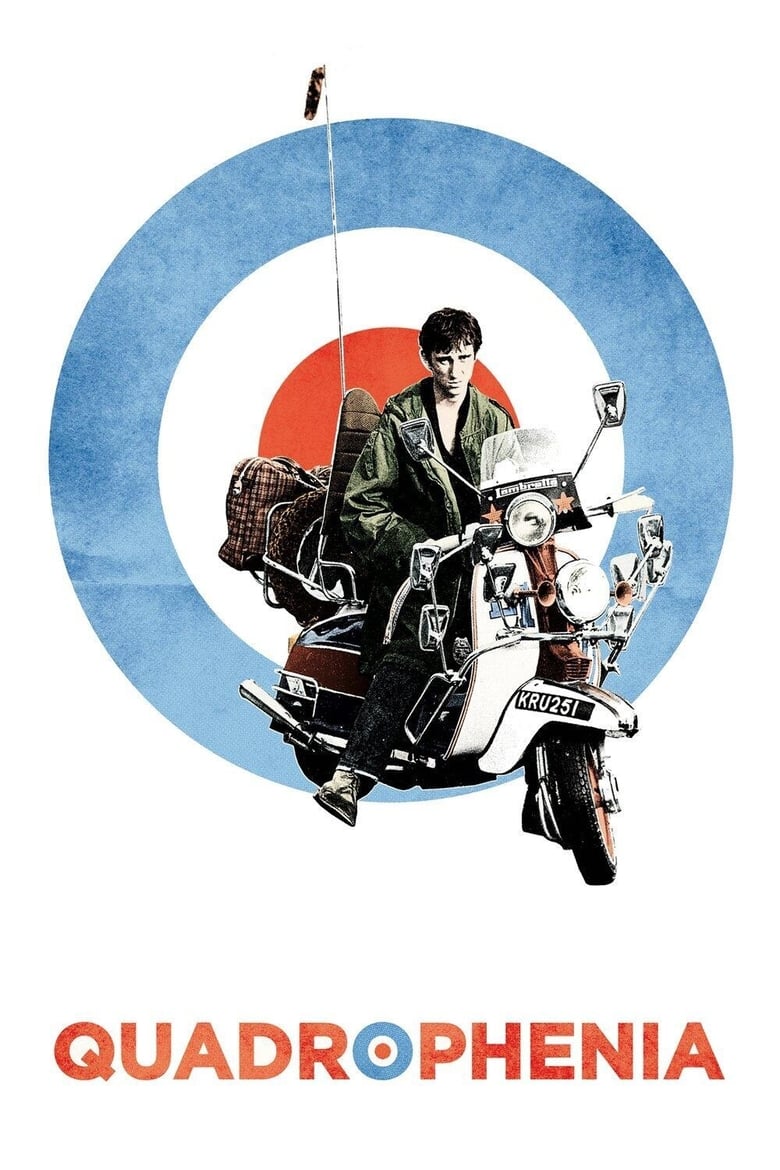
There are films that arrive as entertainment and quietly become documents. Quadrophenia, released in 1979 and directed by Franc Roddam, is one of those. Set against the mods-and-rockers clashes of Brighton in 1964, it follows Jimmy, a young London working-class teenager who spends his weekdays enduring a soul-crushing job and his weekends lost in the rituals of Mod culture: the tailored suits, the Lambretta scooters, the pills, the desperate need to be part of something that feels bigger than a bedsit and a pay packet. The film arrived at the tail end of the first great punk wave, when British youth culture was once again fracturing along tribal lines, and its portrait of subcultural identity as both armour and trap felt immediately resonant. It still does, which is part of why it has quietly accumulated the status of a set text for anyone trying to understand what post-war British adolescence actually felt like on the ground.

The film is built on The Who's 1973 double album of the same name, a rock opera conceived by Pete Townshend as a study in split identity and teenage alienation. Adapting that material for the screen was no small task: an album is a mood and a structure rather than a plot, and turning it into a two-hour drama required real dramatic invention. Roddam, making his feature debut after a background in documentary television, co-wrote the screenplay with Martin Stellman and Dave Humphries, and the three of them made a sensible decision in letting the album's music fuel the atmosphere rather than shaping the narrative too literally around it. Roddam's documentary instincts are visible throughout, in the crowded street scenes, the texture of the Brighton seafront sequences, the sense that this world existed before the camera arrived and will carry on after it leaves. Production was handled through Polytel and The Who's own company, The Who Films, which gave the project an unusual degree of creative control from the band's side, and that independence shows in how unvarnished the whole thing is: polished but unremarkable in the way big studio product can be, this is not. It is scrappy and specific in the best possible way.

The casting has become one of the film's great talking points with the passage of time. Phil Daniels carries the film as Jimmy, a performance built on coiled physical energy and a kind of wounded bravado. Alongside him are Leslie Ash, Phil Davis and Mark Wingett, all of them catching a particular frequency of youthful anxiety and loyalty and cruelty. Then there is Sting, at the time the frontman of The Police rather than a fully formed film actor, playing the magnetic, effortlessly cool Ace Face. It is a small role but a perfectly calibrated one, and it hints at the kind of casting instinct Roddam had for faces that could carry meaning without labouring the point. If you enjoy watching British films of this period for the pleasure of spotting actors before they were famous, Quadrophenia is particularly rewarding company, much as An American Werewolf in London from just two years later offers a similar game for sharp-eyed viewers.

Cinematographer Brian Tufano shoots the film with a grainy, naturalistic quality that suits the material well. The Brighton sequences in particular have a weather-beaten, salt-and-concrete texture, crowds spilling across the seafront in a way that feels observed rather than orchestrated. The interiors, the clubs and bedsits and family kitchens, are tight and slightly claustrophobic, which does useful work in communicating why the open road on a scooter feels like liberation. The score, such as it is beyond the album's own tracks, allows The Who's music to do most of the heavy lifting, and the editors Sean Barton and Mike Taylor cut the film with a rhythm that mirrors the music's restless momentum, particularly in the more frenetic crowd sequences. It is worth comparing that sense of urban texture and youthful displacement to something like Under the Skin, which finds its own very different way of making a British cityscape feel genuinely strange and alive. For another kind of study in social observation and the texture of working life, Macca's take on The Perks of Being a Wallflower offers an interesting transatlantic point of comparison on the theme of teenage belonging.

When I was sweating through my GCSEs, the school sent us off with an unusual piece of revision advice: go and watch Quadrophenia. Decades on, my daughter now sits in the same classrooms, and the same recommendation is still doing the rounds. There is something perfect about that, because Franc Roddam's 1979 film really is a time capsule, a way of climbing inside the mods-and-rockers Britain of the mid-sixties with not a textbook in sight.

Built around The Who's 1973 rock opera, it follows Jimmy, a London teenager grinding through a dead-end job and living for the weekends, the scooters, the events and the tribal thrill of belonging to something.

Part of the joy of it now is the faces. This is a veritable who's-who of British screen talent caught years before most of them were household names, among them a young Sting, the singer rather than the wrestler, smouldering away as the impossibly cool Ace Face.

The soundtrack, of course, is tremendous; The Who lend the thing a restless, kicking energy that pulls you through even its baggier stretches. And Phil Daniels is terrific as Jimmy, all coiled frustration and misplaced swagger, the very picture of a lad who has mistaken a subculture for a personality.

Where it shows its age is, well, roughly everywhere a 1979 film about 1964 might. Some of it feels dated now, in its rhythms and its attitudes alike, and there are passages where the "days in the life" shape wanders more than it grips. That is really what stops me going higher; as sharp as its snapshot of the moment is, it stays a touch too of its time to shrug that off completely. But as social history you can actually feel, and as a portrait of teenage restlessness that has not dated a day, it is a really good watch. Three and a half stars, and the rare bit of school homework I would gladly do all over again.

Quadrophenia occupies a curious and rather valuable position in British cinema: too raw to be nostalgia, too specific to be myth, and grounded enough in a real cultural moment that it has ended up being used as a teaching tool for that moment ever since. Whether you come to it as a fan of The Who, as a student of British social history, or simply as someone interested in what a debut feature film can do when its director is willing to trust the material, there is a great deal here to chew on. Its rough edges are part of its charm, and its portrait of a young man searching for identity in the clothes he wears and the tribe he belongs to has not required much updating to feel relevant. Films about youth culture date, almost by definition. The good ones make you feel the heat of it anyway.


Rating: ★★★½ | Year: 1979 | Watched: 2026-08-14

View on Letterboxd →


Trailer

▶ Watch the official trailer for Quadrophenia (1979) on YouTube


Where to watch

Watch in the UK
Rent:
Apple TV Store · Rakuten TV · Amazon Video · Google Play Movies
Buy: Apple TV Store · Rakuten TV · Amazon Video · Google Play Movies
Physical: Amazon UK · Zavvi

Watch in the US
Stream:
fuboTV · HBO Max Amazon Channel · Criterion Channel · HBO Max
Rent: Amazon Video · Apple TV Store · Fandango At Home
Buy: Amazon Video · Apple TV Store · Fandango At Home
Physical: Amazon US

Affiliate disclosure: Movies With Macca may earn a small commission on purchases or subscriptions started via these links. It costs you nothing extra.


Film images and data courtesy of TMDB. This product uses the TMDB API but is not endorsed or certified by TMDB.

