PT 109 (1963)

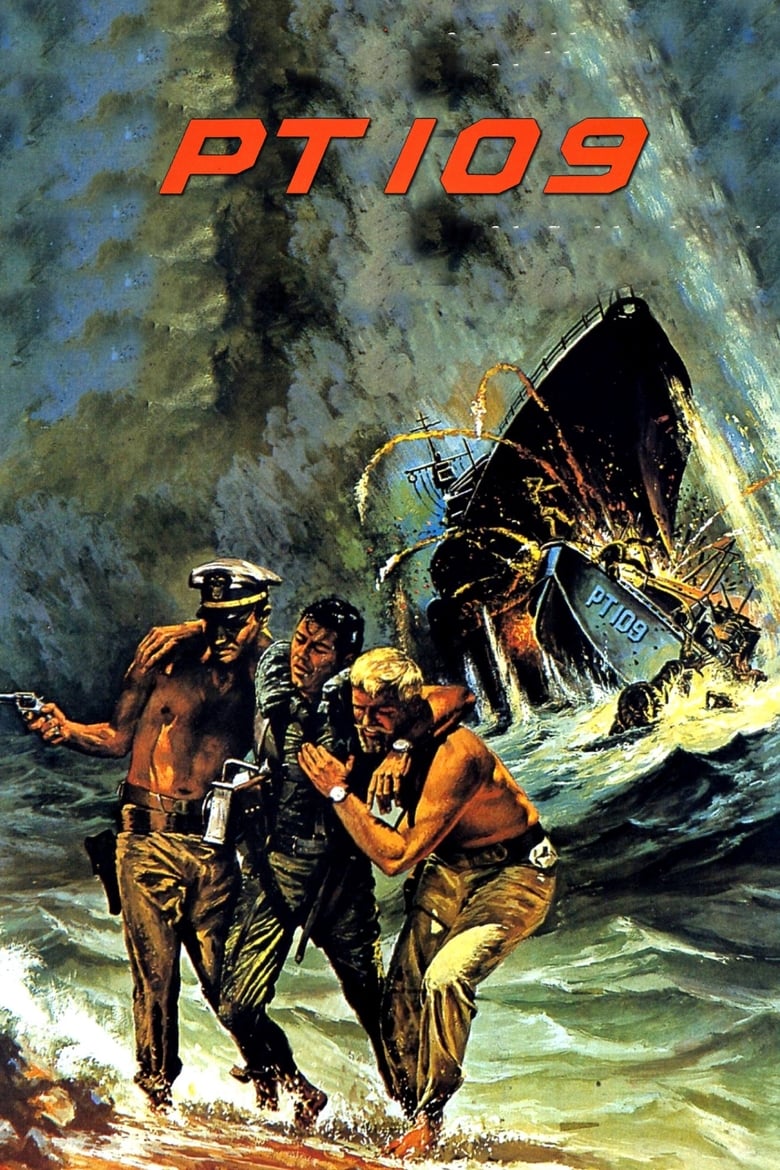
You know the feeling. It's a lazy Sunday afternoon, you're half-awake on the sofa, and you flick through the channels until you land on something that demands absolutely nothing from you: a perfectly harmless, aggressively middle-of-the-road war picture playing out in faded Technicolor. That's PT 109 to a tee. Leslie H. Martinson's 1963 feature is the cinematic equivalent of a biscuit that's been left out slightly too long. It's still a biscuit. You'll probably finish it. But you won't be rushing to tell anyone about it.
The film is a straightforward recounting of a young Lieutenant John F. Kennedy's exploits during the Pacific campaign, and it wears its intentions plainly. This is family-friendly wartime drama, the kind that keeps its boots clean and its heroism tidy. The muddy, visceral horror of the Pacific theatre, which was genuinely brutal and which other films of the era were beginning to grapple with more honestly, is very much kept at arm's length here. What we get instead is a sanitised, respectful tribute to a specific moment in American military history. Safe, inoffensive, and somewhat forgettable.
Now, the elephant in the room: Cliff Robertson plays the future president, and let's be honest, he looks and sounds absolutely nothing like John F. Kennedy. The famous cadence, that distinctive clipped Boston delivery, is entirely absent, replaced by a fairly generic mid-Atlantic accent that could belong to practically any lead in a Hollywood picture of this era. It's a distraction, initially. You sit there for the first twenty minutes doing the mental gymnastics of trying to convince yourself you're watching the man who would go on to occupy the Oval Office. But here's the thing: once you stop fighting it, Robertson actually does a cracking job. He brings a grounded, earnest quality to the role, selling the quiet competence of a young officer focused on keeping his crew alive. It never tips into hagiography, which is a genuine achievement given the subject matter. The film is practically begging to be a puff piece, and Robertson's restraint prevents it from becoming one entirely.
The technical execution, though, is where the film's modest ambitions start to show their seams. The score does the expected work of swelling brass themes and patriotic chest-puffing, but it feels curiously generic, the sort of music you could drop into a dozen other wartime pictures or even a daytime western without anyone noticing the difference. It does its job. It just doesn't leave any impression whatsoever once the credits roll. And the pacing is a touch sluggish throughout. At nearly two hours, the runtime carries a little more weight than the material can comfortably support. The story being told is, by its very nature, relatively straightforward, and stretching it to this length means there are stretches where the film drifts into a kind of pleasant inertia.
I should say: there's nothing here that actively annoyed me. It's perfectly alright. Martinson delivers exactly what he seems to have set out to deliver, a competent, respectful, if uninspired dramatisation that will satisfy anyone looking for a gentle bit of nostalgic wartime storytelling. It's the kind of film that fits its Sunday afternoon slot perfectly. Compare it to something like I Am Cuba, which came out around the same time and used the backdrop of political conflict to create something genuinely electric and formally daring, and PT 109 starts to look even more comfortable in its own averageness. But that's not quite a fair fight, and I'm not sure Martinson ever wanted to be in one.
Three stars. A fine, forgettable watch, carried largely by a performance that deserves a slightly better film around it.
Rating: ★★★ | Year: 1963 | Watched: 2026-07-28
Where to watch
Watch in the UK
Rent: Apple TV Store · Amazon Video
Buy: Apple TV Store · Amazon Video
Physical: Amazon UK · Zavvi
Watch in the US
Rent: Amazon Video · Apple TV Store · Google Play Movies · YouTube
Buy: Amazon Video · Apple TV Store · Google Play Movies · YouTube
Physical: Amazon US
Affiliate disclosure: Movies With Macca may earn a small commission on purchases or subscriptions started via these links. It costs you nothing extra.