
Paraguayan Hammock (2006)

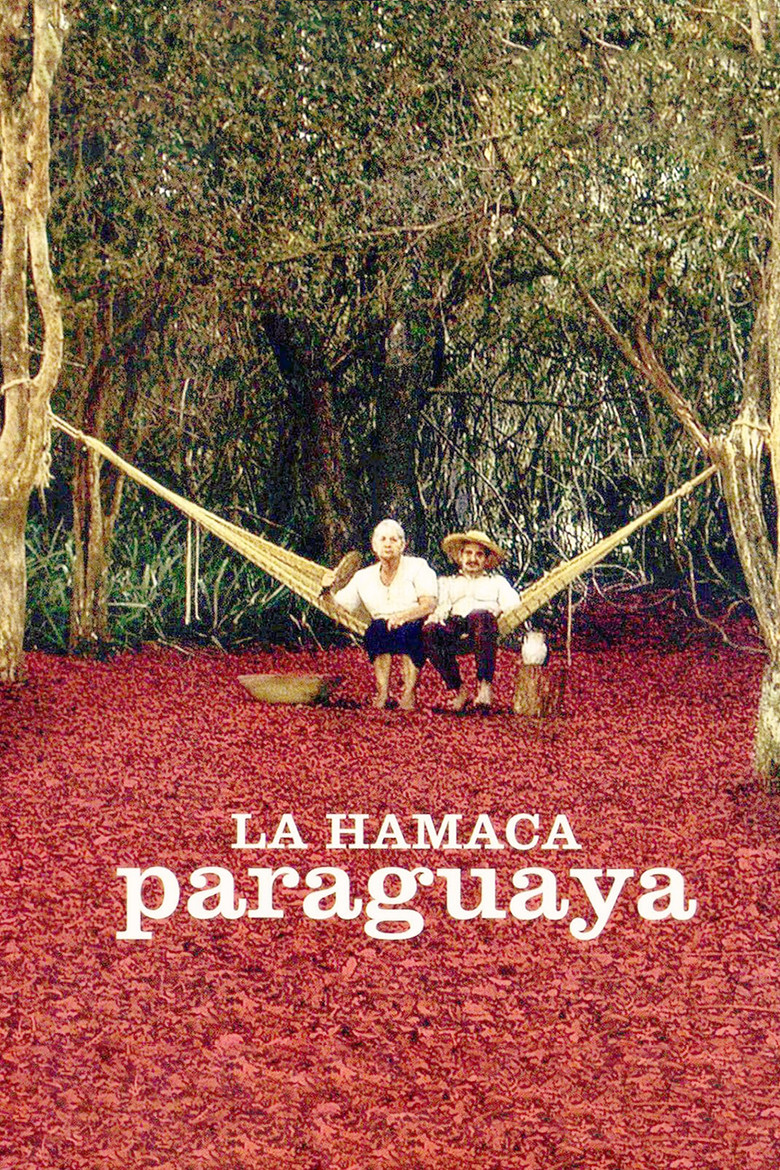
Paraguay's Chaco War of 1932 to 1935 was one of the bloodiest conflicts in twentieth-century South American history, a grinding territorial dispute between Paraguay and Bolivia fought over scrubland so remote and punishing that disease and thirst killed as many soldiers as combat did. It is not, by any stretch, the most documented war in world cinema, which makes it an unusual and potentially rich backdrop for a film. Paz Encina's debut feature, Paraguayan Hammock (2006), circles that conflict from the furthest possible remove: not the trenches, not the command posts, but a small rural holding where an elderly couple sit, wait, and speak quietly to one another while the world outside presses in. The film won the FIPRESCI Prize in the Un Certain Regard section at Cannes, a distinction that placed it firmly in the conversation about world cinema's more contemplative edge, and that recognition drew it to screens well beyond the limited theatrical territory it might otherwise have occupied.
Encina, who also wrote the script, was working very much in the tradition of slow cinema that had been gathering momentum through the late nineties and early 2000s, a lineage that runs from Lisandro Alonso's La libertad to the more internationally distributed end of the art-house market. The production is a genuinely multinational effort, assembled across Argentina, Austria, France, Germany, the Netherlands and Paraguay, with studios including Wanda Visión, Black Forest Films and Lita Stantic Producciones among the backers. That kind of co-production structure is typical of ambitious, lower-budget festival films that could not exist on any single national film fund alone, and it speaks to the degree of institutional faith placed in Encina's vision. The two central figures, the aged couple weathering their long wait, are played by Georgina Genes and Ramón del Río, with Jorge López also appearing in the cast. None of them are internationally familiar names, which is consistent with the film's grounding impulse: this is people as landscape, ordinary lives set against an extraordinary historical moment they can barely see from where they are standing.
Cinematographer Willi Behnisch frames those lives with an aesthetic that is immediately and deliberately distancing. Long, static shots render the hammock, the holding, the couple themselves as elements in a composition rather than subjects of close scrutiny. The light, tropical and hazy, gives the images a quality that is at once beautiful and airless, colour drained down to something wan and still. There is no hurry in the cutting either, with editor Miguel Schverdfinger allowing sequences to breathe to the point where silence becomes the dominant texture of the film's sound world. Composer Óscar Cardozo Ocampo provides music that is sparse and local in character, drawing on Paraguayan folk traditions rather than anything that might feel imported or decorative, which at least gives the film a specific cultural grounding even when everything else seems to retreat from specificity. The overall effect, whether that constitutes a virtue or a liability, is one of studied, almost aggressive patience. For a point of comparison, I also covered Whisky, another understated South American drama from around the same period, and Quo Vadis, Aida?, a very different film about waiting for news of family during wartime, which might serve as an interesting companion piece.
The problem with Paraguayan Hammock is not that nothing much happens.
Plenty of wonderful films are, at bottom, just people talking in one spot. The problem is that it films its people from so far away, and from so high up, that I never once felt let into the room with them. For the best part of eighty minutes we watch an elderly couple on a small Paraguayan holding, waiting for the son they have sent off to war, and the camera keeps them at such a cool remove that they stay strangers from the first frame to the last.
And that is the thing, because a single location need not be a death sentence, far from it. Some of the most gripping films going take place in one spot. 12 Angry Men, which I would call about as close to perfect as cinema gets, pins twelve men in a jury room and never once lets you look away. Phone Booth traps a single man in a glass box and it's still captivating. Even a modest thing like The Platform wrings tension out of four walls. What they all understand, and what this does not, is that confinement works by pulling you closer. Paz Encina does the exact opposite, holding us at arm's length until the waiting becomes our ordeal as much as the couple's.
The frustrating part is that the material deserved so much better. The subject is a relatable, emotive one, a long life shared, a family, the ache of waiting for news that may never be good, and had I been allowed to feel any of it up close, this could have landed hard. Shot the way it is, though, it felt less like watching a story than eavesdropping on two strangers across a field, and I could not make myself care about either of them. One and a half stars, a moving idea filmed at exactly the wrong distance to move me.
Paraguayan Hammock sits in a well-worn tradition of festival cinema that prizes restraint and duration as ends in themselves, and there is an audience for whom that approach will feel entirely honest to the subject. Waiting is, after all, genuinely slow. Grief held at a distance is still grief. But a film that keeps its characters at arm's length for the whole of its seventy-eight minutes is making a significant ask of any viewer, and whether that ask is repaid is the central question here. The Chaco War, and the particular human cost of it measured in the silences of ordinary people, deserves to be told. The manner of the telling is another matter entirely, and a polished but unremarkable festival reception is perhaps the most precise verdict the world has already delivered. Sometimes the right distance to hold a story is close enough to feel it.
Rating: ★½ | Year: 2006 | Watched: 2026-09-18



