
Quo Vadis, Aida? (2020)

Some films don't just stay with you. They haunt you. Jasmila Žbanić's Quo Vadis, Aida? is one of those films. From its opening scenes, you feel the dread settling in, and it never, ever lifts. This is one of the most gut-wrenching viewing experiences I've had in years, and I mean that as the highest possible praise.
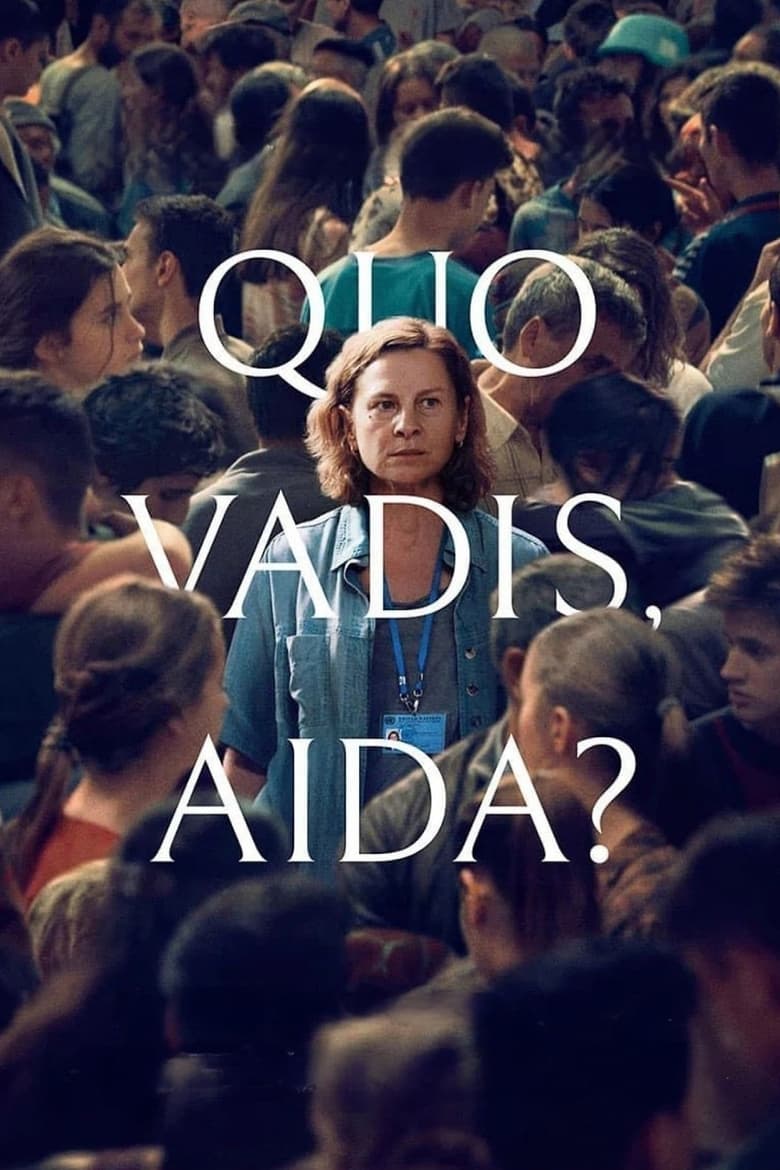
The film is built around Aida, a Bosnian woman working as a UN translator during the Srebrenica massacre, played with astonishing, career-defining force by Jasna Đuričić. What Žbanić does so cleverly is use Aida's specific, agonising position as our way into an almost incomprehensibly vast atrocity. Aida has one foot inside the UN compound and one foot in the terrified crowd outside, and the tension of that position never once lets up. She's trying to do her job, trying to follow protocol, trying to be professional, while simultaneously watching the clock tick down on her own husband and sons. It's a deeply personal lens through which to witness a historical catastrophe, and it works precisely because it grounds the enormous scale of the tragedy in one mother's raw, terrifying reality.
What struck me most is Žbanić's extraordinary restraint. This is a story about one of the worst acts of mass murder in post-war European history, and the film never flinches from that truth, but it also never wallows in it. The violence isn't excessively graphic, and that choice feels not just respectful but strategically devastating. The horror lives in the waiting, the bureaucratic paralysis, the cowardice dressed up as procedure. It's a suffocating, maddening watch. You sit there watching UN officials speak in careful, measured tones while thousands of lives hang in the balance, and the fury that builds in you is almost unbearable.
It reminded me immediately of other films grappling with the international community's catastrophic failures in the face of genocide. The same paralysing institutional rot, the same awful gap between what the peacekeepers were supposed to do and what they actually did. If you've ever watched a film and found yourself furious at a system rather than a single villain, you'll recognise that feeling here. It's a different kind of horror to the kind that comes with a face, and in some ways it's worse.
The performance at the centre of all this is remarkable. Đuričić carries every single frame. There are moments where her face does more work than any line of dialogue could, and you feel every impossible calculation she's making. The rest of the cast are equally committed, and the score swells with a kind of unbearable, creeping dread that mirrors the film's tightening grip on you. The technical craft here is genuinely top-tier across the board.
I've watched a fair few films dealing with political violence and the failure of the world to intervene. I reviewed Jaha's Promise not long ago, a documentary that carries a similar weight of institutional failure and individual resilience, and I'd say these two sit naturally alongside each other as essential, difficult watches. Both demand something of you, and both reward the effort in ways that feel genuinely important.
Quo Vadis, Aida? is not an easy film. It was never going to be. But it is a vital one, a beautifully constructed and deeply dignified piece of filmmaking that honours the victims of Srebrenica while holding a mirror up to everyone who looked away. It's the kind of film that reminds you why this art form matters, why telling these stories matters, and why we cannot afford to forget them.
Four stars. Unforgettable.
Rating: ★★★★ | Year: 2020 | Watched: 2026-07-07
Where to watch
Watch in the UK
Stream: Curzon Amazon Channel · Klassiki
Rent: Apple TV Store · Amazon Video · Google Play Movies · Curzon Home Cinema
Buy: Apple TV Store · Amazon Video · Google Play Movies · Sky Store
Physical: Amazon UK · Zavvi
Watch in the US
Stream: Amazon Prime Video · Klassiki · Amazon Prime Video with Ads
Rent: Apple TV Store · Google Play Movies · YouTube · Fandango At Home
Buy: Apple TV Store · Google Play Movies · YouTube · Fandango At Home
Physical: Amazon US
Affiliate disclosure: Movies With Macca may earn a small commission on purchases or subscriptions started via these links. It costs you nothing extra.



