Operation Dominic (1962)

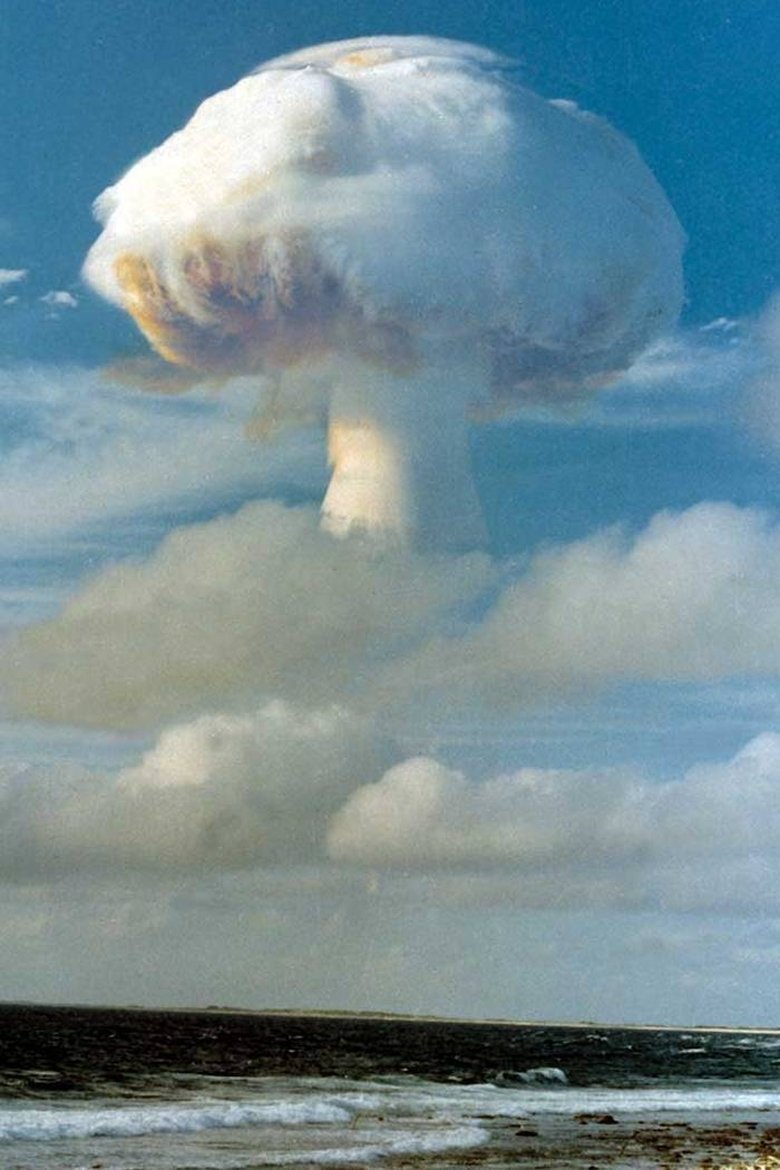
There is a particular horror in hearing mass death described as a job well done. Operation Dominic is essentially an hour of exactly that, and the discomfort never really lets up, even when you know going in what you are dealing with.
This is not a documentary in any ordinary sense. It is a declassified US Department of Defense film, shot in 1962 and withheld from public view until 1998, methodically laying out the American nuclear-testing programme carried out that year across the Pacific. I came to it through the most unlikely of routes: my longstanding habit of hunting down films from the most obscure specks on the map. It counts, on the kind of technicality that governs these lists, as one of only a handful ever made in the United States Minor Outlying Islands. That is not exactly a recommendation, but it is how I ended up here, and I am glad I did, in the slightly queasy way you are glad to have seen something you would not sit through twice.
What stays with you is the tone, or rather the near-total absence of one. This is footage of some of the most destructive devices ever built, weapons designed to kill hundreds of thousands of people in an instant, and it is narrated with the flat, procedural calm of a training video about office supplies. At one point the voiceover pronounces a detonation "a complete success", and it is chilling in a way the film plainly never intends. Apocalyptic force discussed in the bloodless language of a progress report. The dread is not in what it shows so much as in how utterly unmoved it is by what it is showing. A superpower narrating its own capacity for annihilation, without a flicker of doubt or a moment of pause.
There is something almost hypnotic in that. The footage itself carries an awful grandeur: those enormous, silent blooms of fire rising over the Pacific, the shockwaves rippling across the water, the sheer scale of what human beings were then casually detonating in the name of preparedness. I found myself thinking of Decasia: The State of Decay, another film that draws an uneasy fascination from archival images that were never meant to be watched the way we are watching them. The comparison only goes so far, because Decasia is genuinely a piece of film-making and Operation Dominic is something else entirely. But both share that quality of looking at moving images that feel like they belong to a different world, one where the usual human concerns simply do not apply.
As a historical artefact, Operation Dominic is fascinating and oddly watchable. There is a grim pull in the thing. The cold war context gives it a particular weight if you are willing to bring that knowledge yourself, because the film certainly will not bring it for you. It offers no argument, no perspective, no human thread to hold onto. Just fact after fact, test after test, delivered without a pulse. The people involved are functionaries, the weapons are assets, the explosions are outcomes. Nobody on screen appears to feel anything about any of it, and that, more than any individual image, is what lingers.
As film-making, in any sense you would normally use that word, it barely qualifies. I would not point the average viewer towards it expecting to be gripped, or moved in any conventional way. The experience is closer to reading a declassified memo than to watching a film. The craft is minimal, the intention purely institutional, and any meaning you take away is meaning you have had to supply yourself.
And yet I keep coming back to that voiceover, that tone, that complete serenity in the face of destruction. It is, in the end, the most revealing thing about it: not what America was doing in the Pacific in 1962, but how entirely ordinary it felt to the people doing it. Two and a half stars: chilling, historically valuable, and a report first, a film a very distant second.
Rating: ★★½ | Year: 1962 | Watched: 2026-09-03