Lunana: A Yak in the Classroom (2019)

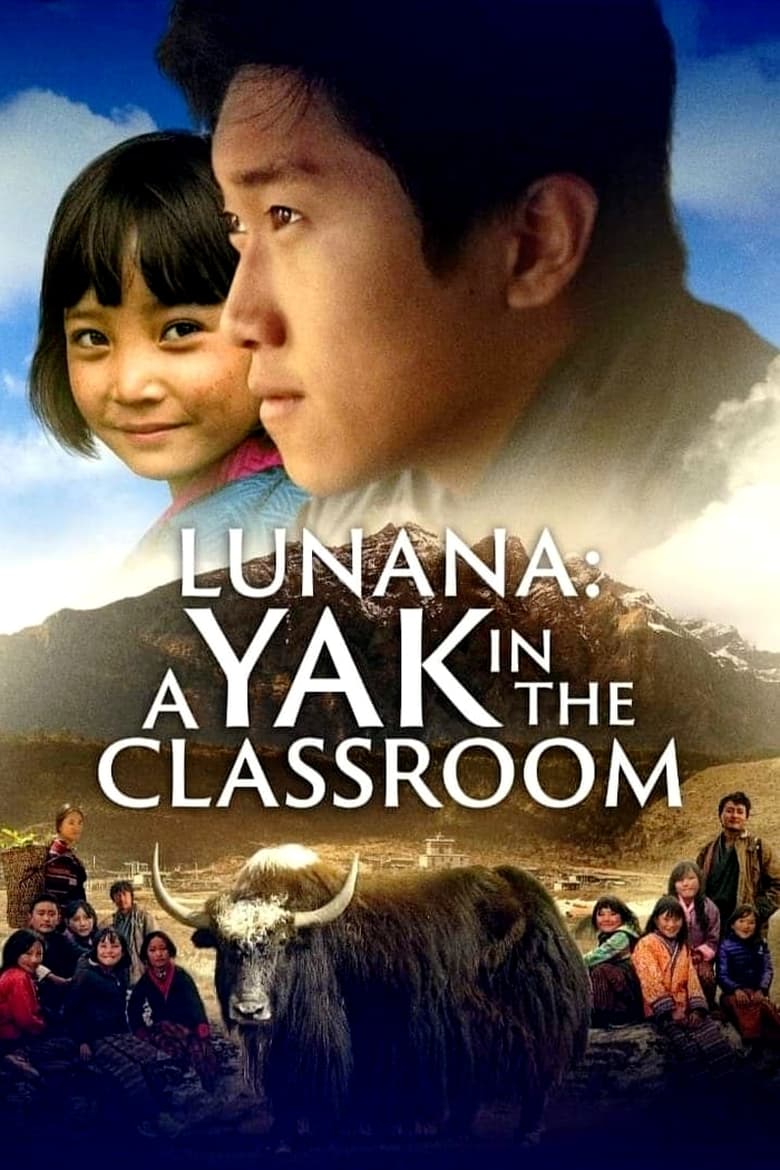
There's something almost perverse about how appealing Pawo Choyning Dorji makes exile look. The premise of Lunana: A Yak in the Classroom sounds, on paper, like a punishment: a young, ambitious teacher yanked away from his city life and dispatched to what is reportedly the most remote school on the planet, deep in the Bhutanese Himalayas. No electricity. No modern comforts. Nowhere to be but here. And yet, within the first half hour, I found myself thinking it didn't sound so bad at all.
Ugyen, played with a beautifully sullen charm by Sherab Dorji, has one goal: get to Australia. He's got dreams of a bigger life, a guitar, and precisely zero interest in honouring his government teaching placement. When that placement turns out to be in Lunana, a village so isolated the journey there is itself a minor epic, his reluctance tips into something close to despair. It's a classic fish-out-of-water setup, and Dorji leans into it without apology. The long, arduous trek up into the mountains, the dawning realisation of just how far from everything Ugyen now is, all of it lands with a gentle, wry humour that keeps things moving even before the story properly begins.
What really sells the picture, though, is the way Bhutan itself looks on screen. I don't want to oversell it, but honestly, the cinematography here is something else. The snow-capped peaks, the sweeping valleys, the quiet, rustic beauty of the village: it's all captured with a clarity that feels almost reverential. You find yourself envying the place even as Ugyen is cursing it. The landscapes do an enormous amount of heavy lifting, and they do it brilliantly. If the film ever flags narratively, a wide shot of the Himalayas tends to sort that out pretty quickly.
It reminded me in some ways of The Next Guardian (2017), another film where a young person wrestles with the pull of modernity against the weight of a tradition rooted in a breathtaking landscape. There's a shared sincerity in how both films treat their communities, an honesty that stops them tipping into postcard sentimentality, even when they come close.
Where Lunana runs into trouble is in the story itself. The interactions between Ugyen and the village children are genuinely sweet, and there are moments of real warmth that earn their place. But the narrative beats are highly predictable. This is, at its bones, a "disillusioned city slicker learns to love the simple life" story, and it does nothing to disguise that. The arc marches steadily toward an inevitable heartwarming realisation, and while there's nothing wrong with a familiar story well told, I kept waiting for a surprise that never quite came. The script opts for comfort over risk, charm over any real thematic depth, and while that's a perfectly valid choice, it does keep the film from becoming something truly memorable.
It's worth saying that "memorable" isn't the only measure of a film. Sometimes a movie earns its place simply by being warm, honest, and nicely made. Lunana is all three. It leaves you with a genuine glow, and in a world of films that strain and shout for your attention, there's something quietly admirable about one that's content to just be lovely.
Three stars. A perfectly serviceable, beautiful-looking fable that doesn't quite reach the heights of its own landscape, but is good company for the journey.
Rating: ★★★ | Year: 2019 | Watched: 2026-07-15
Where to watch
Watch in the UK
Rent: Apple TV Store · Amazon Video · Google Play Movies · Sky Store
Buy: Apple TV Store · Amazon Video · Google Play Movies · Sky Store
Physical: Amazon UK · Zavvi
Watch in the US
Stream: Amazon Prime Video · Amazon Prime Video with Ads
Rent: Amazon Video · Apple TV Store · Google Play Movies · YouTube
Buy: Amazon Video · Apple TV Store · Google Play Movies · YouTube
Physical: Amazon US
Affiliate disclosure: Movies With Macca may earn a small commission on purchases or subscriptions started via these links. It costs you nothing extra.