Liyana (2017)

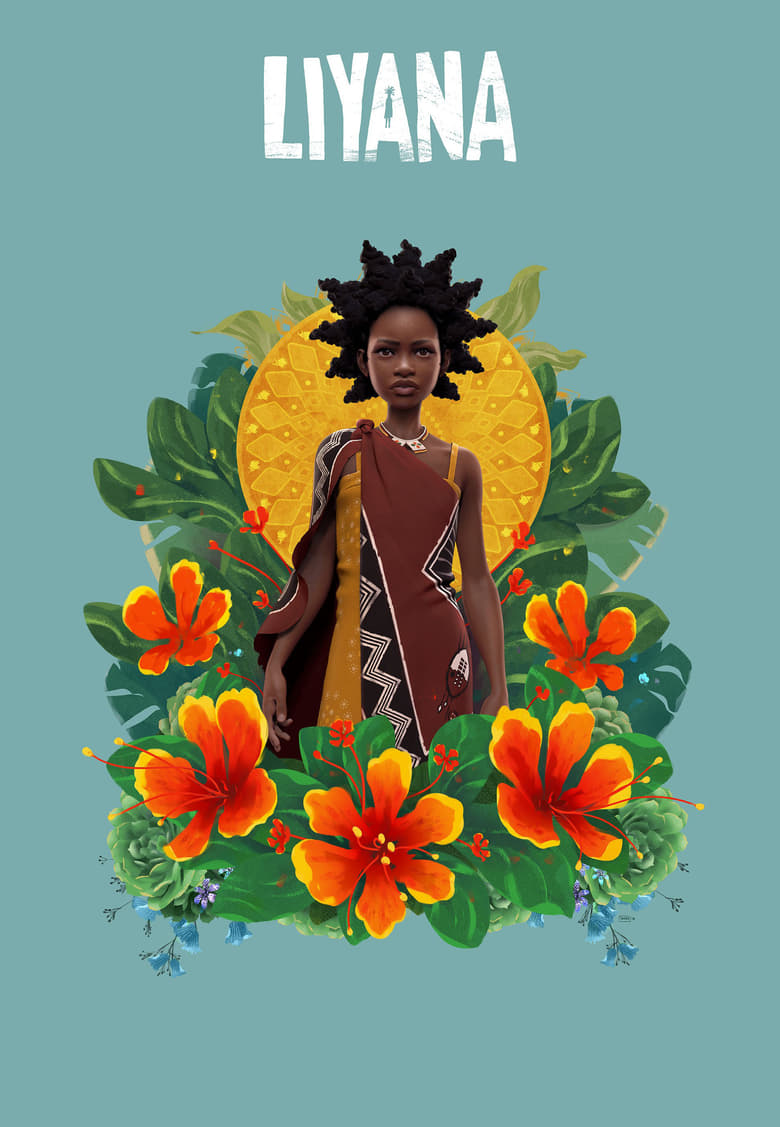
What does it look like when children rewrite their own pain? That question sits at the beating heart of Liyana, and it's the reason this film has stayed with me in a way I didn't entirely expect. There is something genuinely disarming about watching a documentary unfold not through talking heads or archival footage, but through vibrant, picturebook animation. Most docs about vulnerable children keep the camera at a respectful distance, observing quietly. Amanda and Aaron Kopp do something far braver and far more interesting than that.
The setup is deceptively simple. A group of orphaned and vulnerable children in a Swazi village are guided by a local storyteller to build a fairytale from scratch, around a campfire, in real time. The girl at the centre of their invented story is Liyana, a young protagonist who must face extraordinary trials to protect the people she loves. What makes the whole thing crackle with life is the twist that becomes apparent the longer you watch: this isn't a narrative being imposed from the outside. It belongs entirely to these kids. The fictional journey of Liyana is their journey, refracted through imagination and metaphor, and the children know it even if they never quite say so.
Honestly, the way the kids project themselves onto Liyana is the most compelling element of the entire film. As they collectively shape her story, you can see them processing their own very real traumas through her fictional trials. What strikes me most is that the Kopps refuse to let the film pity its subjects. These children are not presented as passive recipients of sympathy. They are given full agency, the pen handed to them, and they use it with remarkable imagination and grace. Fair play to the directors for stepping back and letting the children's voices take absolute centre stage, rather than forcing a Western documentary structure onto their lives. I think of Leitis in Waiting as another doc that handles its subjects with similar dignity and refusal to condescend, and the comparison reflects well on both films.
The execution of the dual narrative is just beautifully done. The transition between the stark, handheld reality of the children in their village and the lush, animated world of Liyana is handled with a lot of care. Every time the story shifts register, from the dust and sunlight of Swaziland to those gorgeous illustrated sequences, it feels earned rather than gimmicky. And I have to give real credit to the audio work, because the soundtrack is absolutely brilliant. It swells and dips perfectly with the rhythm of the children's storytelling, adding emotional weight that makes the animated sequences feel urgent and alive rather than decorative. It's a genuinely impressive piece of audio-visual craft.
If I have any reservations, they are fairly minor. There are moments where the film skirts close to a certain kind of warm, festival-friendly uplift that can smooth over complexity. The children's individual stories are compelling, and occasionally I wanted the film to sit a little longer in the harder, thornier corners of their lives rather than letting the beauty of the animation carry us past them. But that's a relatively small complaint against what is, on the whole, a deeply moving piece of work.
This is a film that proves you don't need a famous narrator or a heavy hand to tell a profound story. The Kopps have made something gorgeous and genuinely engaging that celebrates the resilience of the human spirit and the sheer power of imagination. It doesn't shout. It doesn't lecture. It just sits down beside these children and listens, which turns out to be exactly the right call.
Three and a half stars.
Rating: ★★★½ | Year: 2017 | Watched: 2026-07-21
Where to watch
Watch in the UK
Rent: Apple TV Store
Buy: Apple TV Store
Physical: Amazon UK · Zavvi
Watch in the US
Stream: IndieFlix · IndieFlix Shorts Amazon Channel
Rent: Amazon Video · Apple TV Store · Fandango At Home
Buy: Amazon Video · Apple TV Store · Fandango At Home
Physical: Amazon US
Affiliate disclosure: Movies With Macca may earn a small commission on purchases or subscriptions started via these links. It costs you nothing extra.