Instructions for a Light and Sound Machine (2005)

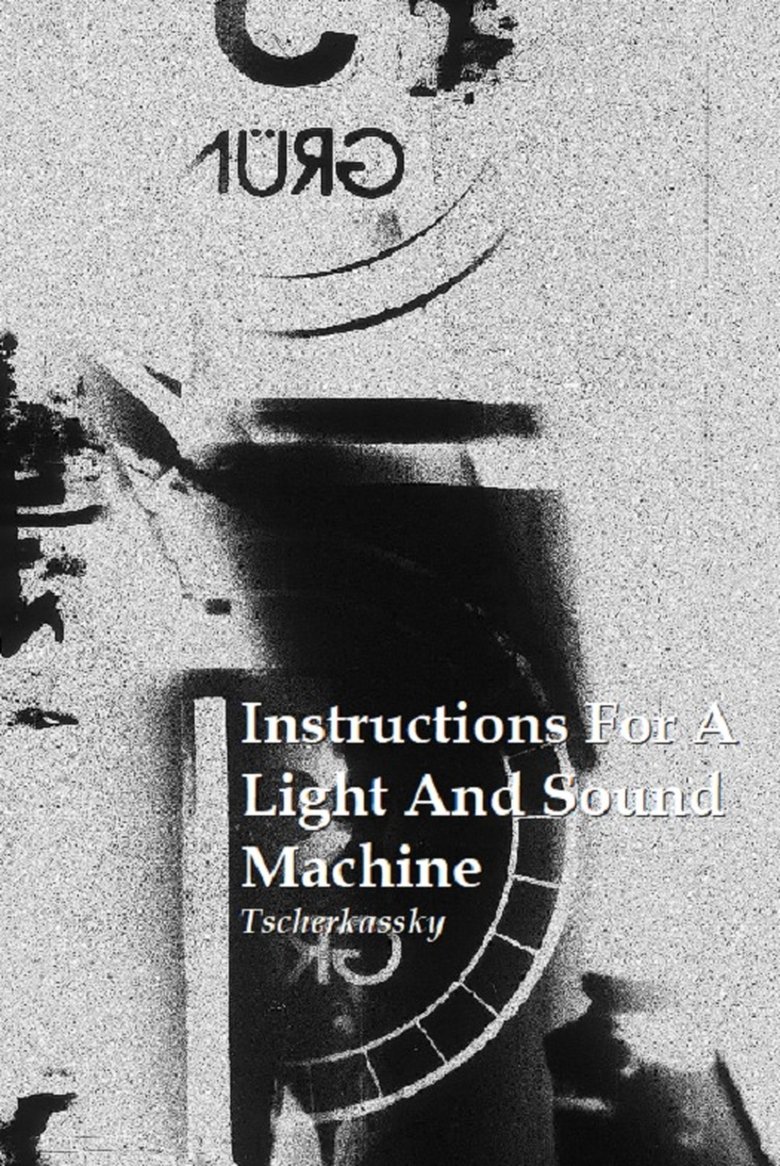
Let me be straight with you: I hated this. And I say that as someone who went in already bracing for a rough time, because Peter Tscherkassky's Instructions for a Light and Sound Machine takes its raw material from one of the greatest films ever made, The Good, the Bad and the Ugly, and proceeds to do something I can only describe as an act of vandalism against it.
I genuinely consider Leone's masterpiece to be one of the finest achievements in the history of cinema. Clint Eastwood, the vast desert landscapes, Morricone's score, that closing three-way standoff. It is immaculate. So when I tell you that Tscherkassky takes direct footage from that film and puts it through a darkroom contact printing process that inverts the negative, turning light to dark and dark to light, strobing it into something resembling a medical emergency rather than a movie, you'll understand why my patience was thin from the off.
The concept, as I understand it, is that this short transforms a Spaghetti Western into a Greek tragedy, subjecting Eastwood's iconic hero to the "gruesome moods" of both the filmmaker and the audience. Fine. That is an idea you can write down on a piece of paper and it sounds provocative and interesting. But there is an enormous distance between a clever concept and a watchable film, and Instructions for a Light and Sound Machine never closes that gap even slightly.
What you actually get is about four and a half minutes of relentless, seizure-inducing strobe effects and inverted imagery, the kind of thing that feels less like cinema and more like a stress test your optician might run on you. There is no narrative. There is no emotional payoff. There is no accessible visual rhythm to hold onto. It is just a wall of chaos, and I found it an absolute chore from the first frame to the last.
Now, I can give Tscherkassky some credit for the craft involved. Working entirely by hand, manipulating physical celluloid in a darkroom without any digital assistance, is genuinely labour-intensive work, and I don't want to pretend otherwise. There is a dedication to the physical medium here that deserves a nod. But dedication is not the same as achievement. A half-star is as low as I go, and that half-star is basically for the manual graft alone, because as an actual viewing experience, this film offers nothing.
What frustrates me most is the way this kind of work gets dressed up in academic language that makes anyone who finds it unwatchable feel like they've simply failed to grasp something. The talk of "deconstructing the cinematic apparatus" and interrogating spectatorship is fine in a lecture hall, but I'm watching a movie, not sitting an exam. Leone's original cinematography is brilliant precisely because it is grounded, composed and purposeful. What Tscherkassky does here strips all of that away and replaces it with noise. It feels less like a dialogue with Leone's work and more like defacing it.
There is a version of avant-garde filmmaking that challenges you in ways that feel worthwhile, that makes you work for something real. This isn't that. This is experimental cinema as pure provocation, as a closed shop for those who already speak the language of structuralist film theory. For anyone else, it's bewildering and thoroughly unpleasant. Some films deliberately unsettle and disturb in ways that feel purposeful, and I can respect that even when it's a difficult watch, but this just left me cold and irritated, with a mild headache.
My advice is simple. Watch The Good, the Bad and the Ugly instead. Watch it twice. Leave it exactly as it is.
Half a star.
Rating: ½ | Year: 2005 | Watched: 2026-07-09
Where to watch
Watch in the UK
Stream: MUBI Amazon Channel · DocAlliance Films
Physical: Amazon UK · Zavvi
Watch in the US
Stream: MUBI · MUBI Amazon Channel · DocAlliance Films
Rent: DocAlliance Films
Buy: DocAlliance Films
Physical: Amazon US
Affiliate disclosure: Movies With Macca may earn a small commission on purchases or subscriptions started via these links. It costs you nothing extra.