Higher Learning (1995)

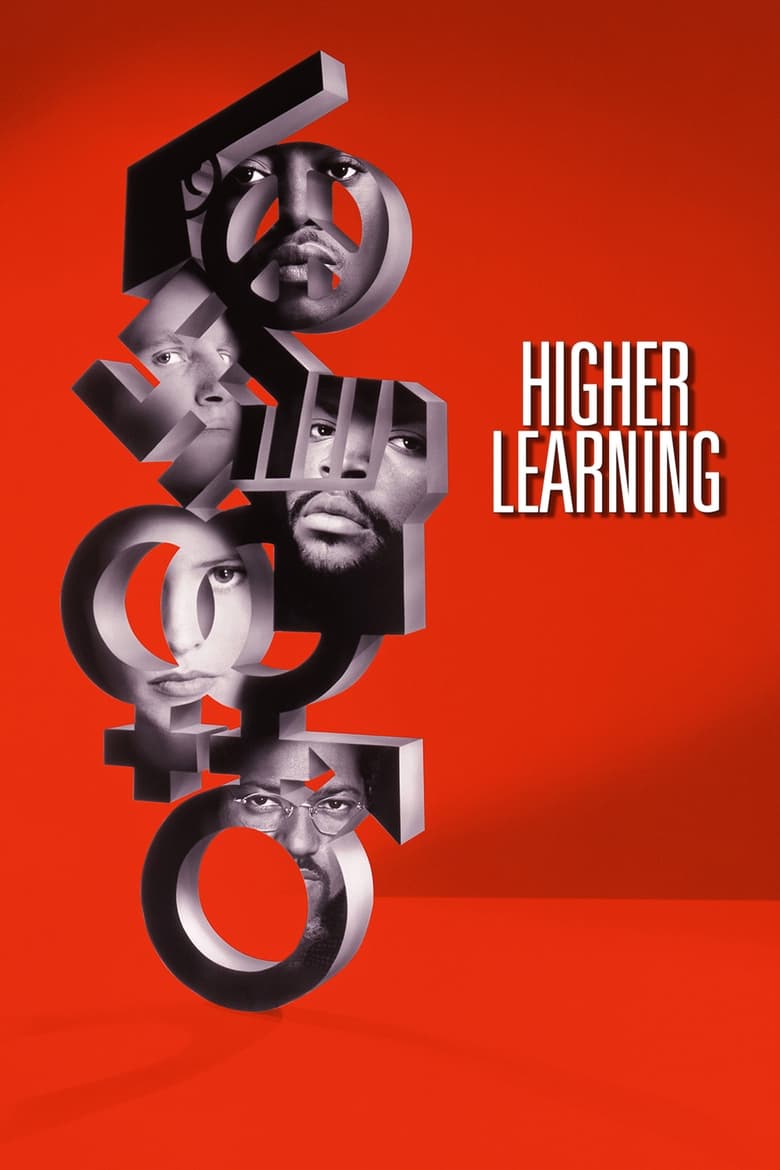
There is a version of Higher Learning that could have been one of the defining American films of the nineties. You can feel it in the best scenes, straining to get out. That it does not quite manage it is genuinely frustrating, because John Singleton was, at his best, among the sharpest chroniclers of race and place that American cinema produced. If you have any doubt about that, I reviewed Boyz n the Hood and the case is watertight. Singleton's debut is a stone-cold classic, and his later work proved those gifts had not faded. Higher Learning, though, catches him somewhere more awkward: a hugely talented film-maker biting off a good deal more than one film can chew.
The setting is a fictional university campus that plainly wants to stand in for America itself, and Singleton is not shy about the ambition. Racism, radicalisation, identity, belonging, the cost of assimilation, the seduction of extremism. All of it is here, spread across a wide sprawl of characters, their stories braided together across a semester. The trouble is that the reach rather outstrips the grasp. There is simply too much crammed in for any single thread to land with full force, and the film keeps cutting away just as something is starting to breathe.
Which is a pity, because the individual pieces are often genuinely strong. Michael Rapaport is the standout, unnervingly good as a lost, drifting young white kid who slowly curdles into something ugly and dangerous. It is the kind of performance that makes you a little uncomfortable in hindsight, not because it is wrong, but because it is so precisely right. For those that trace a character's slow radicalisation from the inside, this is one of the earlier and more underrated examples of the form. You watch the incremental steps and you understand, even as you recoil, how someone arrives there. That is difficult to pull off and Rapaport pulls it off.
Laurence Fishburne, playing a formidable professor who refuses to make things easy for his students or for the audience, proves his range yet again. And there is a real kick in seeing Ice Cube, whom Singleton had launched in Boyz n the Hood, alongside Busta Rhymes, both of them sharper in these early roles than in a fair bit of what came later. The soundtrack, as you would hope from Singleton, is a genuine treat throughout.
But here is the problem. The film cuts between so many stories, the Black athlete finding his footing, the young woman navigating campus life and her own sense of self, Rapaport's slow descent, Fishburne's watchful presence, that the whole keeps coming apart at the seams. There is a leaner, fiercer Higher Learning buried somewhere in this material, one that picked two of these threads and truly dug in. That film might have stood shoulder to shoulder with Singleton's finest. As it is, nothing quite gets the room it deserves.
The film says a great deal without landing any of it quite as hard as it should. The campus-as-America metaphor is so heavily underlined that it stops feeling suggestive and starts feeling schematic. Characters exist to represent positions as much as to be people, and that is a problem in a drama that needs you to feel their stakes viscerally rather than just intellectually understand them.
Even so, I would not write it off. A messy swing from a director this gifted holds more interest than a tidy hit from most, and there is enough here, in Rapaport's performance alone, to make it worth your time. It is the kind of film that leaves you a bit melancholy about what it almost was. Three stars, and a fascinating near-miss from someone who proved, elsewhere, that he had the goods to make it count.
Rating: ★★★ | Year: 1995 | Watched: 2026-08-20
Where to watch
Watch in the UK
Stream: Netflix · Netflix Standard with Ads
Rent: Apple TV Store · Amazon Video · Sky Store
Buy: Apple TV Store · Amazon Video · Sky Store
Physical: Amazon UK · Zavvi
Watch in the US
Stream: Sony Pictures Core Amazon Channel
Rent: Amazon Video · Apple TV Store · Google Play Movies · YouTube
Buy: Amazon Video · Apple TV Store · Google Play Movies · YouTube
Physical: Amazon US
Affiliate disclosure: Movies With Macca may earn a small commission on purchases or subscriptions started via these links. It costs you nothing extra.