Gran Torino (2008)

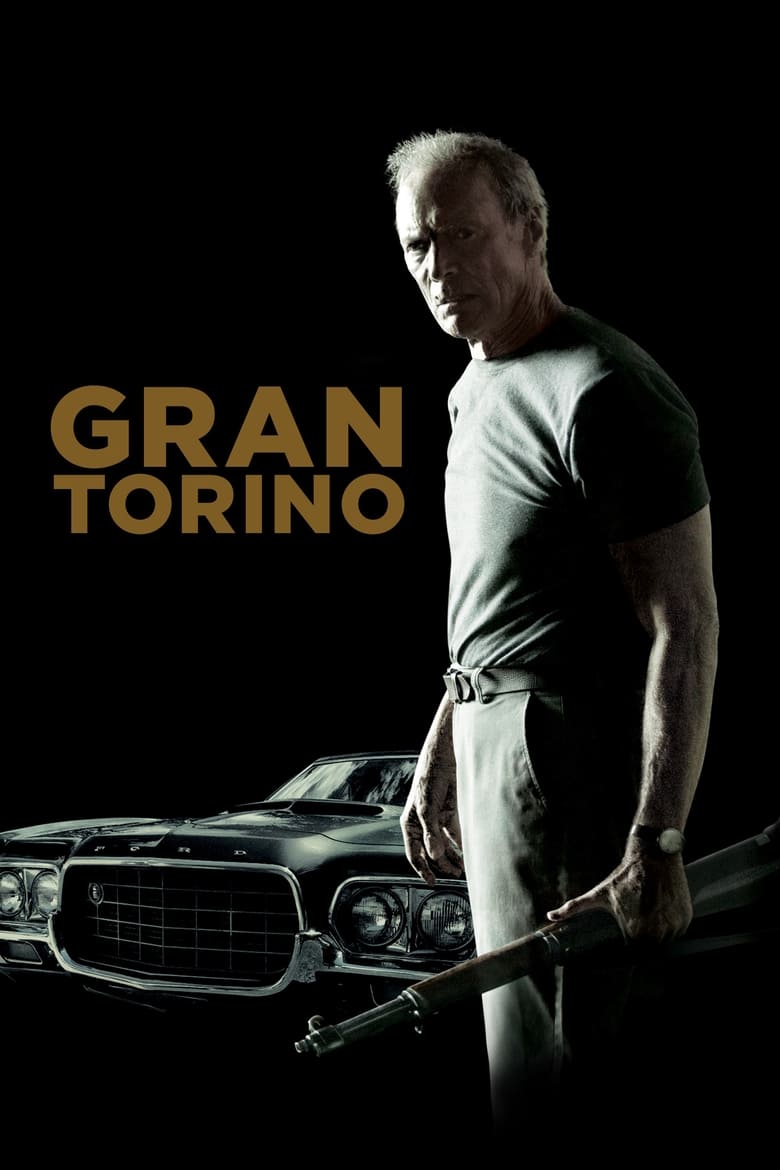
There is a moment early in Gran Torino where Clint Eastwood, snarling on his porch over the barrel of a rifle, looks less like a man than a monument. Some forty years on from the squint and the poncho of The Good, the Bad and the Ugly, still the finest film ever made as far as I'm concerned, he is leaning on all that accumulated iconography and quietly taking it apart. It's a remarkable piece of self-awareness from an actor who has spent the better part of a decade proving he's just as formidable behind the camera as in front of it.
He plays Walt Kowalski, a widowed Korean War veteran stewing in grief and casual racism in a Detroit that has changed entirely around him. Slowly, grumblingly, the Hmong family next door drag him back toward something like decency. That's the shape of it, and yes, you can probably guess where it ends up. The fact that it still lands as hard as it does is a credit to the man at the centre of it.
By 2008, Eastwood the director had nothing left to prove. His run through Mystic River and Million Dollar Baby stands with the strongest late-career work anyone in Hollywood has managed, and Gran Torino has that same unfussy, classical touch. No fuss, no flash, just clean and purposeful filmmaking. It's a character study at its heart, and a fine one, the slow thaw of a hard old man, and it carries far more humour than the film's reputation tends to suggest. Walt is funny, properly funny, and that warmth is what makes the darker turns hit. The score is quietly lovely throughout. And, speaking as a car man myself, that 1972 Gran Torino is an absolutely gorgeous machine. Eastwood carries all of it on those weathered shoulders.
What keeps it from true greatness is, bluntly, almost everyone who isn't him. The supporting players are painfully stiff, and every scene that rests on them sags. Christopher Carley as the persistent young priest tries hard enough, but it's Bee Vang and Ahney Her, as the neighbours who gradually prise Walt open, who struggle most. The warmth those performances need to generate just isn't quite there, and in a film built on the idea that human connection can redeem even the most sealed-off soul, that matters. When Eastwood is on screen, you don't notice. When he's not, or when he's sharing a scene that depends on someone else keeping pace, you notice a great deal.
It's worth comparing this to where he came from. Walt Kowalski rhymes in interesting ways with the characters Eastwood built his legend on: that same laconic menace, that same positioning outside the law and its comforts. I wrote about Unforgiven as a film that used all of that weight and turned it into something genuinely devastating, and Gran Torino is doing something similar, if a touch more sentimental. Where William Munny's arc was unsparing, Walt's is warmer, more redemptive in a conventional sense. That's not a criticism. They're different films with different aims, and both earn their endings.
The self-sacrifice that closes Gran Torino you can see coming from a fair distance. That doesn't stop it working. By the time it arrives, Eastwood has done enough heavy lifting that the emotion is entirely real. The film earns it, even if a stronger ensemble might have made the journey there feel inevitable rather than merely credible.
Four stars, and I'd happily recommend it to anyone. Just turn up for Clint.
Rating: ★★★★ | Year: 2008 | Watched: 2026-08-14
Where to watch
Watch in the UK
Stream: Netflix · HBO Max Amazon Channel · Now TV Cinema · Netflix Standard with Ads
Rent: Apple TV Store · Rakuten TV · Amazon Video · Google Play Movies
Buy: Apple TV Store · Rakuten TV · Amazon Video · Google Play Movies
Physical: Amazon UK · Zavvi
Watch in the US
Rent: Amazon Video · Apple TV Store · Google Play Movies · YouTube
Buy: Amazon Video · Apple TV Store · Google Play Movies · YouTube
Physical: Amazon US
Affiliate disclosure: Movies With Macca may earn a small commission on purchases or subscriptions started via these links. It costs you nothing extra.