
Get Out (2017)

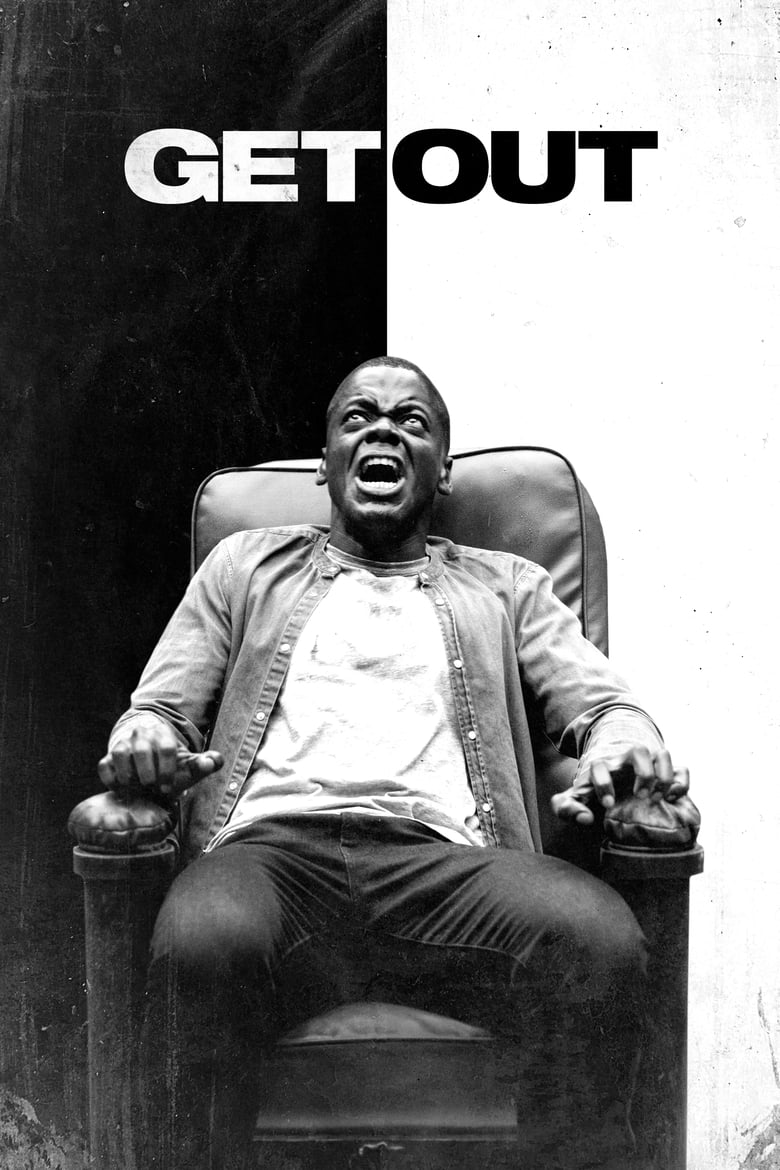
Jordan Peele's debut feature arrived in early 2017 with the kind of cultural momentum that very few horror films ever generate. Made for a reported budget of around 4.5 million dollars under the Blumhouse Productions model (low cost, creatively unencumbered, share in the upside if it lands), Get Out went on to gross well over 250 million dollars worldwide and earned Peele the Academy Award for Best Original Screenplay, making him the first Black screenwriter to win that particular prize. That is not a small footnote. Before Get Out, Peele was known primarily as one half of the sketch comedy duo Key and Peele, whose Comedy Central series had already proven he had a sharp, satirical eye for race in America. Translating that sensibility into feature horror, and doing so with the confidence the film displays in its opening passages, was a genuine creative leap.
Peele wrote the screenplay himself, channelling a lineage of domestic-paranoia horror, films in which the home or the welcoming social gathering turns out to be the most dangerous place imaginable. The setup is economical and effective: Chris Washington, a young Black man played by Daniel Kaluuya, accompanies his white girlfriend Rose (Allison Williams) to spend a weekend with her family at their large upstate estate. The film does not wait long before establishing its particular flavour of unease, and the writing earns real credit for grounding that unease in recognisable social dynamics before anything visibly supernatural occurs. The production was handled through Peele's own Monkeypaw Productions alongside Blumhouse and QC Entertainment, and the collaborative relationship between those companies gave Peele an unusual degree of authorial control for a first-time feature director.
The cast assembled around Kaluuya is polished and purposeful. Kaluuya himself had already built a strong reputation in British television, most notably in the Black Mirror episode "Fifteen Million Merits", and his particular skill is communicating interior states through restraint rather than expression. It is the kind of screen acting that rewards close attention. Catherine Keener and Bradley Whitford play Rose's parents with a studied, slightly-too-hospitable warmth that gives the film much of its early discomfort, and Caleb Landry Jones as Rose's brother adds a different and more volatile texture to the family dynamic. For a companion piece on a horror film that similarly wrings its tension from what is left unspoken and unseen, see also Pontypool, which manages an impressive amount with almost no budget and a single location.
Cinematographers Toby Oliver and Denson Baker give the film a clean, composed look that sits deliberately at odds with the genre expectations of horror. The estate sequences in particular are lit with an almost catalogue brightness, all sharp greens and warm interiors, which makes the few moments where that visual grammar is broken feel genuinely unsettling. The colour work is controlled and consistent throughout. Composer Michael Abels, working on his first major feature score, produced something quite distinctive: the opening title sequence is accompanied by a piece that draws on African choral traditions in a way that immediately signals the film's thematic preoccupations, and the score throughout blends orchestral unease with those more unusual tonal textures. Editor Gregory Plotkin, who had previously worked on several Blumhouse productions including the Paranormal Activity sequels, cuts the film with a patience in its first half that is fairly unusual for the genre, allowing scenes to breathe and discomfort to accumulate. I also covered Dressed to Kill, another thriller in which the editing rhythm does a great deal of the tension's heavy lifting, if you want to read something on how cutting shapes dread.
Get Out had every ingredient it needed to be a really good film, and for me it fell just short, mostly on the writing and the direction.
It sets its premise up well: a young Black man, Chris, travels with his white girlfriend to meet her family for the first time, understandably a little on edge, and the film does a fine job of making you uneasy long before anything overtly strange happens. A tense encounter with the police on the way, a welcome that is a shade too warm, Black staff on the estate whose manner is subtly off. The disquiet is nicely built.
The trouble, for me, is that it shows its hand far too soon. Without giving anything away, my wife and I both clocked exactly where it was heading within about fifteen minutes, off a single early detail the film would have been far better off drip-feeding us rather than laying out so plainly. From there, a good deal of the tension leaked away, because we were no longer wondering what was going on so much as waiting for the film to catch up with what we had already guessed. A thriller like this lives or dies on you not being three steps ahead of it, and we were.
None of which is to say it is without pleasures. Daniel Kaluuya is superb in the lead, doing a great deal with a held expression and a slowly rising dread, and the ensemble around him, Catherine Keener, Marcus Henderson and Betty Gabriel among them, is excellent throughout. There is one standout set-piece that gets right under your skin, the social commentary running beneath it all is sharp and pointed, and even its later reveals, guessable or not, rest on a clever and thoroughly nasty idea.
Where it lost me for good was the ending, which struck me as both too neat and oddly abrupt, tying the whole thing off in a way that left far too many loose threads flapping.
For a film this widely adored I am plainly something of an outlier, and I do understand why people love it. But between the telegraphed twists and that rushed finish, it landed for me as a good film that ought to have been a great one. Three stars, all the makings of something special, let down by a script that could not quite keep its own secrets.
Get Out sits in an interesting position in recent film history: a genre picture that was received as a cultural event, discussed as much in think-pieces about American race relations as in horror circles, and whose reputation has only grown in the years since. Whether that weight of expectation helps or hinders a first viewing rather depends on the viewer. The social commentary is pointed and arrives from a genuine place, Kaluuya's performance is one of the stronger lead turns in recent horror, and Peele's subsequent work, particularly Us and Nope, suggests the ambition on display here was not a one-off. For those interested in where prestige horror has been heading in this decade, I also wrote about The Assistant, another film that builds its unease quietly through social observation rather than conventional scares, and for something completely different in tone from the same year, see Ryuichi Sakamoto: CODA. Get Out is a film that clearly knows what it wants to say, and largely knows how to say it. Whether the script keeps its own counsel well enough to sustain the ride is, as you have just read, a rather more open question.
Rating: ★★★ | Year: 2017 | Watched: 2026-09-27
Trailer
▶ Watch the official trailer for Get Out (2017) on YouTube
Where to watch
Watch in the UK
Stream: Amazon Prime Video · Sky Go · Now TV Cinema · Amazon Prime Video with Ads
Rent: Apple TV Store · Rakuten TV · Amazon Video · Google Play Movies
Buy: Apple TV Store · Rakuten TV · Amazon Video · Google Play Movies
Physical: Amazon UK · Zavvi
Watch in the US
Stream: fuboTV · Peacock Premium · YouTube TV · FXNow
Rent: Amazon Video · Apple TV Store · Google Play Movies · YouTube
Buy: Amazon Video · Apple TV Store · Google Play Movies · YouTube
Physical: Amazon US
Affiliate disclosure: Movies With Macca may earn a small commission on purchases or subscriptions started via these links. It costs you nothing extra.



