
The Assistant (2019)

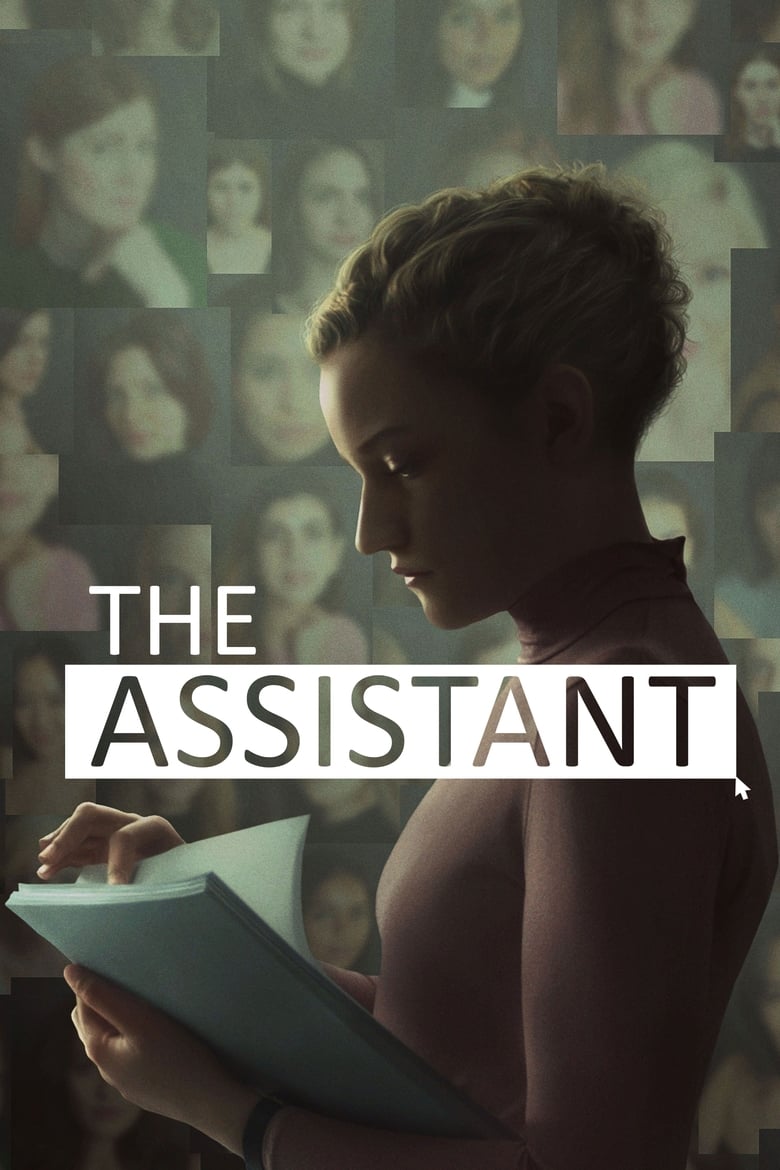
Released in late 2019 and acquiring a wider profile in early 2020, The Assistant arrived at a particular cultural moment. The Harvey Weinstein scandal had broken in 2017, the Me Too movement had reshaped public conversation around workplace power, and the film industry was grappling, publicly if not always honestly, with the systemic structures that had allowed predatory behaviour to flourish for decades. Writer-director Kitty Green's film is not a dramatisation of any specific case, but its setting, a gleaming New York film production office run by an invisible, never-named mogul, makes its target clear enough. It is, in that sense, less interested in the man at the top than in the machinery around him: the schedules, the errands, the phone calls smoothed over, the quiet administration of a corrupt enterprise.
Green came to the project from documentary. Her previous features, including Ukraine Is Not a Brothel (2013) and Casting JonBenét (2017), established her as a filmmaker drawn to institutional power and the ways ordinary people accommodate themselves to it. That documentary instinct is visible throughout The Assistant: the film was produced on a modest budget by Forensic Films, Symbolic Exchange, and Bellmer Pictures, and it runs a spare 88 minutes. Green also edited the film herself, alongside Blair McClendon, and the cutting reflects her documentary sensibility, patient and observational, staying with mundane tasks long past the point of comfort. It is worth noting that Green wrote, directed, and co-edited here, a level of creative control that is unusual and that shapes the film's tempo as a deliberate, fully owned choice rather than an accident of the edit. For a companion piece on the kind of observational, real-world filmmaking that similarly refuses to look away from unglamorous labour, see also Jiro Dreams of Sushi.
The film rests almost entirely on the shoulders of Julia Garner, who plays Jane, the junior assistant whose single working day we follow from before dawn to late evening. Garner was, by this point, best known for her Emmy-winning work in Ozark, and she brings to the role a quality of watchful containment that suits the material: Jane is required, professionally and socially, to absorb rather than react. Matthew Macfadyen appears in a pivotal scene as the company's HR officer, and his brief, polished but unremarkable performance functions less as character study than as a demonstration of how institutions police themselves. Makenzie Leigh and Kristine Froseth appear in smaller roles, and Jonny Orsini rounds out a cast that Green uses largely as furniture around Garner, faces and voices that frame Jane's isolation. I also reviewed another film from around this period that deals, at a different angle, with marginalised people working within systems that were never built for them: The Watermelon Woman is worth a read alongside this one.
Cinematographer Michael Latham shoots the film in close, institutional interiors, fluorescent-lit offices, grey corridors, a conference room that feels slightly too large for the people in it. The palette is deliberately draining: cool whites, dull neutrals, the kind of light that flattens rather than illuminates. There is very little camera movement that announces itself, which is itself a choice, keeping the audience as still and hemmed-in as Jane. Tamar-kali's score is sparse and low, more ambient texture than melody, the kind of sound design that sits just beneath conscious attention and contributes to a persistent, low-grade unease. The craft throughout is sober and considered, film-school precise, which is either a strength or a problem depending on what you want the film to do to you.
I can see precisely what The Assistant is reaching for, and part of me admires it, but there is no getting round how painfully slow I found it.
Kitty Green's 2019 drama follows a single day in the working life of Jane, a junior assistant to a powerful and never-named film mogul, and its entire method is restraint: no big confrontations, no speeches, just the slow accretion of small and deadening office tasks.
The idea underneath is a strong one. By keeping the abuse, and the powerful man himself, almost entirely off screen, Green turns the film into a study of complicity instead, of the assistants and enablers who keep a rotten operation running while assuring themselves it is none of their concern. Julia Garner is nicely understated in the lead, doing a great deal with a face that is mostly required to absorb and stay silent, and I can well believe the whole thing lands hard for plenty of people. It just did not land for me.
Admiring the intent turned out not to be the same as being held by it, and held by it I mostly was not. The film is so muted and so deliberately uneventful that it tipped over, to my mind, from understated into inert. I nodded off twice and needed the best part of three days, and a fair bit of rewinding, before I got to the end of an 87 minute film.
It is fairly predictable, too, and for all its craft it does not add much to a subject recent cinema has already worked over thoroughly. Two and a half stars: capably made and decently acted, but too slow and too familiar to rise above average.
The Assistant occupies an honourable but tricky position: a film that knows exactly what it wants to do and does it with discipline, yet whose method may leave some viewers outside the experience rather than inside it. Whether the studied restraint reads as controlled or simply cold is, genuinely, a matter of what you bring to the room. Films that work through accumulation and absence rather than event have a long and respectable tradition, and there is something to be said for a drama that refuses easy catharsis on a subject the industry is often tempted to fictionalise in more flattering ways. For those interested in how institutional silence gets dramatised in British cinema, Let Him Have It makes for an interesting, if very different, companion. Green's film is a measured piece of work about the cost of looking away. The question is whether watching it feels like understanding or simply waiting.
Rating: ★★½ | Year: 2019 | Watched: 2026-09-12
Trailer
▶ Watch the official trailer for The Assistant (2019) on YouTube
Where to watch
Watch in the UK
Stream: Amazon Prime Video · MUBI · BFI Player · BFI Player Amazon Channel
Rent: Apple TV Store · Rakuten TV · Amazon Video · Google Play Movies
Buy: Apple TV Store · Rakuten TV · Amazon Video · Google Play Movies
Physical: Amazon UK · Zavvi
Watch in the US
Stream: Hulu · Netflix · Netflix Standard with Ads
Rent: Amazon Video · Apple TV Store · Google Play Movies · YouTube
Buy: Amazon Video · Apple TV Store · Google Play Movies · YouTube
Physical: Amazon US
Affiliate disclosure: Movies With Macca may earn a small commission on purchases or subscriptions started via these links. It costs you nothing extra.



