Dao (2026)

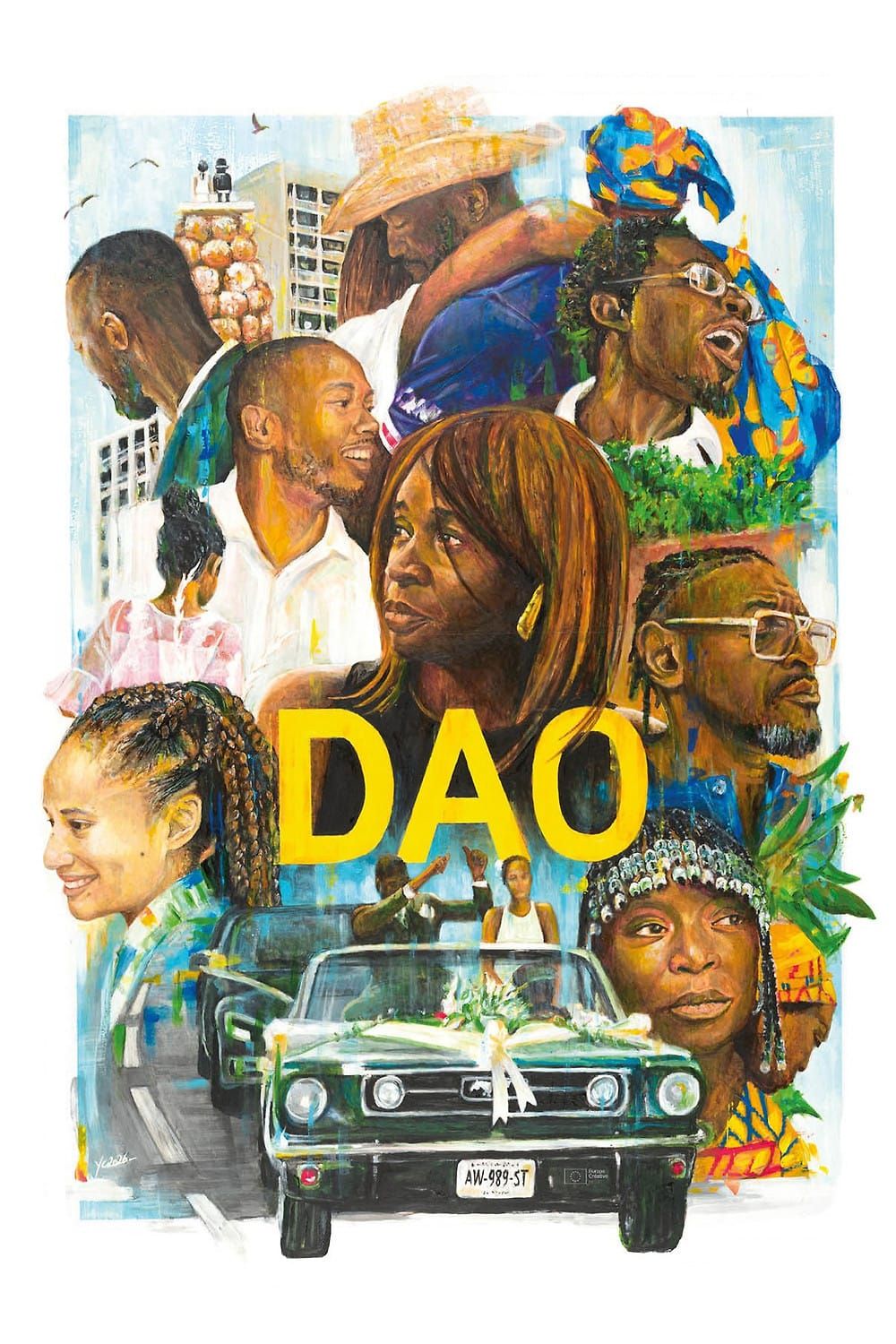
How on earth do you tackle a film like Dao. Alain Gomis's sprawling, searching family epic is the sort of thing that resists a tidy write-up, and I caught it at the BFI London Film Festival knowing roughly nothing about where it was going to take me. In the end I admired a great deal of it and was frustrated by just as much, and I come down at two and a half stars, with the nagging sense of a stronger film buried somewhere inside this one.
It opens in a register that feels almost like meta-cinema, a film partly about its own making, and my mind went straight to Mohsen Makhmalbaf and the gorgeous hall of mirrors of Salaam Cinema, with its movie about making a movie, and the games that 1001 Frames would later play. Dao reaches for that same self-aware, free-flowing energy early on, and for a while it is genuinely intriguing to watch it feel out its own shape.
From there it broadens into something much larger. This is a film about life and death, and specifically about living as a Black person in France, the child of immigrants, caught between worlds and inheritances. It moves between a wedding in France and a commemorative ceremony in Guinea-Bissau, two celebrations woven together so that joy and grief, memory and transmission, keep bleeding into one another. Katy Correa anchors it as Gloria, travelling home to mark her late father, while D'Johe Kouadio's Nour prepares to marry, and around them Gomis builds a teeming, generous portrait of a family and of life in general, the way it ebbs and flows and carries the past along with it.
When it works, there is real feeling here, and an unforced sense of lived-in truth. The trouble is the length. At over three hours, Dao is a wildly ambitious runtime for a film built on this kind of loose, improvisatory, raw and low-budget texture, and that scale ends up working against it. What should feel expansive instead feels drawn out, and long stretches sag where they ought to deepen, until the accumulation of moments starts to blur rather than build.
By the closing stretch I found, to my slight disappointment, that I had not been especially moved, which for a film reaching so openly for the big questions of life, death and belonging is the one thing it really could not afford. Two and a half stars. There is a rich, soulful and distinctive piece of cinema in here, and I respect its reach enormously, but I kept wishing it were half as long. Trimmed to a tighter, fiercer shape, this could have been something special. As it stands, Dao is easier to admire than to love.
Related on Movies With Macca
More from Country Guinea Bissau: Conakry (2013)
More from the 2020s: All That's Left of You (2025), The Whale (2022), Look Back (2024)
More drama: I Will Be Alright (2026), White Musk (2026), FarEye (2026)