Come and See (1985)

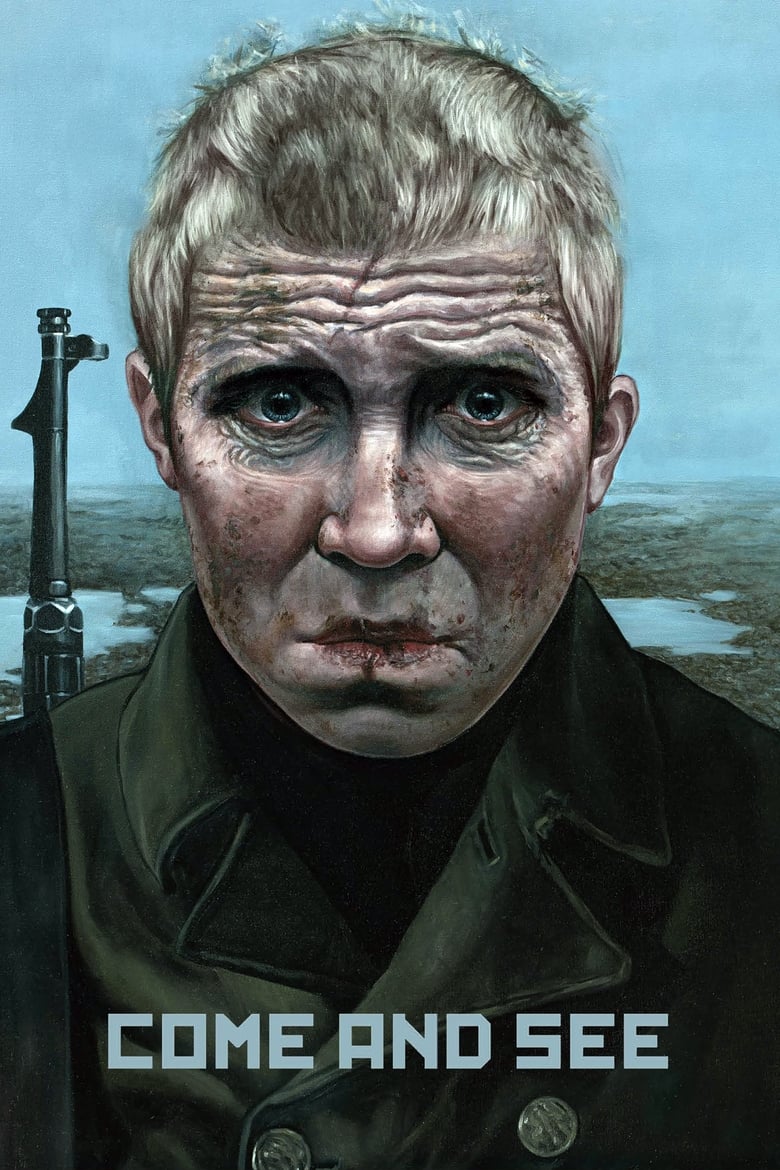
There's a particular kind of pressure that comes with sitting down to watch a film that half your friends have handed a perfect score. Scrolling through Letterboxd and seeing Elem Klimov's 1985 war epic sitting proudly as one of the highest-rated films of all time, wave after wave of five-star and four-and-a-half-star reviews flooding my feed, does something strange to the viewing experience before a single frame has played. It raises the stakes in a way that almost guarantees a complicated reaction. And complicated is exactly what I got.
Let me be straight with you: Come and See is a monumental piece of filmmaking. I'm not here to dismiss it or be contrarian for the sake of it. But I also can't sit here and pretend I felt the full force of that five-star consensus, because I didn't. Four stars, absolutely. A film I deeply respect. But the pinnacle of all cinema? That's where I have to gently, respectfully part ways with the crowd.
What Klimov and his team pull off on a technical level is genuinely staggering. The cinematography is stark and unforgiving, perfectly calibrated to capture the mud-soaked, godless horror of the Eastern Front. Every frame feels wrung out, exhausted, like the landscape itself has given up hope. But it's the sound design that really gets under your skin. The sequence where the protagonist suffers hearing damage is one of the most effective uses of audio perspective I've encountered in any war film, pulling you so completely inside his fractured headspace that you feel the disorientation in your chest. It's the kind of craft that reminds you what the medium is actually capable of.
And then there's Aleksei Kravchenko. I genuinely didn't know what to expect from a relatively unknown young actor carrying something this heavy, but his performance as Flyora is astonishing. Watching his face age by what feels like decades over the course of a few hours of screen time isn't just good acting, it's the entire emotional architecture of the film. Without him, the whole thing falls apart. With him, it becomes almost unbearably real.
Where it loses me, though, is in its absolute, unrelenting commitment to despair. And I want to be careful here, because I understand that's the point. Klimov wasn't making entertainment. He was making a document of atrocity, an unflinching record of what the Nazis did to Belarus, and he wanted it to hurt. I respect that intention completely. But there's a difference between a film that breaks you open and one that simply wrings every last drop of feeling out of you until you're left hollow and knackered on the sofa. Come and See lands firmly in the second camp for me.
It shares that quality with films like Requiem for a Dream or The Pianist: technically superb, critically celebrated, and almost impossible to recommend with genuine enthusiasm. I can acknowledge their importance without pretending I'd ever willingly put myself through them again on a Saturday evening. Some films earn their brutality. Come and See absolutely earns its. But earning it and enjoying it, or even finding it nourishing, are different things entirely.
It's worth noting that Soviet and Eastern European cinema has a rich tradition of visually and philosophically ambitious filmmaking that can be just as demanding in different ways. I reviewed The Color of Pomegranates (1969) and found it fascinating precisely because it challenges you cerebrally rather than emotionally. Come and See challenges you on a level that feels almost physiological.
Four stars. That feels honest. Come and See is a vital, historically significant work of art, the kind of film that exists to bear witness and to make sure you bear witness too. Klimov crafted something visually and sonically extraordinary, anchored by one of the great screen performances of the 1980s. It succeeds completely at its own grim objectives. But it's also an endurance test that demands a degree of emotional masochism I'm not entirely sure I possess, and I'm comfortable admitting that. Admire it, yes. Acknowledge it, absolutely. Just don't expect to feel anything other than hollowed out when the credits roll.
Rating: ★★★★ | Year: 1985 | Watched: 2026-07-14
Where to watch
Watch in the UK
Rent: Apple TV Store · Amazon Video
Buy: Apple TV Store · Amazon Video
Physical: Amazon UK · Zavvi
Watch in the US
Stream: Criterion Channel
Rent: Amazon Video · Apple TV Store · Google Play Movies · YouTube
Buy: Amazon Video · Apple TV Store · Google Play Movies · YouTube
Physical: Amazon US
Affiliate disclosure: Movies With Macca may earn a small commission on purchases or subscriptions started via these links. It costs you nothing extra.