
Ben Fogle and the Buried City (2023)

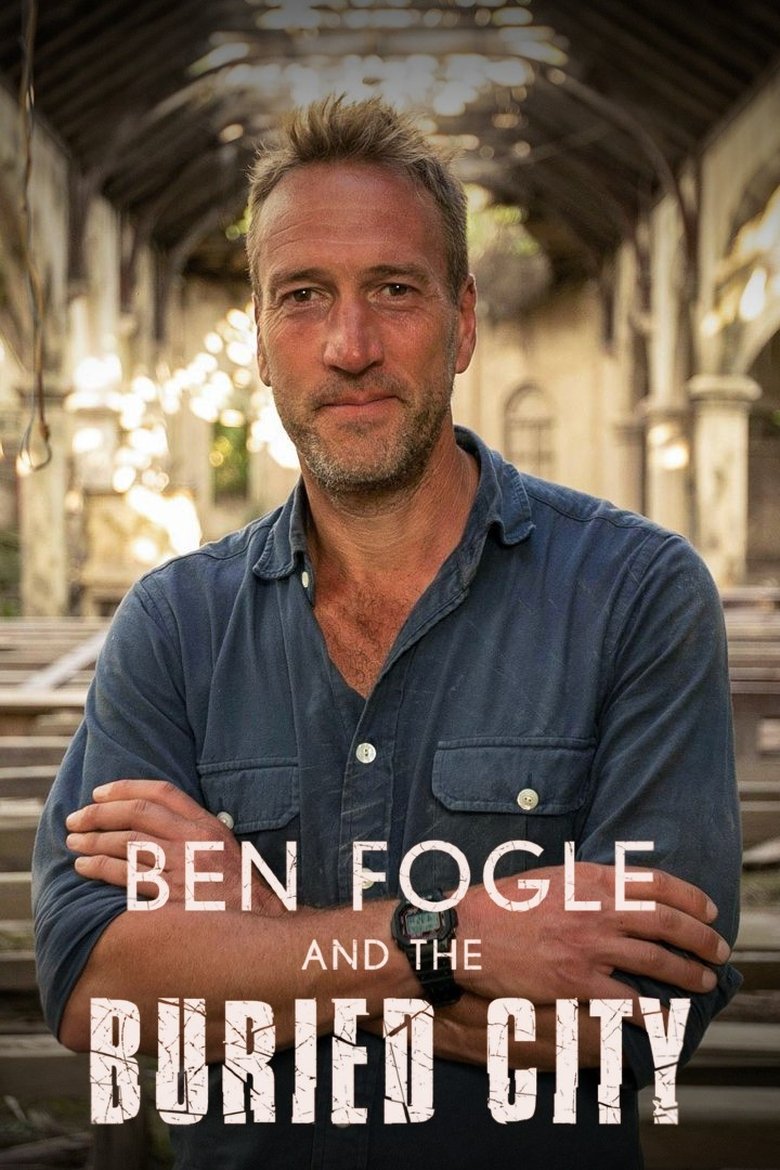
There's a street in Plymouth, Montserrat, buried under metres of volcanic ash and debris, where you can still make out the rooftops of houses that were someone's home. That image stays with you long after the credits roll on Ben Fogle and the Buried City, and it's exactly the kind of haunting detail this documentary earns rather than exploits. This is a film that understands what it has on its hands and, for the most part, knows what to do with it.
The story at the centre of all this is genuinely extraordinary. In the 1990s, a volcanic eruption on the small Caribbean island of Montserrat buried Plymouth, its capital city, beneath ash and pyroclastic flows. The whole southern half of the island was rendered uninhabitable. Thousands of people were displaced, many of them permanently. Plymouth now sits in an exclusion zone, slowly being reclaimed by the earth, earning its comparison to Pompeii. It's one of the most dramatic natural disasters in recent Caribbean history, and it remains remarkably little known. The fact that it doesn't get the attention it deserves makes a film like this feel genuinely necessary.
Ben Fogle is your guide through all of this, and he's a good fit. He brings warmth and genuine curiosity rather than performative emotion, and he knows when to step back and let the people who actually lived through this do the talking. And those people are the film's greatest asset. The survivor testimonies here are raw and deeply human, full of grief and resilience in equal measure. These aren't polished talking-head soundbites; they're the words of people who lost homes, communities, and in some cases everything they had built. Combined with archival footage from before and during the eruption, there's a visceral immediacy to the whole thing that no reconstruction or dramatisation could have achieved. I was reminded of the way Lessons of Darkness (1992) uses real images of catastrophe to create something that feels almost surreal in its power, though this film is warmer and more people-centred in its approach.
The production values are impressive for a television documentary. The cinematography makes the most of the eerie, ash-choked ruins, finding beauty in the desolation without ever making it feel decorative. The sound design deserves a particular mention: the silence of the abandoned streets is used to real effect, giving you a felt sense of absence. The editing weaves archival footage with contemporary interviews and present-day footage of the ruins cleanly and respectfully. It never sensationalises the tragedy, but it doesn't sand down the emotional weight either. That's a harder balance to strike than it sounds.
If you want a broader look at Montserrat beyond the disaster itself, I'd also point you towards Montserrat: Emerald of the Caribbean (2007), which gives the island its fuller due as a place with a rich identity beyond the eruption. The two films sit well together.
Now, the flaw. At around 90 minutes (longer once you factor in ad breaks, if you're watching it as broadcast television), the film occasionally loops back on itself. Points that had already landed clearly are revisited, and there are stretches where the momentum stalls. A tighter 60-minute cut would have served the material better without losing any of the substance. It's not a fatal problem, but there are moments where you'll find yourself thinking the editor could have been a little more ruthless, and you won't be wrong.
Three and a half stars.
That quibble noted, this is still a really good documentary. Moving, informative, and beautifully made, it brings long-overdue attention to a chapter of Caribbean history that deserves a much wider audience. The powerful firsthand testimonies and the striking visuals of a ghost city frozen in time are more than enough to carry it. If you have any interest in natural disasters, in stories of displacement and survival, or simply in a corner of the world that rarely gets its moment in the spotlight, this is well worth your time. Just be prepared to do a little forgiving of the structure along the way.
Rating: ★★★½ | Year: 2023 | Watched: 2026-06-01



