Artemide’s Knee (2008)

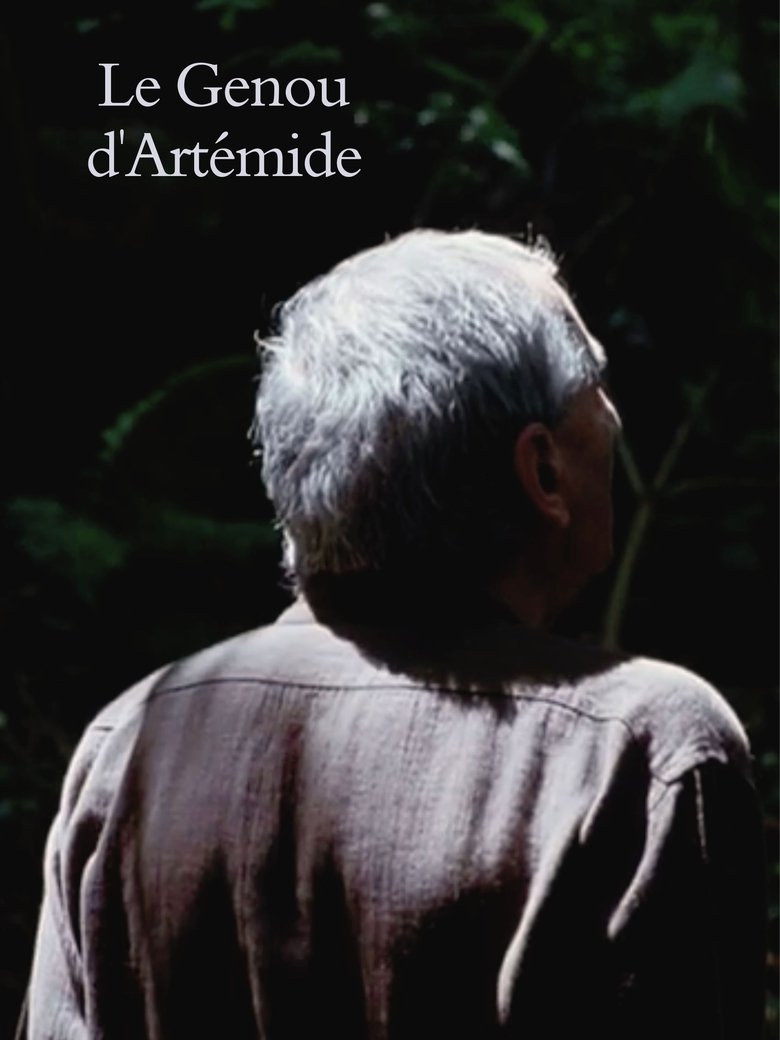
Grief is one of the hardest things to put on film. Not because emotion resists the camera, but because the temptation to sentimentalise, to over-explain, to reach for easy catharsis, is almost irresistible. Jean-Marie Straub resists all of that in Artemide's Knee, a short film made in the wake of losing Danièle Huillet, his lifelong partner and creative collaborator of decades. What he puts in grief's place instead is classical music and a mountain grove, and whether that trade-off works for you will depend entirely on what you ask of a film.
I went in genuinely curious. How does a filmmaker of Straub's rigour and reputation process something so personal on screen? The answer, it turns out, is with remarkable stillness. This is a meditative visual essay, quiet and wistful, steeped in what I can only describe as tender mercy. There's no narrative arc to speak of, no talking heads, no archival footage. Straub turns the camera on a specific patch of natural landscape, the mythological site associated with Endymion and his longing for the untouchable Artemis, and he lets it sit there.
What absolutely carries the film, and I mean carries it completely, is the sound. Straub pairs Kathleen Ferrier's singing of "The Farewell" from Mahler's Das Lied von der Erde with Heinrich Schütz's Lament on the Death of His Wife. The Mahler alone would be devastating in context: a piece the composer wrote after losing his own daughter, now placed in service of a man mourning the person he spent his creative life alongside. Ferrier's voice is enormous and sorrowful in a way that bypasses your critical faculties entirely. I'm a sucker for a powerful musical accompaniment at the best of times, but this combination hit me somewhere deeper than I expected. The music isn't decoration here. It's the whole emotional architecture of the thing. Without it, I'm not sure the film would hold together at all.
And that's where my honest reservations kick in. The visual language is, bluntly, quite limited. Static shots of the grove, one after another, with almost no variation in framing or movement. I can respect what Straub is doing: the landscape as solace, as a place where longing outlasts loss, where mythology gives sorrow a shape it can bear. Symbolically, it lands. But from a purely practical viewing standpoint, the rigidity of the camera work tests your patience. It begins to feel less like a film and more like a beautifully conceived installation piece, which isn't necessarily a criticism, but it is a distinction worth making. I've sat through slow, demanding work and come out grateful for it. Here, I kept feeling the gap between how moving the soundtrack was and how little the images were doing on their own.
Straub is a filmmaker whose work rewards a specific kind of attention, and if you've spent any time with his collaborations with Huillet, you'll know that already. I looked at Sicily! with similar feelings: an admiration for the formal discipline, a slight restlessness at the austerity. There's a purity to the approach that I respect enormously, even when I'm not fully won over by it.
Artemide's Knee is a genuinely moving piece of work, but its power is almost entirely sonic. The visual storytelling is so pared back that it borders on wilful self-denial. That might be the point. Straub may well be saying that images aren't enough for this, that only music and the earth can hold grief of this magnitude. I understand that argument. I just found myself wishing the film trusted its visuals a bit more, or at least offered them more room to breathe and vary.
Three stars. Worth your time, especially if Mahler or Ferrier mean anything to you. Just don't expect a conventional documentary, or indeed much of a film in the traditional sense. What you get is something closer to a farewell made audible, which, in the circumstances, might be exactly enough.
Rating: ★★★ | Year: 2008 | Watched: 2026-07-09