Aristotle's Plot (1996)

Share
Aristotle's Plot (1996)

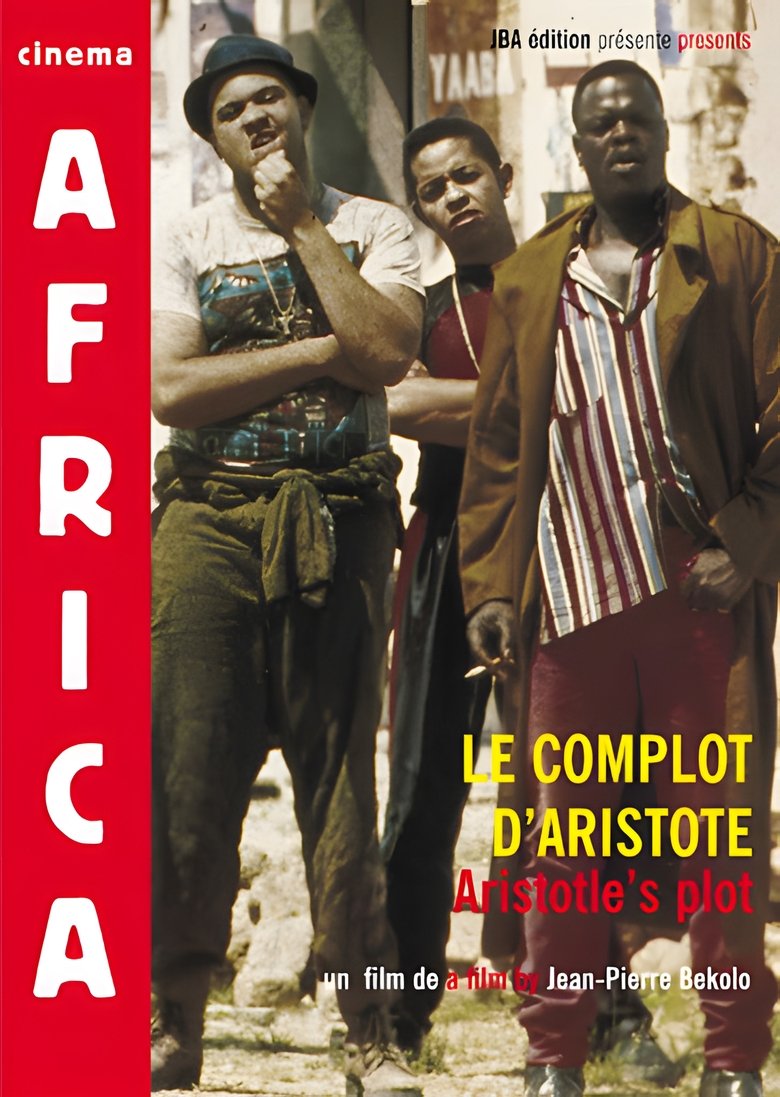
Jean-Pierre Bekolo arrived at Aristotle's Plot as one of the more provocative voices to emerge from Francophone African cinema in the early 1990s. His debut feature, Quartier Mozart (1992), had already marked him out as a filmmaker more interested in subverting genre conventions than playing it safe, blending magical realism with pointed social observation in a way that felt genuinely fresh. By the time he came to make Aristotle's Plot, commissioned as part of the BFI's centenary of cinema project in 1996, Bekolo was working with a brief that was almost tailor-made for his sensibilities: make something that interrogates the very idea of what African cinema is, and what it should be. The result is a film that sits somewhere between a manifesto and a street brawl, shot across Zimbabwe and carrying the fingerprints of a genuinely unusual co-production between Cameroonian, French and British interests. For anyone who has enjoyed other formally adventurous films from this era, such as Goodbye to Language, the pleasure of watching a director actively fight with the medium will feel familiar, if rather more raucous here.

The premise is deceptively simple. A character who calls himself Tourneur (a knowing nod to the Hollywood journeyman director Jacques Tourneur) sets himself up as a defender of serious African cinema, squaring off against a rival called Cinema and his gang of street kids who are fixated on imported action films and kung fu pictures. It is, on one level, a scrappy neighbourhood gang comedy, but running underneath it is a genuine and rather pointed argument about cultural colonialism, about who gets to define what stories African audiences should want to see and who profits when those audiences are fed a diet of Western or East Asian genre films instead. The BFI's involvement was not incidental: the film was one of several commissions designed to mark one hundred years of cinema from perspectives that the mainstream anniversary celebrations were liable to overlook. The production is polished but unremarkable on a technical level, which is, in a way, rather the point. Bekolo is more interested in ideas than in glossy surfaces. Fans of Chocolat (1988), Claire Denis's cool, observational take on colonial Africa, will find a film here working in an entirely different register but grappling with some of the same questions about gaze and representation.

The cast is a mix of Zimbabwean and South African talent, anchored by Albee Lesotho as Tourneur and Seputla Sebogodi as Cinema. Ken Gampu, a veteran South African actor with decades of screen experience behind him and something of a pioneering figure in Black South African cinema, lends the film a measure of weight in a supporting role. Anthony Levendale and Dylan Wilson-Max round out the principal players, contributing to an ensemble that is clearly more interested in energy and commitment than in studied naturalism. These are performers working in a tradition that owes as much to physical comedy and theatrical performance as it does to screen acting in the conventional sense. There is also an interesting question, worth raising before we get to the review proper, about what it means to judge a film like this against the criteria one might apply to a mainstream production with ten times the resources. Bekolo is doing something quite specific and quite conscious, and that context matters when you sit down to watch it. For a sense of how low-budget filmmaking from outside the mainstream can succeed entirely on its own terms, it is also worth checking out Nom Tèw, another modest but memorable piece of world cinema covered here previously.

If you've ever stumbled across Who Killed Captain Alex? and found yourself charmed by the sheer, unbridled enthusiasm of Wakaliwood cinema, then Jean-Pierre Bekolo's 1996 Cameroonian/Zimbabwean oddity Aristotle's Plot is going to feel like a surprisingly polished cousin of that same wild energy.

It's a tongue-in-cheek African action movie that absolutely knows it's a bit ridiculous, and rather than apologising for it, the film leans right into the absurdity with a knowing wink. Honestly, it's a cracking little find that caught me completely off guard.

The action sequences are genuinely decent for a film of this vintage and budget, carrying a scrappy, inventive charm that puts a lot of modern, over-produced Hollywood fare to shame. There's a real sense of fun in the way Bekolo stages the confrontations, blending slapstick comedy with genuine kinetic energy. The humour lands more often than it misses, and there are several moments where the film's sheer audacity had me laughing out loud. It doesn't take itself seriously for a single second, which is incredibly refreshing in a genre that so often drowns in its own self-importance.

Now, I won't pretend the performances are going to win anyone an Oscar. The acting is undeniably hammy across the board, with line deliveries that occasionally veer into full-blown pantomime territory. But here's the thing: it works. The cast commits to the bit with such infectious enthusiasm that the wooden delivery actually becomes part of the charm rather than a distraction. It's the kind of film where you stop judging the technical shortcomings and just let the sheer joy of the production wash over you.

Aristotle's Plot is a highly entertaining, genuinely funny piece of African cinema that punches well above its modest means. Bekolo has crafted a film that is equal parts action romp and satirical comedy, and while it won't be everyone's cup of tea, it's a thoroughly enjoyable ride for anyone willing to meet it on its own terms. It's a decent, charming watch that proves you don't need a massive budget to make something with real personality.

Aristotle's Plot is the kind of film that tends to find its audience slowly, through word of mouth and late-night festival screenings, rather than through conventional distribution. Its sixty-eight minute runtime means it asks very little of your evening, and its willingness to be genuinely silly while making a serious argument gives it a texture that lingers a little longer than you might expect. Bekolo went on to develop a career that continued to agitate and provoke, and this film reads now as an early, exuberant statement of intent, rough at the edges but entirely sure of what it wants to say. Whether you come to it as a curio of 1990s African cinema or simply as something a bit different for a quiet Tuesday night, it earns its place on the watchlist. Sometimes the films that cost the least care the most.


Rating: ★★★ | Year: 1996 | Watched: 2026-07-20

View on Letterboxd →


Trailer

▶ Watch the official trailer for Aristotle's Plot (1996) on YouTube

Film images and data courtesy of TMDB. This product uses the TMDB API but is not endorsed or certified by TMDB.