
Anatomy of Hell (2004)

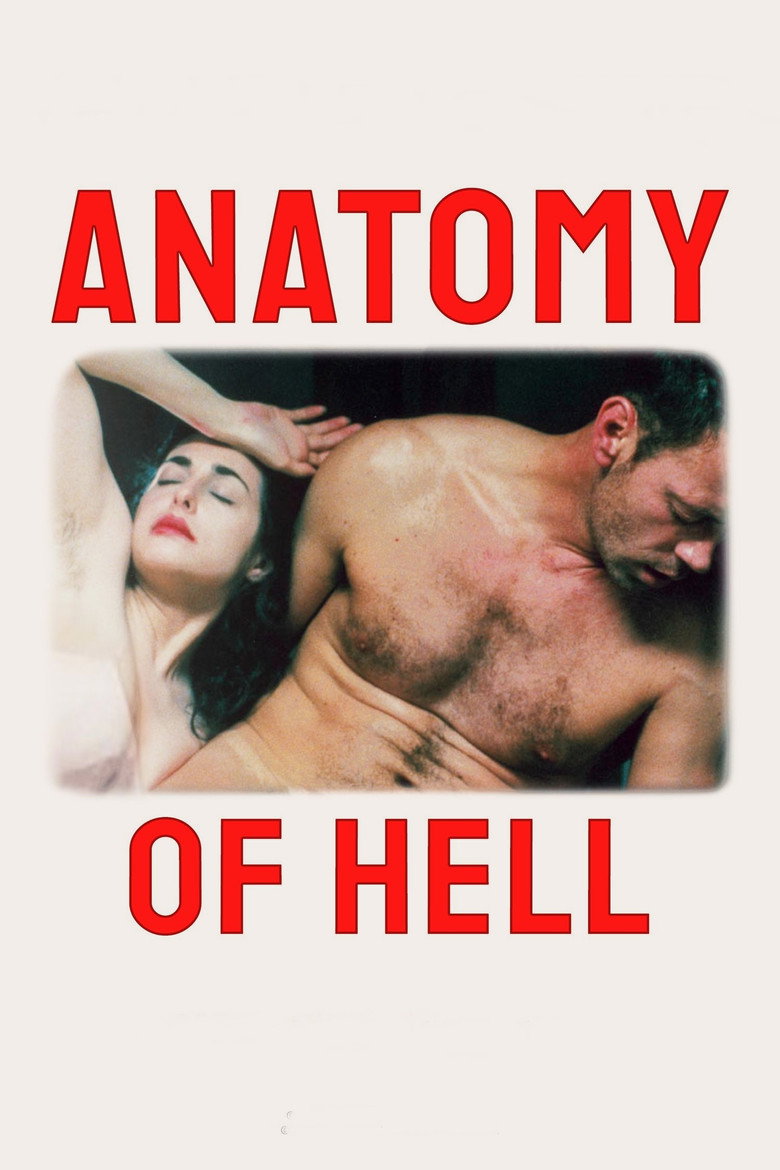
Catherine Breillat has never been a filmmaker interested in making things easy for her audience. The French director built her reputation across a string of provocative, sexually frank features, from Romance (1999) to Fat Girl (2001), that placed the female body and female desire at the centre of the screen in ways that French cinema had rarely done quite so directly or so argumentatively. By the time Anatomy of Hell arrived in 2004, she was already a genuinely divisive figure: championed by some critics as one of the most rigorous voices in European art cinema, and dismissed by others as a provocateur who mistook shock for insight. The film, adapted by Breillat from her own novel Pornocracy, sits squarely in that contested territory. It is a film that knows exactly what it is doing and intends for you to feel the discomfort of that.
The premise is almost theatrical in its spareness. A woman, unnamed, approaches a man she has seen in a gay nightclub and proposes a contract: he will come to her isolated house for four consecutive nights and simply watch her, the parts of her she describes as unwatchable. Breillat strips away almost everything that might cushion that central confrontation, location, backstory, conventional drama, leaving something closer to a philosophical essay in film form than a conventional narrative. It is produced through CB Films and Flach Film, modest French outfits that had backed Breillat's work before, and its 77-minute runtime leaves no room for distraction or detour. The writing is Breillat's own, and the dialogue, much of it delivered in the manner of a spoken argument rather than natural speech, announces itself as deliberately stylised from the first exchange.
The two leads are Amira Casar and Rocco Siffredi. Casar, a French-British actress perhaps best known internationally for Call Me by Your Name (2017), brings a composed, almost statuesque quality to the woman, performing material that is genuinely exposing in every sense of the word. Siffredi, an Italian performer more associated with adult cinema than art-house drama, is a deliberate casting choice rather than a compromise one: his presence carries an explicit cultural meaning within the film's argument, and Breillat is clearly aware of the provocation. Alexandre Belin, Manuel Taglang and Jacques Monge appear in supporting roles. For a companion piece on the kind of uncompromising filmmaking that places heavy demands on its performers, see also Meek's Cutoff, and I also wrote about The Assistant, another film that uses a tight, controlled frame to make a pointed argument about gendered power.
Visually, the film is the work of two cinematographers credited jointly: Guillaume Schiffman, who would later shoot Michel Hazanavicius's The Artist (2011), and the Greek veteran Giorgos Arvanitis, whose long association with Theo Angelopoulos gave him a particular instinct for slow, ceremonial images with a lot of air in them. The collaboration between the two produces something that is cool and deliberate in its framing, dwelling on surfaces, skin, water, the bare walls of the woman's house, with a patience that refuses to hurry past what it is showing you. There is a painterly quality to some of the compositions, which only sharpens the tension between the aesthetic distance and the rawness of what is being depicted. The editing by Pascale Chavance keeps a similarly measured pace, cutting sparingly and allowing individual shots to hold well past the point of comfort. The score is sparse to the point of near-silence in places, which leaves the imagery to carry the argument on its own terms. For another film of the same year that sits at the more rigorous, aestheticised end of European cinema, I also covered Five Dedicated to Ozu, a piece that shares something of the same unhurried, contemplative approach to the image.
Anatomy of Hell is not a film you enjoy so much as sit through, and I suspect Catherine Breillat would take that as a compliment.
The setup is stark to the point of abstraction: a woman pays a man, who has no interest in women, to spend four nights watching her body and her most private moments, the parts she calls unwatchable. From there Breillat mounts a deliberately confrontational essay on the female body, on desire and disgust, and on the way men look at women. It is art with a thesis, and it could not care less whether you are comfortable.
To be fair to it, the thesis lands. I understood exactly what it was reaching for, the reclaiming of the female body from the male gaze, and the two leads commit to it completely, so much so that the acting is strong in a way that cannot have been easy given how exposing the material is. There is a serious film in here, and plenty of people take it very seriously indeed.
Where it lost me is that grasping the point did not make me want to see quite so much of it. For all the intellectual framing, a good deal of it tips over, for me, into the gratuitous, and one scene involving menstruation was simply more than I needed to see. I am no prude, but there is a difference between confronting an audience and grinding them down, and this lands on the wrong side of it.
Two and a half stars. The idea has weight, I will not pretend otherwise, but it is emphatically not a film I could ever press on a friend, and I doubt I will be sitting through it a second time.
Anatomy of Hell is the kind of film that exists to start an argument rather than settle one, and it has certainly managed that across the twenty-odd years since its release. It sits within a very specific tradition of French art cinema that prizes intellectual rigour over accessibility, and it is genuinely difficult to disentangle the film's ideas from the experience of watching it, which is, one suspects, precisely the point Breillat would make if pressed. Whether the confrontation is productive or merely exhausting is a question each viewer has to answer for themselves. What it is not, whatever else you might say about it, is accidental or careless. Films made this deliberately rarely are. Sometimes that has to be enough.
Rating: ★★½ | Year: 2004 | Watched: 2026-09-17
Trailer
▶ Watch the official trailer for Anatomy of Hell (2004) on YouTube
Where to watch
Watch in the US
Stream: Criterion Channel
Physical: Amazon US
Affiliate disclosure: Movies With Macca may earn a small commission on purchases or subscriptions started via these links. It costs you nothing extra.



