A Dessert for Constance (1981)

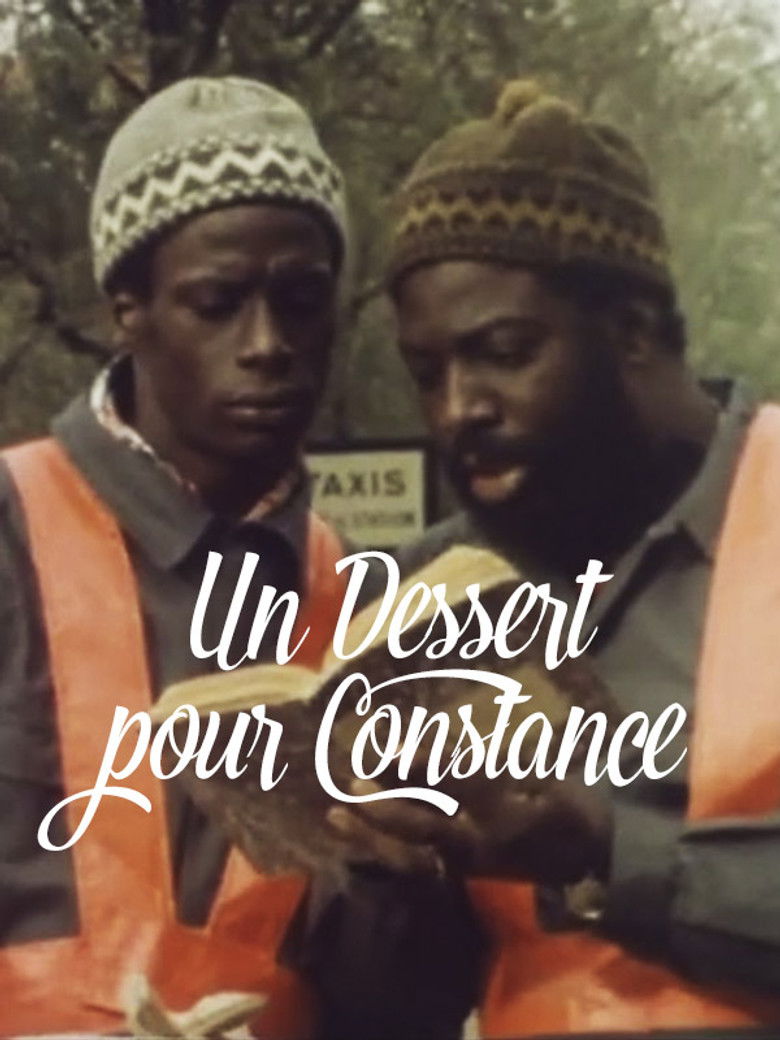
There is a quiet magic to A Dessert for Constance that genuinely sneaks up on you. Sarah Maldoror's 1981 picture announces itself with the kind of premise that could easily slide into bleak social commentary: two immigrants in France, doing the thankless, back-breaking work of refuse collection. And then, somewhere along the way, it does something rather wonderful. It pivots. It refuses to be what you expect. It decides, instead, to be a joy.
The turning point is almost absurdly simple. The two men discover a vintage cookbook among the rubbish they are collecting, and rather than toss it back, they take it home. What follows is a story of culinary experimentation, growing ambition, and an eventual tilt at a local television cooking competition. Written down like that, it sounds slight. On screen, it is anything but.
What Maldoror gets absolutely right is the dynamic between the two leads. Their friendship feels genuinely lived-in, the kind of easy, tested camaraderie that takes years to earn. The dialogue has a natural, crackling rhythm to it, and the humour, when it comes, earns its laughs through honest observation rather than cheap gags. These are men finding purpose and real pleasure in something unexpected, and you cannot help but be swept along with them. There is something quietly radical about a film that takes people on the margins of society and refuses to define them purely by their hardship. Maldoror wants you to see the whole of them, and she manages it.
The technical side of things is modest but entirely sure of itself. The film knows when to step back and let the characters breathe, which is exactly the right instinct for this kind of material. The soundtrack deserves a particular mention. It provides a gentle, rhythmic undercurrent beneath the culinary experiments, supporting the mood without ever swamping it. Where so many films of this type reach for heavy-handed scoring to tell you what to feel, this one trusts the warmth already on screen to do the work. It is a film that earns its texture.
If I have a reservation, it is only that the picture's modesty occasionally tips into understatement at moments when a little more ambition might have pushed it from very good to genuinely great. There are scenes that feel like they are just beginning to open up something deeper before the film moves on. But that is a mild complaint about a film this generously spirited. Maldoror is not interested in big proclamations. She is interested in people, and on that front she delivers completely.
I was reminded, watching this, of the way I felt during Who's Singin' Over There?, another film from around the same era that takes an unlikely group of people, throws them together in close quarters, and finds the comedy and the humanity in the friction and the fellowship. Both films operate on a relatively small canvas and both punch well above their weight.
Three and a half stars.
A Dessert for Constance is a hidden gem, and I mean that without any irony. It proves, again, that you do not need spectacle or scale to make something genuinely memorable. What you need is a director who believes in her characters and a story that respects its audience. Maldoror has both. Seek this one out if you can find it. It is the kind of film that leaves you feeling, faintly but unmistakably, better than you did before you watched it.
Rating: ★★★½ | Year: 1981 | Watched: 2026-08-09
Where to watch
Watch in the UK
Stream: MUBI · MUBI Amazon Channel
Physical: Amazon UK · Zavvi
Watch in the US
Stream: MUBI · MUBI Amazon Channel
Physical: Amazon US
Affiliate disclosure: Movies With Macca may earn a small commission on purchases or subscriptions started via these links. It costs you nothing extra.