To the North (2026)

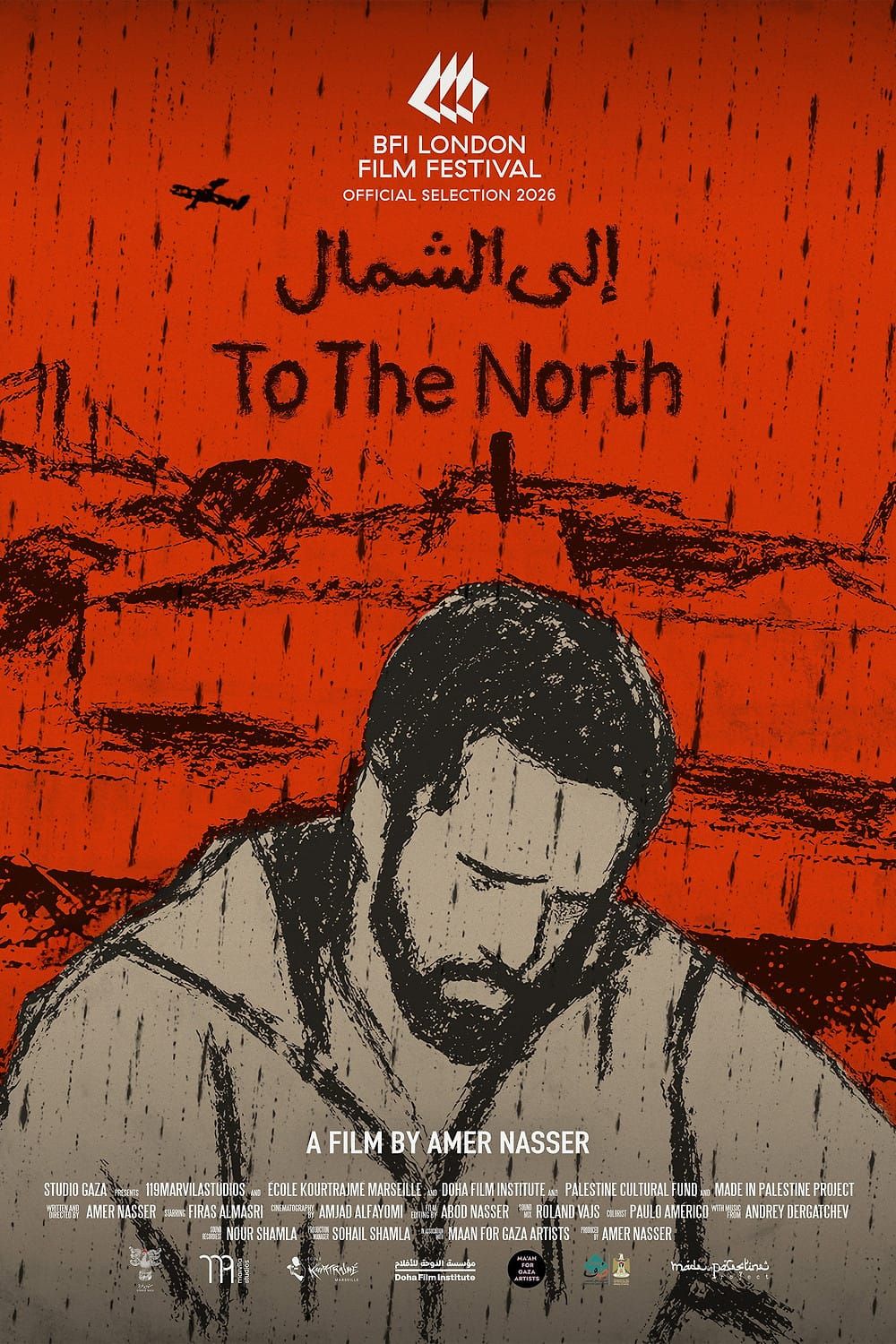
Some films do not have time to ease you in, and To the North, Amer Nasser's short film, does not try. It runs only around eight minutes, and in that time it delivers a gut punch that stayed with me long after the screen had gone dark. I saw it at the BFI London Film Festival, and I am giving it four stars, though with a film like this the number feels almost beside the point.
Set in 2025, after 471 days of war and during a brief ceasefire in Gaza, it follows Firas as he travels back to the north alone, hoping to recover his sister and her family from beneath their collapsed home. That is the entire story, and it is more than enough. What struck me first, and what I do not think I will ever quite get used to, is the sheer scale of the devastation the film simply shows you. The streets are not damaged, they are gone, reduced to endless fields of rubble, and the camera does not sensationalise it so much as let it sit there in all its unbearable ordinariness.
The film's power is in its restraint. When Firas finds the house utterly levelled, he phones his mother, and she suggests a bulldozer, as though there were still some practical solution to be reached. But the ruin is so total that even that would be useless, that it would take a crane to shift, and in that small, devastating exchange the film captures the gulf between a family's need to do something and the absolute impossibility of doing anything at all. Any hope of recovering the bodies, or even a single belonging, is simply gone.
And so he does the only thing left to him. He writes the names of his trapped family in chalk on the rubble above where they lie. It is an almost unbearable image, a gesture of love and remembrance in the face of something that refuses to be fixed or recovered, and it is the moment the film earns every bit of its running time. I found it profoundly moving, and profoundly hard to watch.
Four stars. To the North is brief, unflinching and enormously impactful, the kind of short film that uses its tiny window to say something no feature could say more powerfully. That it was made under the conditions it depicts, by Palestinian film-makers through Studio Gaza and the Made in Palestine Project, only deepens its weight. It is not an easy watch, and it is not meant to be, but it is a necessary one, and I would urge anyone who can to seek it out.
Related on Movies With Macca
More from the 2020s: All That's Left of You (2025), The Whale (2022), Look Back (2024)
More drama: I Will Be Alright (2026), Delisted (2026), Lady (2026)