THX 1138 (1971)

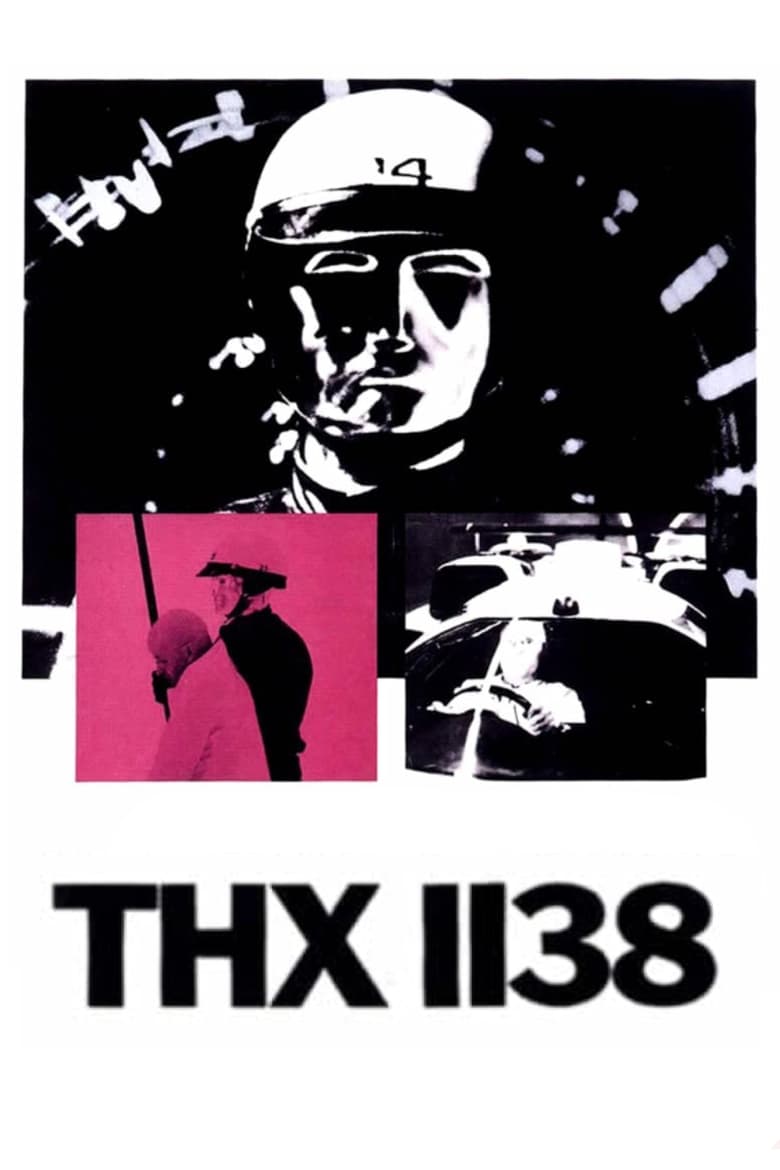
There's a particular kind of chill that comes from watching a decades-old film and realising it was right. Not in a vague, hand-wavy way, but in sharp, specific, uncomfortable detail. That's exactly what watching THX 1138 today feels like. George Lucas's 1971 directorial debut received a pretty mixed reception when it first came out, and looking at it through the lens of that era, you can understand why. But watch it now, and the thing hits differently. Properly differently.
The world Lucas builds is one where a subterranean population is kept obedient through mandatory emotion-suppressing drugs, where confession and counselling are handled by an automated AI that recycles platitudes and offers hollow absolution, and where individuality has been scrubbed clean from every surface. Sound familiar? The thematic foresight on display is genuinely brilliant, and more than a little unsettling. This isn't the kind of sci-fi that feels like fantasy anymore. It feels like a warning that arrived too early for anyone to take seriously.
Visually and tonally, the debt to Kubrick's 2001: A Space Odyssey is obvious and freely worn. The sterile white corridors, the cold geometry, the sense of vast institutional indifference pressing down on a single fragile human being. But what's just as interesting is how much Lucas then gave to the films that came after him. You can trace a direct line from THX 1138 through to films like Equilibrium and Demolition Man, and there's one detail that still stops me cold: the shiny, expressionless android police officers in this film have an almost uncanny resemblance to the T-1000 in his police uniform in Terminator 2. Whether that's homage or coincidence, it's a striking connection.
The story itself is fairly lean. THX, the titular character, begins to awaken from his chemically induced compliance, and the film follows where that awakening takes him. It's not complicated, and it doesn't need to be. What anchors it is the quality of the performances. Robert Duvall is, as ever, a remarkably grounded and compelling lead, doing an enormous amount with very little, which is exactly what the role demands. And Donald Pleasence is an absolute joy to watch. There's a gleeful, slightly unhinged energy he brings to practically every scene, and it feels like he could monologue his way out of any situation you put him in, in any film, in any era.
I do have gripes, and I think they're worth being honest about. The pacing loses its grip in a fairly long, talky stretch just past the halfway point, and the momentum that the first half builds so carefully starts to leak away. More frustratingly, the ending left me wanting. We spend the whole film immersed in this cold, synthetic world, genuinely unnerved by it, and then we never really get any explanation of how humanity arrived here. There's a narrative void right at the moment when you're most hungry for answers, and it stings a little. These aren't deal-breakers, but they do hold the film back from being everything it could be.
What's fascinating, thinking about Lucas's career as a whole, is how this film fits into the picture. He went from this stark, cerebral piece of dystopian sci-fi to American Graffiti (1973), and then to Star Wars (1977). Three wildly different films in tone and ambition, but each one proof that he was never just coasting. THX 1138 shows the version of Lucas who was genuinely wrestling with ideas, with society, with where things were heading. That version of him deserves more credit than he typically gets.
Three and a half stars.
As a debut, it's bold, atmospheric and deeply ambitious, and it laid the groundwork for decades of genre filmmaking that followed. Over fifty years on, it remains a thought-provoking watch, and honestly, an increasingly relevant one. I'd recommend it to anyone who fancies something that'll sit with you for a while, probably because the world outside your window looks just a little too much like it.
Rating: ★★★½ | Year: 1971 | Watched: 2026-06-23
Where to watch
Watch in the UK
Stream: HBO Max Amazon Channel · HBO Max
Rent: Apple TV Store · Rakuten TV · Amazon Video · Google Play Movies
Buy: Apple TV Store · Rakuten TV · Amazon Video · Google Play Movies
Physical: Amazon UK · Zavvi
Watch in the US
Rent: Amazon Video · Apple TV Store · Google Play Movies · YouTube
Buy: Amazon Video · Apple TV Store · Google Play Movies · YouTube
Physical: Amazon US
Affiliate disclosure: Movies With Macca may earn a small commission on purchases or subscriptions started via these links. It costs you nothing extra.