Resident Evil (2026)

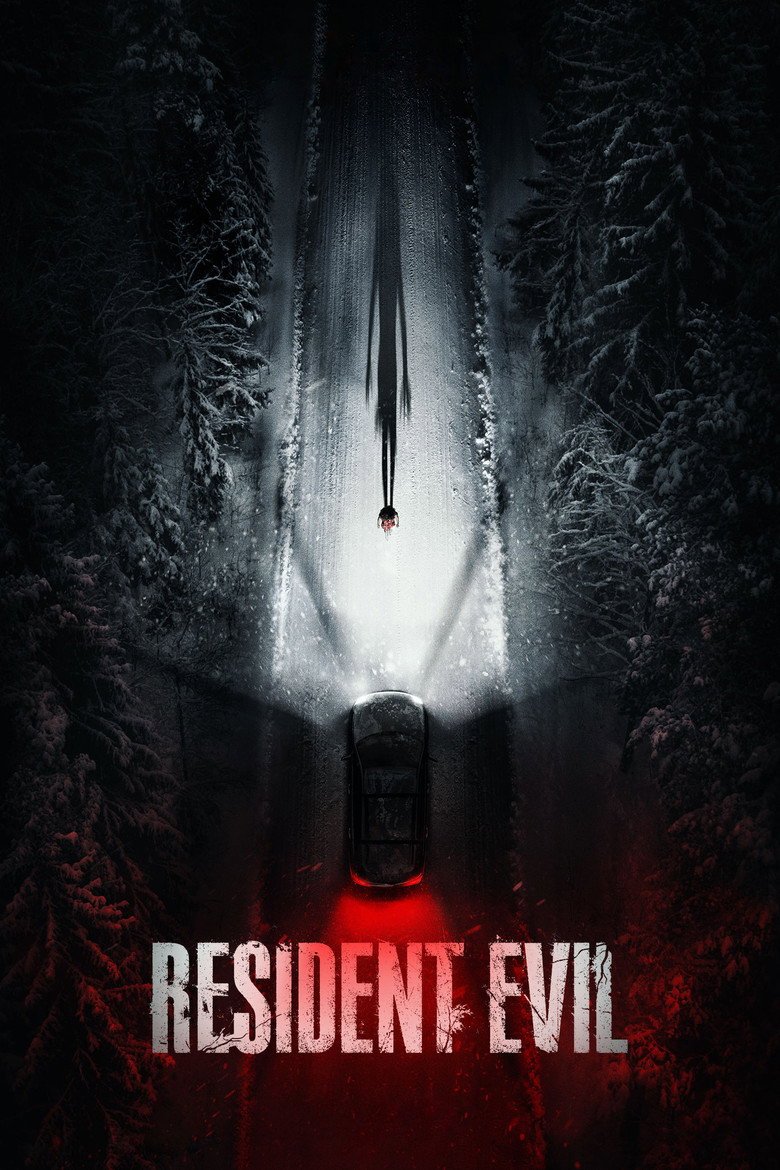
The Resident Evil franchise has had a complicated relationship with cinema since Paul W.S. Anderson launched the Milla Jovovich series back in 2002. That run stretched to six films, earning a certain loyal following while frustrating fans of Capcom's survival horror games in roughly equal measure. A 2021 reboot, Welcome to Raccoon City, tried to hew closer to the source material and landed with a thud. So here we are in 2026, with a fresh attempt: a new cast, a new director, and a tagline promising a new era of evil. Whether the series has genuinely turned a corner is the question sitting at the heart of this review.
The man tasked with resurrecting the property is Zach Cregger, who wrote and directed the 2022 horror Barbarian, a film that drew considerable attention for its skill in wrong-footing an audience and maintaining genuine unease across a tight runtime. His involvement here raised genuine hopes that the franchise might finally get a filmmaker who understood what made the original games so effective: claustrophobia, resource management, and the slow, mounting dread of not quite knowing what was around the next corner. The screenplay is credited to Cregger alongside Shay Hatten, who has form in genre territory through his work on the John Wick sequels and Army of the Dead. The production is a co-venture spread across Constantin Film (the German outfit that has held the Resident Evil film rights for decades), Vertigo Entertainment, Subconscious, Davis Films, and Columbia Pictures, with a runtime of a brisk 95 minutes. For genre fare with this much franchise baggage, that kind of economy can be a virtue or a liability, depending entirely on what you do with the time.
The central role of Bryan, a medical courier whose ordinary working night spirals into something considerably worse, is taken by Austin Abrams, a young American actor known largely for television work. Alongside him are Paul Walter Hauser, who has built a reputation for finding unexpected texture in supporting roles (his turn in BlackBerry being a recent example), Kali Reis, Zach Cherry, and Johnno Wilson. The cast is, on paper, an interesting ensemble: not marquee names, but performers with enough range to carry a horror film that wanted to do something with its characters rather than simply push them through set pieces. Whether the material gives them that opportunity is another matter.
On the craft side, the film was shot by Dariusz Wolski, a cinematographer whose career stretches from The Crow in 1994 through his long partnership with Ridley Scott on films including The Martian and Alien: Covenant. Wolski tends to work in cool, expansive palettes, and here the snowbound exteriors and shadowed interiors of the Raccoon City surroundings give him ample material to suggest isolation and threat. The score is the work of Hays Holladay and Ryan Holladay, composers whose approach draws on textural, ambient electronic sound, a sensible fit for survival horror's need to keep the audience's nerves unsettled without overwhelming the silence that the genre depends on. Joe Murphy edited the picture, and at 95 minutes the cutting has to do real work in keeping momentum without letting the pacing go slack between set pieces.
I also reviewed The Devil's Rejects, another entry in that particular tradition of American horror that courts genuine nastiness rather than comfort, which might make for an interesting companion piece when thinking about what this kind of film can look like when the filmmaking ambition and the execution are properly aligned. For something on the horror-adjacent end of science fiction, see also my thoughts on Anatomy of Hell, a film that is certainly not for everyone but which commits entirely to its own unpleasant vision in a way that invites comparison with films that hedge their bets.
I came to this new Resident Evil about as qualified to judge it as anyone: a devoted fan of the games, at least the first three and their remakes, and someone who has sat through every one of the films, from the Milla Jovovich run to the misfiring reboot. So I went in with expectations sensibly lowered, knowing full well it would not be a faithful adaptation.
Then the fanfare hit, the cries of "best video game movie ever made", and I let myself get excited. I should not have. Whatever this is, it is barely Resident Evil; beyond the name, Raccoon City and a stray nod to Umbrella, it shares almost nothing with the games at all.
And the maddening thing is that, for a while, it is good. Zach Cregger opens with a courier ferrying a mysterious medical package towards Raccoon City through snowbound woods, and that first stretch is tense, atmospheric and deeply unnerving, beautifully shot, with some superb creature work and CGI that actually earns its place. There is a farmhouse sequence, all careful searching and mounting dread, that had me thinking I was in for something special.
Then, at a stroke, it throws all of that away. The suspense curdles into wall-to-wall quipping, the lead is a bumbling, panicky sort whose response to every fresh horror is another weary swear word, and the writing turns startlingly basic. Worse, the plot grows more ridiculous by the scene, piling up creatures and cure-chasing nonsense that does not survive a moment's thought, and treating its more promising characters as disposable.
Paul Walter Hauser is comfortably the best thing in the film, and even he is barely given room to register. By the end any horror has been defused entirely, and the whole thing simply stops, with no payoff and no resolution to speak of. I have no patience for endings that lazy.
A word, too, on the look of it, because it nearly sank the thing single-handedly: it is far too dark. I saw it in a cinema and still lost track of what was happening in stretches; at home, in anything short of pitch black, you would be squinting at a murky blur throughout. There is a good forty minutes of film buried in here, and a clear talent behind the camera when it behaves itself, but it squanders both. Two stars, and even that may be a shade generous.
Whatever this 2026 Resident Evil turns out to mean for the franchise's future, it is a reminder that a promising premise, a director with genuine horror instincts, and strong craft on screen are necessary conditions rather than sufficient ones. The reputation of video game adaptations as a genre has been slowly, cautiously improving in recent years, and the expectation that each new entry might finally be the one to crack it keeps pulling audiences back in. That optimism is not irrational, but it does make the gap between a strong opening half-hour and a disappointing finish feel all the wider. A new era of evil, the tagline promises. On this evidence, it is the same old story.
Rating: ★★ | Year: 2026 | Watched: 2026-09-26
Trailer
▶ Watch the official trailer for Resident Evil (2026) on YouTube