
The Happiness of the Katakuris (2001)

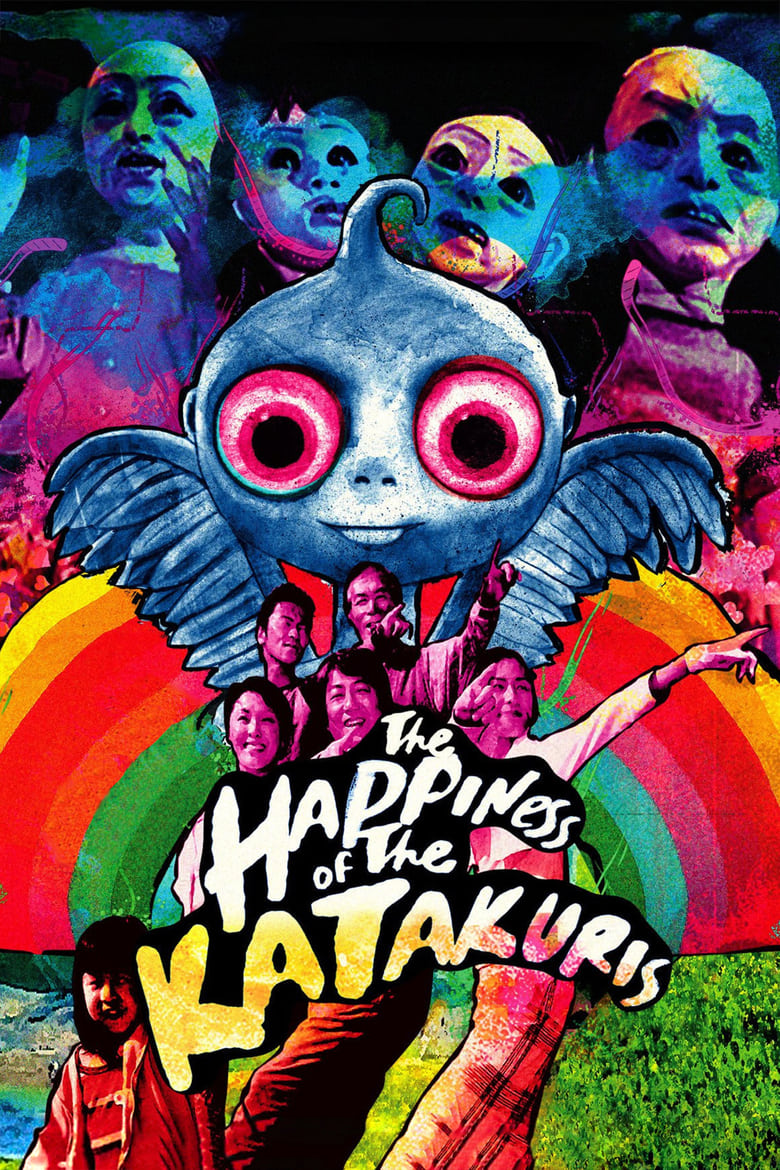
Japanese cinema at the turn of the millennium was producing some of the most formally adventurous and commercially awkward work anywhere in the world, and The Happiness of the Katakuris (2001) sits near the extreme end of that spectrum. It is, on paper, a remake of the South Korean black comedy The Quiet Family (1998), a film about a clan of hoteliers undone by a string of inconvenient guest deaths. What Takashi Miike did with that source material is the sort of thing that makes you question whether "remake" is anywhere near the right word. The two films share a premise and almost nothing else in tone, texture or ambition. Where the original kept its feet on the ground, Miike's version lifts off entirely, somewhere around the first musical number and never quite comes back down.
Miike was already a name that made programmers and censors nervous by the time this arrived, having released, among other things, Audition (1999) and Ichi the Killer (2001) in the same extraordinary creative period. His output rate was, and remains, almost alarming (he has been known to direct double-digit features in a single year), but Katakuris is unusual even within that body of work in that it is a film with a genuinely warm heart beneath all the chaos. The screenplay, by Kikumi Yamagishi, folds horror, domestic comedy, romance and outright surrealism into a story about family loyalty and the desperate optimism of people who keep singing when they probably should not. The production was backed by Shochiku, one of Japan's oldest studios, alongside dentsu and several other co-producers, which makes its sheer strangeness feel even more remarkable. For those curious about the broader wave of Japanese genre filmmaking from this period, I also reviewed Pulse (2001), Kiyoshi Kurosawa's equally unsettling, if very differently pitched, contribution to the same moment.
The cast is a particular pleasure on paper. Kenji Sawada, a rock star turned respected screen actor, plays the Katakuri patriarch with a kind of exhausted dignity that makes the musical sequences land rather than embarrass. Keiko Matsuzaka brings warmth and good comic timing to the family matriarch, and the supporting players, including Shinji Takeda, Naomi Nishida, and the rock legend Kiyoshiro Imawano as a magnificently unreliable love interest, give the film the feel of a company who are all in on the same mad joke. Cinematographer Hideo Yamamoto, who had worked with Miike on Ichi the Killer, shoots the mountain setting with a quality that keeps shifting between picture-postcard prettiness and something distinctly off-kilter, warm greens and open skies that somehow never quite feel safe. The score, by Koji Endo and Koji Makaino, toggles between cheery show-tune pastiche and something more unsettling underneath, and the editing by Yasushi Shimamura is no small part of what makes the tonal swerves work at all, cutting between registers with an almost perverse confidence. For another example of Miike letting genre categories collapse entirely under the weight of his own restlessness, see also my review of Sukiyaki Western Django (2007), a film that approaches a similar problem from a very different angle.
I have seen a fair few films, and I am still not entirely sure what The Happiness of the Katakuris actually is. It is a horror. It is a comedy. It is, at various points and with a completely straight face, a musical, a claymation short and a zombie picture.
Takashi Miike, one of the most gleefully unclassifiable minds in cinema, takes a family running a remote mountain guesthouse whose guests keep turning up dead, and then has the family burst into song about it. Crazy is about the only word that covers it.
The stop-motion sequences are the wildest part, grotesque claymation interludes that erupt out of nowhere, and they are pure Jan Švankmajer, the same gleeful body-horror surrealism he pulled off in Virile Games, a short I found impressive but oddly cold when I watched it. Here that grotesquerie is only one ingredient in the stew, which suits it far better. That is more or less the film in miniature: it made me laugh, then it made me wince, now and then within the same scene. You cannot fault its nerve, or Miike's flat refusal to ever do the expected thing.
Whether all that madness adds up to something I loved is another matter, and for me it does not quite get there. I was never once bored, and I will not forget it in a hurry, but for all the swings it takes it never fully won me over. It is good. It is wild. It just is not one I fell for. Three stars, and well worth a look for the sheer nerve of it, provided you can stomach the swerves.
The Happiness of the Katakuris is the kind of film that resists easy placement in anyone's catalogue, which is either its greatest virtue or its central problem depending on your appetite for organised chaos. It is polished but unremarkable in some of its individual parts, yet wholly singular as an assembled whole, a film that earns a kind of battered affection even from viewers it never fully convinces. Those drawn to cinema that refuses to behave itself will find plenty to enjoy here, and those after a more grounded sort of horror comedy might do well to manage expectations. Either way, it is not a film you half-remember a week later. Miike makes sure of that.
Rating: ★★★ | Year: 2001 | Watched: 2026-09-17
Trailer
▶ Watch the official trailer for The Happiness of the Katakuris (2001) on YouTube
Where to watch
Watch in the UK
Stream: Arrow Video Amazon Channel · Shudder Amazon Channel · ARROW
Rent: Apple TV Store · Amazon Video · Google Play Movies · YouTube
Buy: Apple TV Store · Amazon Video · Google Play Movies · YouTube
Physical: Amazon UK · Zavvi
Affiliate disclosure: Movies With Macca may earn a small commission on purchases or subscriptions started via these links. It costs you nothing extra.



