
Monterey Pop (1968)

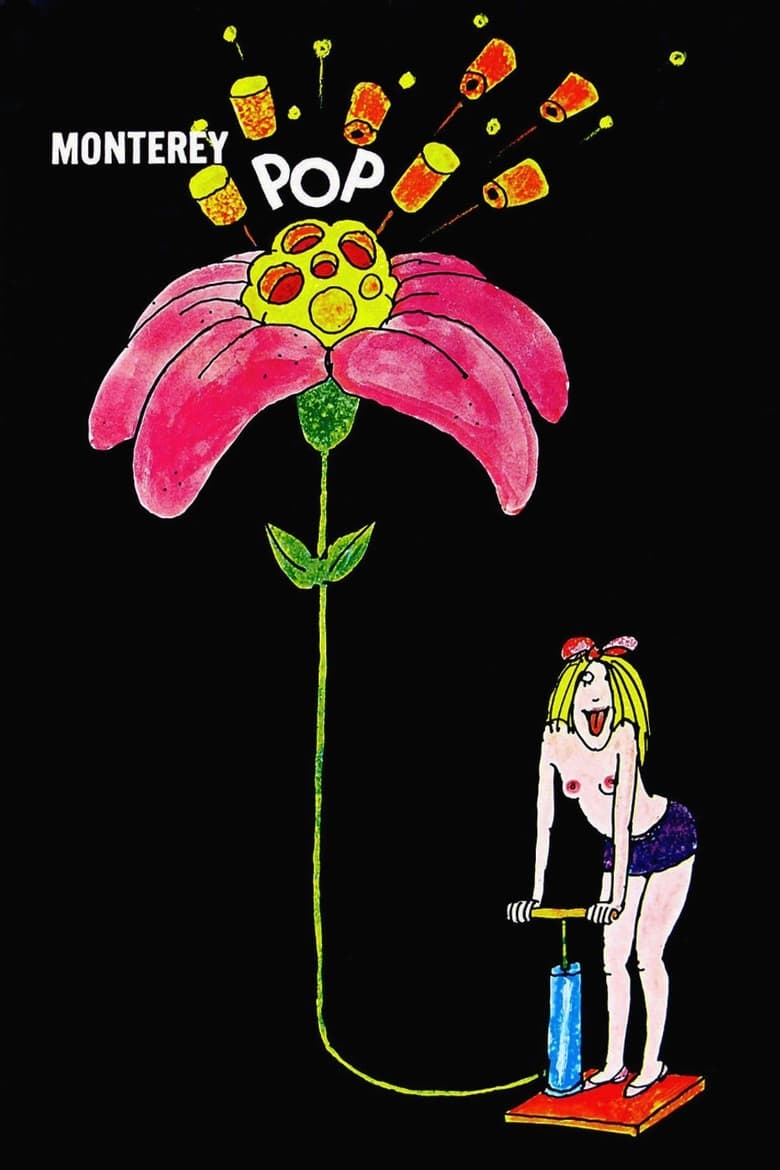
There's a moment in Monterey Pop where you stop thinking about the camera, stop thinking about the era, stop thinking about anything really, and you just feel it. D. A. Pennebaker had a gift for that. He didn't announce himself, didn't impose a grand thesis. He just showed up with a camera and let something extraordinary unfold in front of it.
And extraordinary is not too strong a word. The 1967 Monterey International Pop Festival sits right alongside Woodstock and Live Aid when you're talking about the greatest live music events ever staged. The lineup alone is enough to make your jaw hang open. This was a weekend that didn't just reflect the Summer of Love, it essentially lit the fuse for it. You can feel that significance radiating off the screen, even fifty-odd years on.
Jimi Hendrix setting his guitar on fire isn't just a rock and roll myth when you watch it here. It's genuinely alarming and genuinely thrilling in equal measure. And Janis Joplin, God. She tears into her set with such ferocious, raw energy that it feels almost violent. These aren't polished, stage-managed spectacles. They're performances in the truest sense, people absolutely wringing themselves out for an audience that's right there with them, swept up in the same wave.
Pennebaker's fly-on-the-wall approach is what makes it work so well. He doesn't try to mythologise what he's capturing. He doesn't need to. The handheld camera darts between the stage and the crowd with this restless, joyful energy, catching a face in the audience here, a pair of hands there, the whole colourful, chaotic, beautiful scene in full bloom. It feels alive in a way that a lot of concert films simply don't manage. I loved Down from the Mountain (2000) for similar reasons. That film has the same quality of just putting you in the room and trusting that's enough.
I do want to be honest about one thing, though. Monterey Pop works as well as it does for me partly because I'm already a fan of that specific pocket of music. The late 60s psychedelic rock, folk, and soul scene is very much my cup of tea, and I suspect that gives me a certain generosity towards the film that someone less invested in the era might not feel quite as readily. If you've got no particular affection for the music, you might find yourself slightly at arm's length from the reverence the documentary wraps around everything. That's worth flagging. It's not a criticism exactly, more an honest caveat.
But here's the thing: even allowing for that, Pennebaker's camera captures something that goes beyond the music. He's documenting a mood, a specific kind of optimism that felt genuinely world-changing at the time. The fashion, the faces, the way the crowd moves together. It's a time capsule of a moment when people really believed that music could shift something fundamental in the culture, and watching it now, you don't dismiss that as naivety. You find yourself wanting to believe it too.
Three and a half stars.
Monterey Pop is an essential watch for anyone with a serious interest in music history or in the craft of documentary filmmaking. It's vibrant, kinetic, musically stunning, and shot through with a spirit that still feels infectious. Pennebaker didn't just point a camera at a stage. He caught lightning in a bottle and had the good sense to press record.
Rating: ★★★½ | Year: 1968 | Watched: 2026-07-01
Where to watch
Watch in the US
Stream: HBO Max Amazon Channel · Criterion Channel · HBO Max
Buy: Apple TV Store · Google Play Movies · YouTube
Physical: Amazon US
Affiliate disclosure: Movies With Macca may earn a small commission on purchases or subscriptions started via these links. It costs you nothing extra.



