Moana (1926)

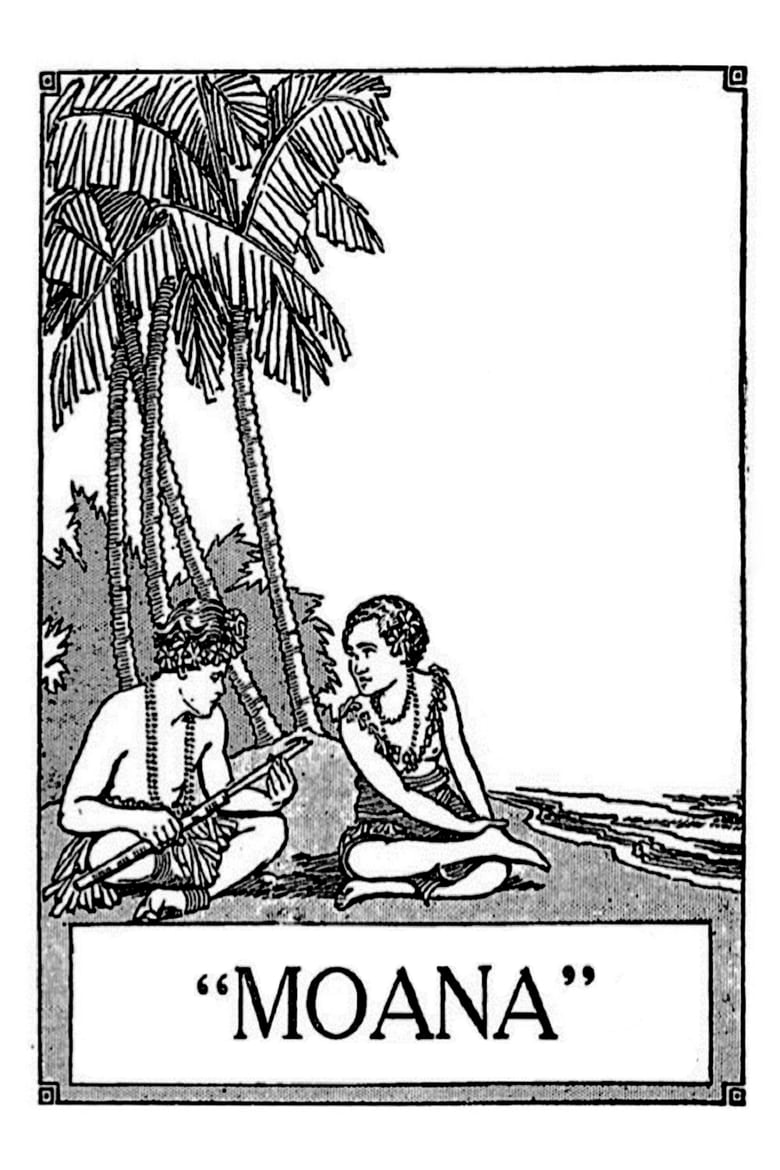
A hundred years old. Let that sink in for a moment. Robert and Frances H. Flaherty's Moana has just turned a century, and watching it now, you're genuinely staring at a piece of film history unlike almost anything else. It's widely regarded as the very first "mockumentary", or at the very least the first film to deliberately frame a staged narrative as documentary truth. The Flahertys packed up and travelled to Samoa to capture the daily lives of the local tribal people, their chores, their rituals, their routines. What they came back with was presented as a factual record of island life, but it was heavily staged and acted by the locals themselves. That tension between document and performance is genuinely fascinating to think about.
As a piece of film history, it earns enormous respect. As a film to actually sit through on a Sunday afternoon? That's a much harder sell.
The vast majority of the runtime is simply watching people go about their day: fishing, climbing trees, preparing food, carrying out the kinds of tasks that made up life in 1920s Samoa. I understand the intention completely. The Flahertys wanted to preserve and showcase a specific way of life, and in that regard, the film does exactly what it set out to do. There's a real sincerity to the project, and you can feel the effort behind every beautifully composed frame. But sincerity and effort don't automatically equal engagement, and sitting with a silent, black-and-white film of people doing their chores, with no narrative drive and no real character arcs to follow, is an honest challenge. I won't pretend otherwise. My attention wandered more than once.
What keeps it from being a total dead end is the sheer logistical achievement of the thing. Making this film a century ago, travelling to the Pacific, working with local communities, and bringing back usable footage at all is remarkable. The compositions have a real stillness and grace to them. There are moments, especially in the outdoor sequences, where you catch something genuinely beautiful in the frame, a reminder that the Flahertys had a real eye even if they had a fairly loose relationship with the truth of what they were capturing. If you're interested in Pacific Island culture on screen, I'd also point you towards The Orator and Vai, two very different but far more dramatically alive explorations of that part of the world.
It's also worth noting that Moana sits in an interesting lineage alongside Robert Flaherty's other work. The same instinct to observe a community and shape that observation into something watchable runs through his career, and fans of that approach might find it a rewarding companion piece. For my money, though, the dramatic pull just isn't there in the way it needs to be to hold a modern viewer's attention for a full feature.
Two and a half stars. Moana is far better appreciated as a historical curio than as an entertaining night in front of the screen. It's a vital, pioneering text for documentary filmmakers, and a beautiful time capsule of a world that was already changing when the camera was rolling. The sheer ambition of making it deserves acknowledgement. But unless you're a film student with a specific reason to seek it out, you'll likely find yourself checking your watch well before the end. Respect it, by all means. Just don't expect it to thrill you.
Rating: ★★½ | Year: 1926 | Watched: 2026-06-18
Where to watch
Watch in the UK
Physical: Amazon UK · Zavvi
Watch in the US
Stream: HBO Max
Physical: Amazon US
Affiliate disclosure: Movies With Macca may earn a small commission on purchases or subscriptions started via these links. It costs you nothing extra.