
Max Havoc: Ring of Fire (2006)

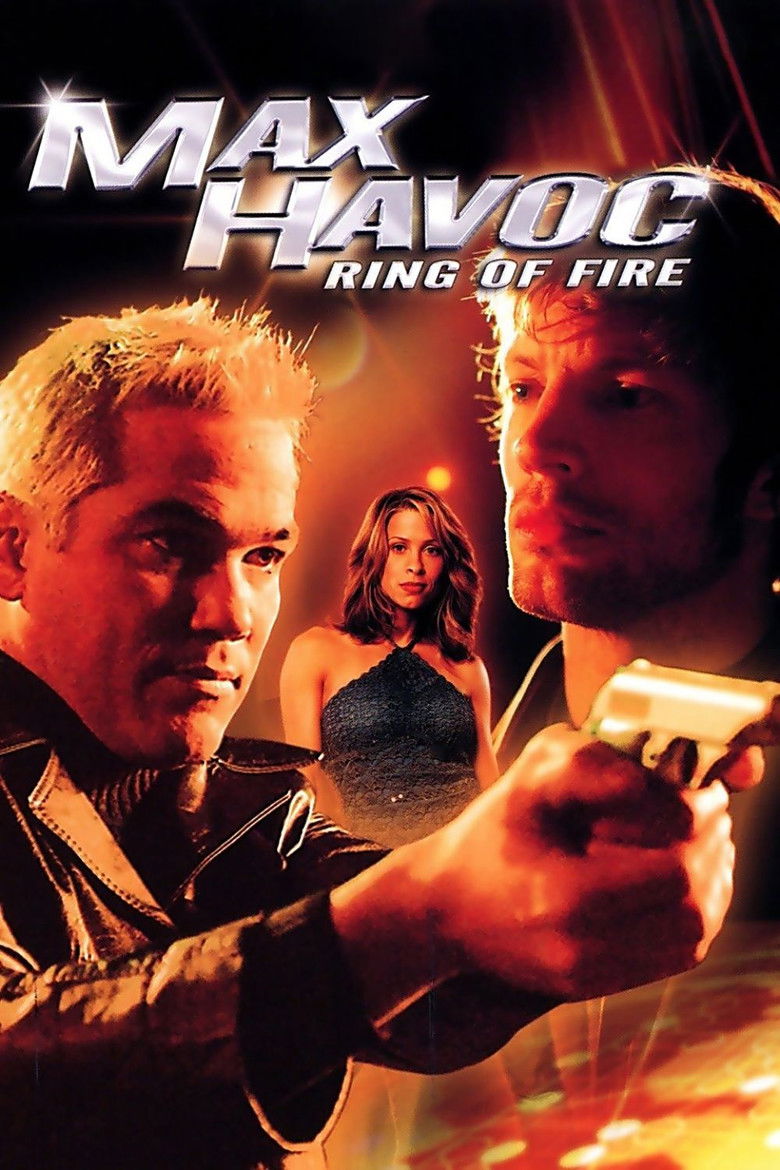
Let me paint you a picture. You sit down for a film challenge, press play on what you think is the first entry in a franchise, and spend the next ninety minutes slowly realising something is very, very wrong. The story feels like it's referencing events you never saw. Characters behave as though they share a history you're not privy to. And then it dawns on you: you've accidentally started on the sequel. Not that it matters much in the end, because even if you'd seen the first film, I doubt it would have helped. Max Havoc: Ring of Fire is the kind of film that would leave you confused and underwhelmed regardless of how much homework you'd done beforehand.
This is a direct-to-video martial arts picture, and it carries every one of those words like a weight around its neck. It doesn't feel like a movie someone was passionate about making. It feels like a contractual obligation, a placeholder, something assembled from leftover parts on a tight schedule with a cast who may or may not have all been in the same room at the same time. The whole thing has the texture of a forgotten television pilot that somehow ballooned to feature length without anyone noticing it had nothing to say.
Where do you even start with the problems? The acting is wooden in a way that goes beyond charm or camp. Line deliveries feel rehearsed in the worst possible sense, like everyone memorised the words but nobody bothered to work out what the words meant. There's no chemistry between characters, no warmth, no tension. People share scenes without appearing to actually interact. It's the performing equivalent of two people standing in the same queue and pretending the other one doesn't exist.
The script doesn't help them. It's a patchwork of genre clichés stitched together with long, wandering stretches of exposition that go nowhere and mean nothing. Characters stare at horizons. They walk through locations slowly. They have conversations that circle back on themselves without advancing anything. The runtime ticks by and you start to wonder if the film itself has forgotten it's supposed to be telling a story.
And then there's the fighting. In a martial arts film, the fights are the point. They're what you showed up for. Even the most forgettable entries in the genre, the ones that stumble badly in every other department, can usually scrape together a few minutes of genuine physical excitement. Not here. The choreography is basic to the point of being insulting, the framing is poor, and the editing has none of the pace or rhythm you need to make action sequences feel alive. Compare it to something like The Raid 2, which understands instinctively how to make a body hitting another body feel like cinema, and the gap is so vast it almost becomes funny. Almost.
I went in hoping for campy fun, the kind of cheerful incompetence that makes a bad film a good evening. I came out with nothing. That's the real problem with Ring of Fire. It's not offensively bad, it's not fascinatingly bizarre, it's not "so bad it's good." It's just inert. Forgettably mediocre in a way that is, genuinely, harder to sit through than outright failure. At least failure has personality. This has a running time and not much else.
I'm giving it one star, and that one star is purely technical. It is a finished product. It has a beginning, a middle, and an end, more or less. The camera points at things. Sound was recorded. By the strictest possible definition, it qualifies as a feature film. As entertainment? It fails completely. As action cinema? Nowhere close. As a fun bad movie? Not even that.
If you're working through a franchise challenge as I was, you have my sympathy. If you're cataloguing obscure direct-to-video martial arts releases for some noble archival purpose, godspeed. For everyone else: this is not the film you're looking for, and you'll thank yourself for looking elsewhere.
Rating: ★ | Year: 2006 | Watched: 2026-06-07
Where to watch
Watch in the UK
Stream: Amazon Prime Video · Amazon Prime Video with Ads
Rent: Amazon Video
Buy: Amazon Video
Physical: Amazon UK · Zavvi
Watch in the US
Stream: fuboTV · Troma NOW
Rent: Amazon Video · Fandango At Home
Buy: Amazon Video · Fandango At Home
Physical: Amazon US
Affiliate disclosure: Movies With Macca may earn a small commission on purchases or subscriptions started via these links. It costs you nothing extra.



