Lali (2026)

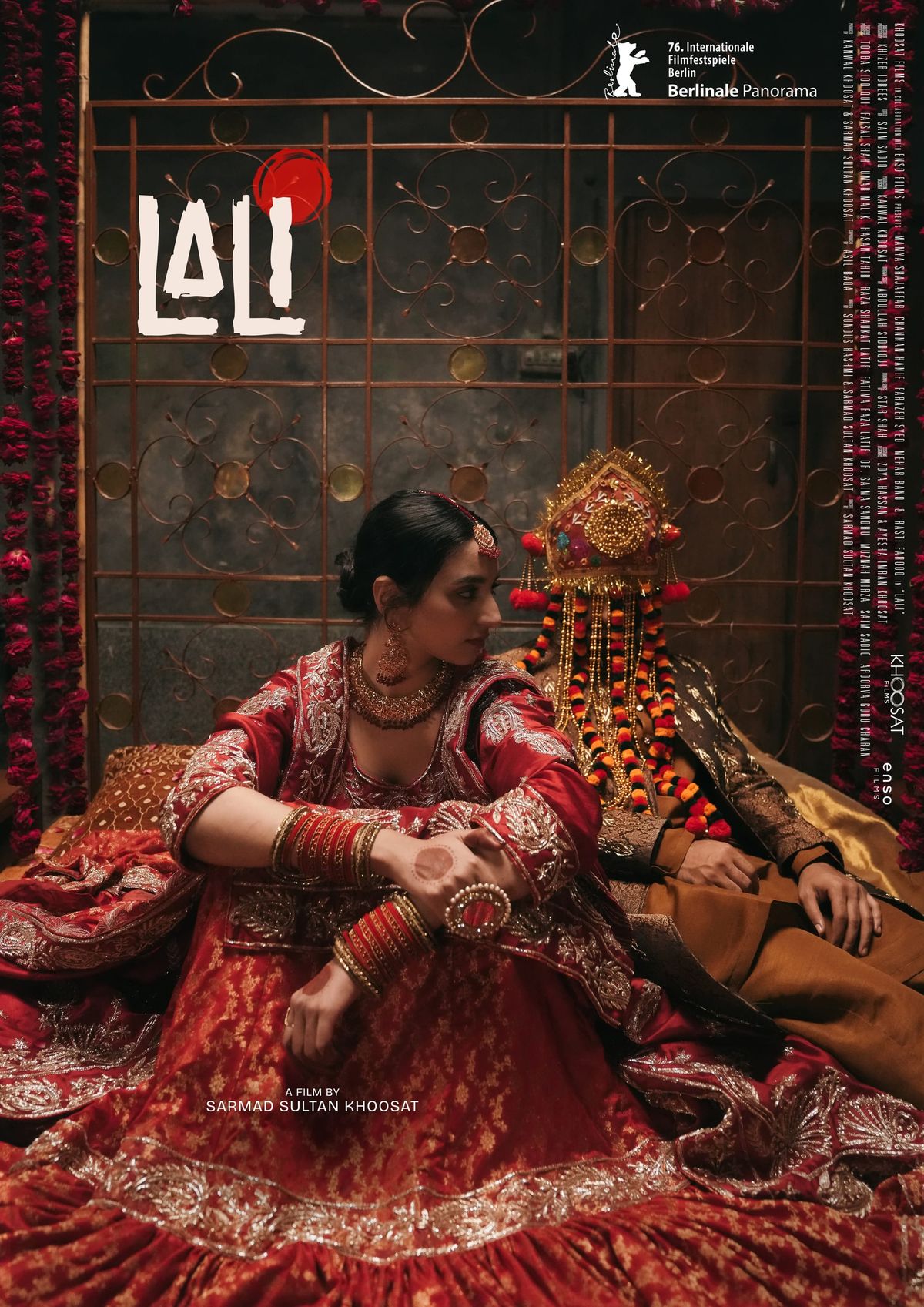
I came to Lali as a card-carrying Joyland obsessive, and perhaps that was always going to be a problem. Sarmad Sultan Khoosat's darkly comic Pakistani fever dream, made by many of the same people who gave us that modern masterpiece, is a handsome, ambitious and frequently intriguing film, but for all its atmosphere it never gripped me the way I hoped it would. There is plenty to admire here, yet by the end I found myself admiring it from a distance. Three stars.
The premise is a strong one. Zeba (Mamya Shajaffar) is a so-called cursed bride: three of her previous suitors have died before they could marry her, and their deaths hang over her like an omen. She is now bound, through an arranged marriage, to Sajawal (Channan Hanif), and from the very start the pair feel like a poor fit. There is uneasy talk of their pasts, a creeping sense that something is not quite right, and Zeba's own foreboding admission that death seems to follow her wherever she goes.
For a while the film builds that dread beautifully. Small, strange misfortunes accumulate, an allergy here, an earring very nearly choked on there, and then a death that lands closer to home. Khoosat has a real feel for the queasy, superstitious texture of the world he is depicting, where prophecy and paranoia bleed into daily life, and the craft throughout is excellent. It looks gorgeous, and the performances are solid across the board.
Then the film takes its bizarre turn, and this is where it and I parted ways. The characters come to believe that a djinn, the soul of a dead father, has taken up residence in a red blanket, and that it is driving people to do and say terrible things. It is left pointedly ambiguous how much of this is genuine possession and how much is Sajawal weaponising superstition to control his wife, which is a clever idea on paper. I am usually a willing convert to a supernatural slow-burn, but this one simply struck me as odd rather than unnerving, tipping into a register I could never quite settle into.
The finale, when it comes, is something of an anti-climax, and it is here that the comparison with Joyland becomes unavoidable. Where that film carried enormous social weight, an aching, precise study of desire and repression, Lali gestures at big themes, gender, fate, the tyranny of belief, without ever landing them with the same force. The result is a film that is atmospheric and often striking, but curiously weightless, its ideas evaporating rather than settling.
Three stars. Lali is a well-made, well-acted and genuinely distinctive piece of Pakistani cinema, and I have no doubt it will find admirers, particularly among those drawn to folkloric, superstition-soaked storytelling. For me, though, it promised more than it delivered, and coming from this team, with that pedigree, I could not help wishing it hit harder. Worth a look, especially if the premise intrigues you, but temper the expectations that a Joyland connection inevitably raises.
Reviewed at the BFI London Film Festival, where Lali receives its UK premiere.
Related on Movies With Macca
More from Country Pakistan: The Queen of My Dreams (2023), Joyland (2022)
More from the 2020s: All That's Left of You (2025), The Whale (2022), Look Back (2024)
More drama: Macbeth in Compton (2026), Something Pointless (2026), Home (2026)