
HyperNormalisation at Ten: A Look Back
HyperNormalisation (2016) at ten: a look back at the film, its making and its legacy.

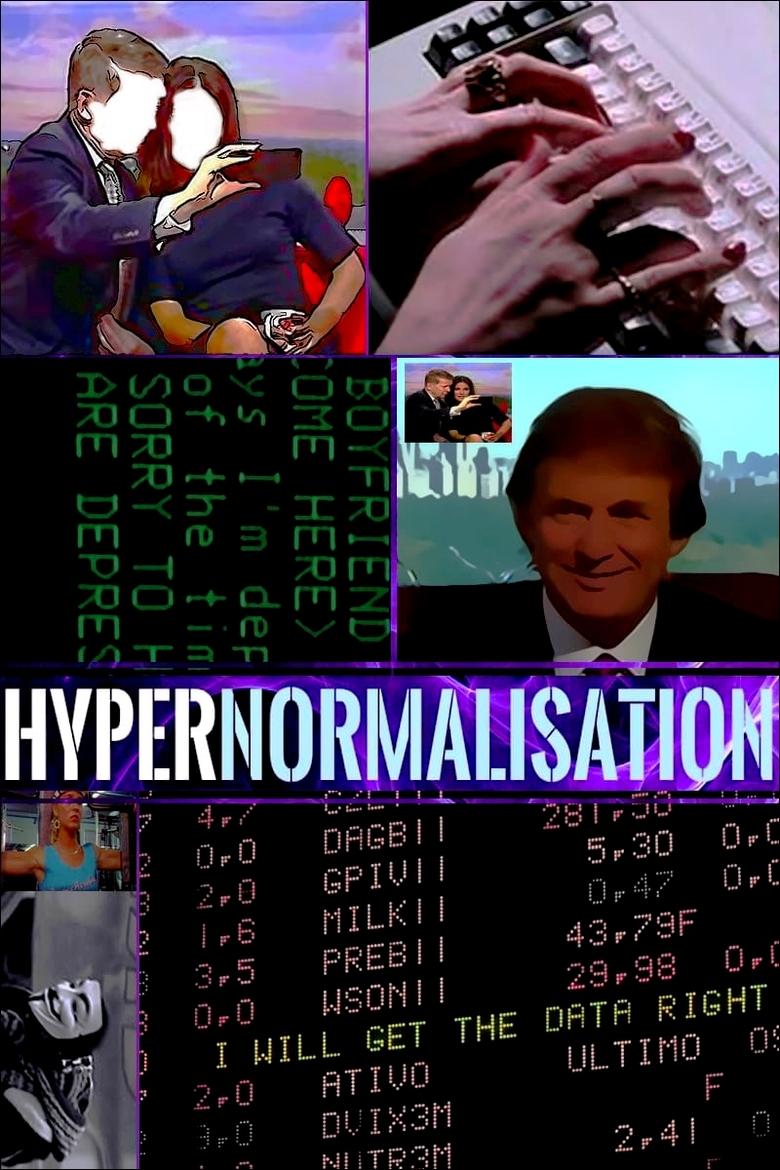
Ten years ago this month, Adam Curtis released HyperNormalisation on BBC iPlayer, and the internet promptly lost its mind trying to work out what they'd just watched. The three-and-a-half-hour essay-film arrived during what felt like an endless news cycle of political chaos: Trump had recently won the US presidency, Brexit was still unfolding with surreal momentum, and the world seemed to be operating under some sort of collective agreement to accept the absurd as routine. Curtis's film suggested that this wasn't actually new at all, that we'd been living in a state of managed unreality for decades, and that the present moment was simply the logical endpoint of systems designed to confuse us into submission. It was either the most important documentary anyone had made or complete bollocks, depending on who you asked, and frankly both groups had a point.
Curtis has always been an essayist first and a documentary filmmaker second, constructing arguments through juxtaposition and archival footage the way a theorist builds them with text. HyperNormalisation follows this method to its most ambitious extreme, weaving together material about Syria, Libya, finance, technology, and Russian politics whilst Curtis himself narrates, offering interpretations that connect dots many viewers hadn't realised existed. The film's central claim is that political and corporate elites have spent half a century creating a false narrative of stability and control, and that we've all become complicit in accepting this fiction because the alternative, admitting uncertainty, is too uncomfortable to contemplate. Whether you find this thesis convincing or reductive rather depends on your tolerance for grand historical claims and Curtis's rather particular editing style. Television critics and academics were divided; general audiences on social media treated it with the intensity usually reserved for religious texts or conspiracy theory rabbit holes. The BBC released it free on iPlayer at a moment when that distribution method still felt like a statement.
A decade later, the film has aged in interesting ways. Some of its specific predictions now look either prescient or merely obvious in hindsight, which is the problem with any essay-film about current events. What hasn't dated is Curtis's basic argument about how narrative and reality have become untethered from one another, something that only seems more relevant with each passing year. Whether HyperNormalisation itself is part of the problem it describes, offering viewers a seductive counter-narrative to feel superior to the approved narrative, remains the central question nobody quite wants to answer. People still cite it, share clips from it, and argue fiercely about whether it changed how they think or just made them feel cleverly confused for three and a half hours. That enduring uncertainty is probably exactly what Curtis intended.
Read Macca's full review of HyperNormalisation (2016): HyperNormalisation (2016) ★★★★
Related on Movies With Macca: more Documentary films · more United Kingdom films · Macca's Must Watch · more articles



