Ghost School (2025)

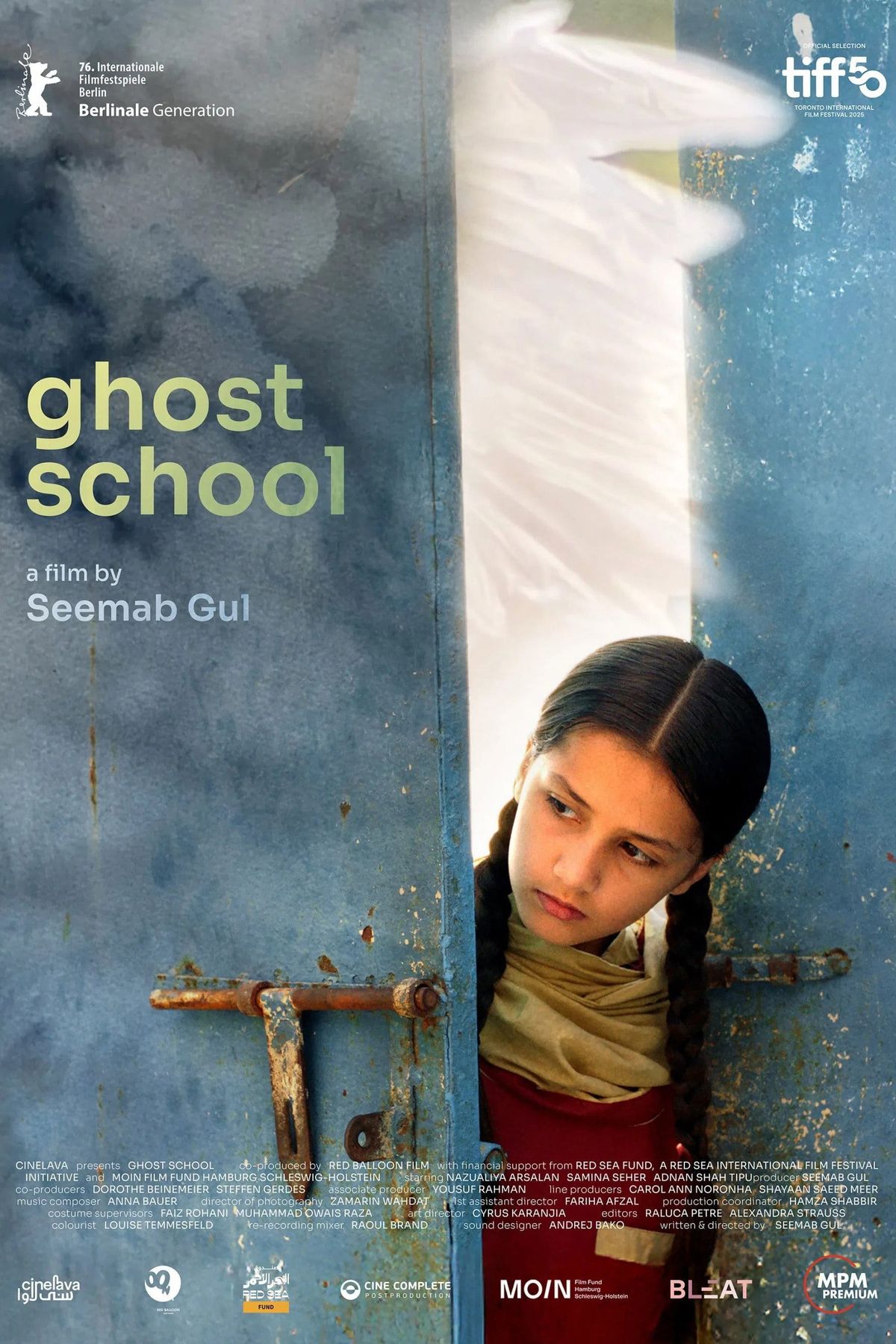
The Pakistani writer-director Seemab Gul built her reputation on short films before stepping up to her first feature, and Ghost School arrives with real festival pedigree, having played in the Berlinale's Generation strand and picked up a Crystal Bear nomination. It reaches UK audiences as part of the second Muslim International Film Festival.
Gul tells her story of village corruption from the ground level of a child, leaning on the textures of rural Pakistan and a thread of magical realism rather than the language of a news report. It is a fable with a social conscience, and it sits in a growing run of films that hand the camera's point of view to a young girl pushing against the world the adults have built.
Seemab Gul's 2025 debut feature, Ghost School, is a genuinely well-intentioned and ambitious piece of cinema. The film follows ten-year-old Rabia as she sets out to uncover the mystery behind why the only school in her village has been shut down. Framed as a fable and a ghost story with a lovely tinge of magical realism, it attempts to explore the deep-rooted issue of corruption entirely through a child's perspective. It's a brave approach, and you can really feel the passion and earnestness behind Gul's directorial debut.
What's fascinating about the film is its heavy social commentary, which tackles the stark realities of the Pakistani caste system, the glaring divide between the haves and the have-nots, and the suffocating grip of local feudal lords. It also weaves in a thoughtful critique of regional superstitions surrounding Jinns. Because it explains these complex socio-political themes quite overtly and directly, it feels very much tailored to a younger, perhaps secondary-school-aged audience rather than the general audience. It serves as a brilliant, accessible entry point into these heavy topics, even if it lacks a bit of subtlety for seasoned cinephiles.
That being said, the film's execution does stumble a bit in the middle. The genuinely decent, hard-hitting message is occasionally sidelined by some very basic dialogue and a narrative structure that relies heavily on Rabia just walking from place to place. It's a charming journey, but the repetitive pacing means the film could have easily been shortened by twenty minutes or more to keep the momentum going. It's certainly a lovely effort, but it doesn't quite reach the polished, masterful heights of films like Wadjda, or Tiger Stripes which handle a similar perspective with a bit more cinematic finesse.
Still, when you look at the big picture, Ghost School is a highly interesting and deeply meaningful first feature. It has a lot of heart, a striking visual flair, and a message that is absolutely worth hearing. It's a solid, promising start for Seemab Gul, and while it's a bit rough around the edges and overstays its welcome slightly, it remains a thoroughly watchable and important piece of cinema.
For all its rough edges and its baggy middle, I came away glad I had spent time with Ghost School. Its heart is in exactly the right place, and there is enough visual promise on show that I will be keen to see what Seemab Gul does with a tighter script next time.
Reviewed from a press screener for the Muslim International Film Festival (MIFF), where Ghost School screens during the 2026 edition, 2 to 5 July.
Related on Movies With Macca
More from Muslim International Film Festival (MIFF): Birds of War (2026), Once Upon a Time in Gaza (2025), Hijra (2025)
More from the 2020s: Look Back (2024), The Whale (2022), All That's Left of You (2025)
More drama: Summer School, 2001 (2025), Silent Rebellion (2025), My Daughter's Hair (2025)