Bye Bye Blue Bird (1999)

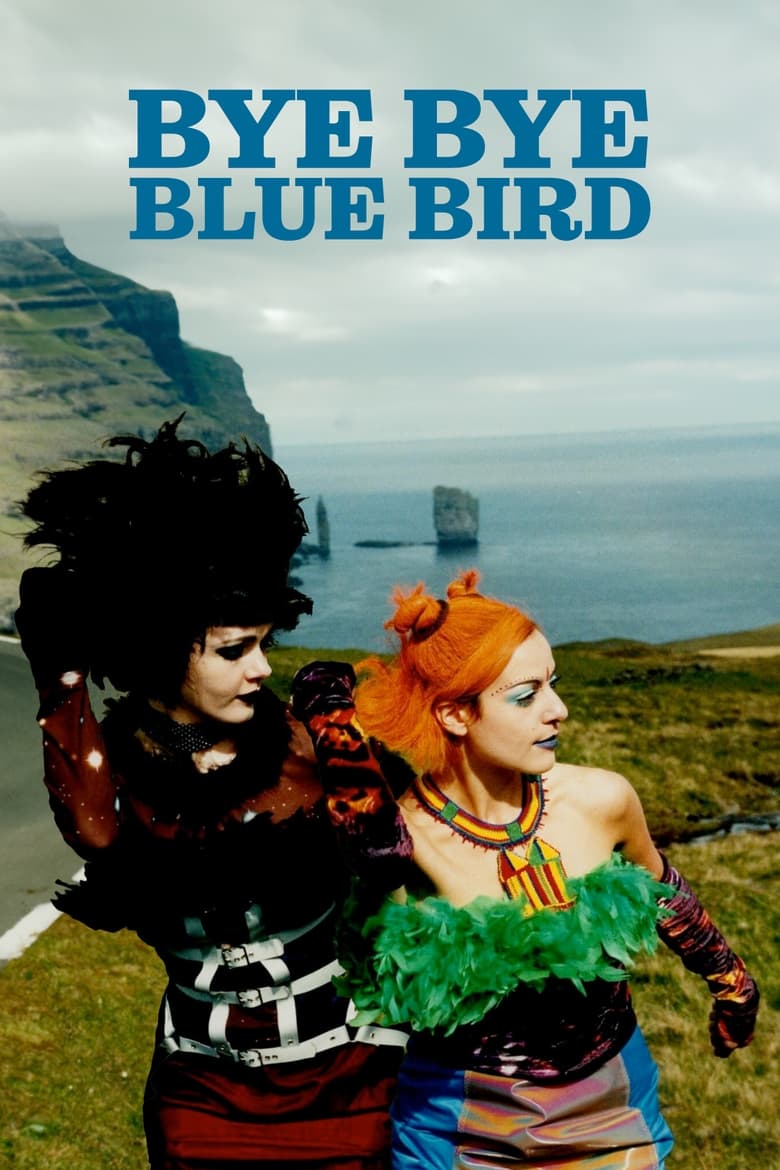
There's something quietly disarming about a film that knows exactly what it is. Bye Bye Blue Bird, directed by Katrin Ottarsdóttir, is a low-budget Faroese road movie about two women returning home after seven years away and finding that home no longer quite fits. It's unassuming, a little quirky, and genuinely good in ways that kept catching me off guard.
Rannvá and Barba roll back into the Faroe Islands transformed. Bold hair, outlandish clothes, eccentric habits picked up from years living off-island. To the tight-knit conservative community they've come back to, they might as well have landed from another planet. Their own families shut them out. Locals stare, whisper, shun. It's a familiar story, in one sense: leave a small place, grow into something bigger, and discover you no longer belong to either world. But what Ottarsdóttir does with that premise is where things get interesting.
The two women fall in with a local fisherman, Rúni, and the three of them set off together with no particular destination in mind. The film's own tagline captures it better than I could: "They didn't know what they were looking for, but they found it." What begins as a scenic drift through the rugged, almost brutally beautiful Faroese landscape gradually turns into something more searching. Rúni carries a dark secret with him, and when that weight starts to surface, the film earns a genuine emotional depth that its breezy early scenes don't fully prepare you for.
It's a modest production, clearly, and there are moments where the seams show. But I'd be lying if I said those limitations bothered me much, because the craft is smart enough to work around them. The editing in particular genuinely surprised me. There's a kinetic energy to the cuts, a musical quality to the pacing, that reminded me quite a bit of Run Lola Run. It gives the whole road trip a forward momentum that keeps things lively and stops the modest resources from ever feeling like a ceiling. When a film this small can make you forget what it doesn't have, that's something worth noting.
The Faroese setting is doing real work here too. The landscape is stark and gorgeous and strange, and Ottarsdóttir uses it with real intelligence. It doesn't just sit in the background looking pretty. It reflects the characters' dislocation, the sense of being caught between a place that shaped you and a self that outgrew it. I've always been drawn to films that treat remote or unfamiliar places not as novelties but as emotional spaces, and this one does exactly that. It reminded me of what I found compelling about Village at the End of the World, that quality of a place pressing itself into the story, becoming almost a character in its own right.
If I'm being honest, Bye Bye Blue Bird is the kind of film that doesn't fully announce its pleasures. It sneaks up on you. The first act feels light, almost frivolous, and you might wonder where it's going. Stick with it. The warmth and the weight build gradually, and by the time Rúni's past comes fully into the light, you're more invested in these three people than you'd have predicted from the opening reels.
It won't change your life. It's not trying to. But it's a charming, visually distinctive character study that punches well above its weight, and proves that a strong sense of place, a bit of editorial flair, and three characters you actually care about can carry a story a very long way. Three stars.
Rating: ★★★ | Year: 1999 | Watched: 2026-06-18
Trailer
▶ Watch the official trailer for Bye Bye Blue Bird (1999) on YouTube