Stelana Kliris and Leem Lubany on Apart, divided homelands and the women left behind

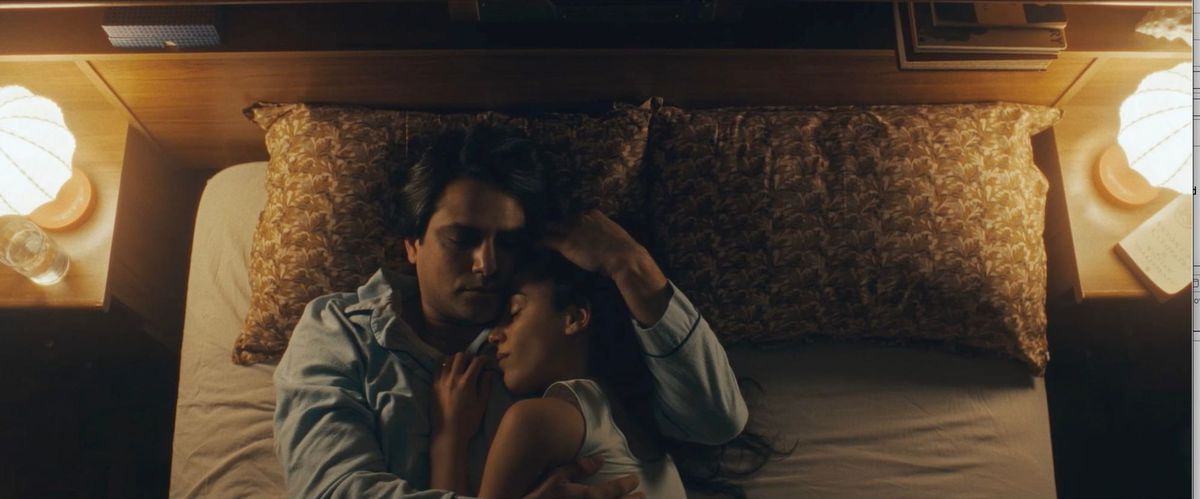
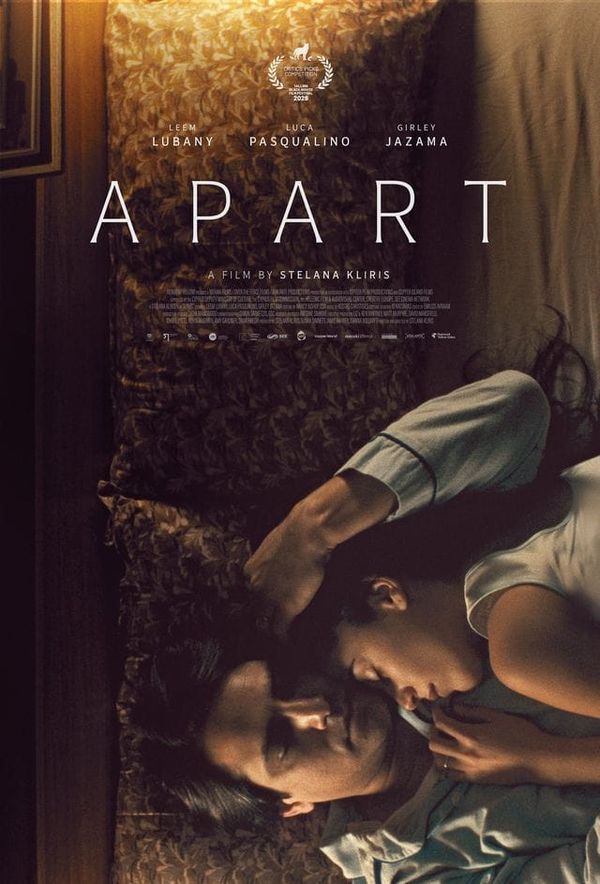
Of all the films I saw around this year's festival season, few moved me as deeply as Apart, Stelana Kliris's beautiful, tragic drama of a young Cypriot woman married off to a stranger in apartheid South Africa in 1974, leaving one divided country for another. I gave it a strong four stars, and I was thrilled when both its writer-director and its remarkable lead agreed to talk to me about it. What follows are two conversations: one with Stelana Kliris, who drew the film from her own family's history, and one with Leem Lubany, whose watchful, interior performance anchors the whole thing. My thanks to them both. (A gentle note: the pieces touch, lightly, on the fact that the film holds a secret, though neither gives away what it is.)
In conversation with Stelana Kliris, writer-director
Apart is drawn from your own family's history; your parents lived through the events that shaped it. What made this the moment to finally tell their story, and how did it feel to build a film around something so personal?
This film is an embodiment of generations of family stories that have been with me since I was born, but it was only when I finally moved to Cyprus and experienced the divide up close that everything came together. It was an emotional response to everything I had been told, and everything I had not been told, growing up, and I think the trigger to tell this story was a visit to the anthropological centre in the buffer zone in Cyprus, where the remains of missing people from the war are identified and returned to their families, possibly one of the most disturbing experiences of my life. So I felt a great sense of responsibility telling this story, but it was also a very cathartic experience to share my perspective.
The film sets two divided countries side by side, Cyprus in 1974 and apartheid South Africa, so that your heroine leaves one wounded, partitioned place only to arrive in another. When did that parallel crystallise for you, and what did putting them in the same frame let you say that neither could on its own?
As a child of refugees and immigrants, I always questioned how I ended up in South Africa, and what events led to my parents choosing a place that was so far and foreign from home, and of course, I couldn't help but draw parallels between two countries that are seemingly so different, but actually have a lot in common. And that's the story: we're all the same, no matter where we come from, we all carry the same humanity. So I had to have both places to make this point.
At the heart of the film is a woman carrying a secret about who she really is. Without giving too much away, how early did that idea exist in the writing, and what were the challenges of planting it and paying it off so that it lands as both a shock and, in hindsight, inevitable?
That was always the core of the story. Without giving away spoilers, it was a definite challenge as to when and how her secret would come out, and also doing it in a way that the audience would understand and perhaps sympathise with the decision she makes.
Leem Lubany gives a remarkably interior, watchful performance; so much is held in her eyes. What made her the one, and how did the two of you work together to calibrate how much she revealed and how much she kept hidden?
This was a difficult role to cast locally because of the subject matter; it hits too close to home. So when I realised I would have to cast outside of Cyprus, Leem became the obvious choice. I remember being awed by this young Palestinian actress in Omar and, coming from a place of division herself, she immediately understood the context of our story. She was so easy to work with, and her approach to the character was exactly as I had imagined it. Subtle but powerful. The women of that generation had hard lives and simply learned to carry their trauma inside them, which she captures beautifully.
The apartheid setting is far more than backdrop; the segregated doorways, the casual police cruelty, and above all Johanna's story run right through the film. How did you approach weaving those intersecting injustices together without one swallowing the other?
It was a challenge to combine so many stories in one film, so the approach was to keep the focus on Leem's character and perspective, and allow all of these events to inform and affect her own experience and choices. It was always supposed to be an intimate, character-driven story against these two historical events.
You use flashback beautifully to let your heroine's past in Cyprus bleed into her present. How did you think about when and how much of that history to reveal, and about the role music plays; the film's final stretch is scored to devastating effect?
Thank you! With the flashbacks, it was a balance of moving the story forward and timing the moments to take a step back and reveal a little more of the past, without curbing the momentum of the film. I had to look for organic triggers in the present that would take us back to the past; my favourite is the dancing sequence, and it's a good example of how we used our music. The song that plays over that sequence is actually a traditional Greek love song from Asia Minor that was carried by the refugees who moved to Greece after those conflicts, again parallel stories from different places. We were very deliberate in our song choices to capture the conflict and mood of the era; specifically, you'll hear Bob Dylan's "Hurricane", Rodriguez's "Like Janis" (Rodriguez's music had a cult anti-establishment following in South Africa) and the Cypriot song "Acherobasman" by Alkinoos Ioannidis. The original score was by Kostas Christides, who did a beautiful job of firstly focusing on the emotional journey and then subtly adding local flavour to certain scenes. We have multiple storylines, and he was able to bring them together with a very tender score.
The press notes describe Apart as looking at war and division "through the female gaze." What does that framing mean to you in practice, both in whose story you chose to tell and in how you chose to tell it?
The men in my family never talk about the war in Cyprus, understandably, with the trauma they experienced. So all the stories I have are from the women, from my mother, grandmother and aunts, and while they were not on the frontline, they had an equally horrifying experience of the war, as women in all war zones do. We see many stories about soldiers, but not as many about the women left behind to fend for themselves and their children. This is the story I wanted to tell, I had to tell.
Apart had its world premiere at Tallinn Black Nights in the Critics' Picks competition, a long way from Find Me Falling. What has this film's journey meant to you, and what are you working on next?
While I love making feel-good films like Find Me Falling, it is very important to also be able to tell personal stories like Apart that might even get a dialogue going and create some impact. Apart is a very special film to me; it was very hard to put together, it's a combination of heartfelt work by so many talented people, and I hope that audiences embrace it. I have a few projects in the works: I'm producing Yianna Americanou's next feature, My Name is Lily, and I'm developing my next feature, The Wedding Plan.
In conversation with Leem Lubany, lead
What was your first reaction when you read the script for Apart, and what was it about this woman and her story that made you want to play her?
Reading a script that is based on a true story is always fascinating, and knowing how personal it was to Stelana made it even more special. I was really interested in this woman and the situation she finds herself in. She's forced to leave her home, marry a complete stranger, in a country she knows nothing about, while carrying a massive secret. That's one strong woman. And the interesting thing is that she's not necessarily equipped for any of it. She's figuring things out as she goes.
So much of your performance lives in stillness and in the eyes, in what your character cannot say out loud. How did you approach building a role where so much has to be held back and hidden, and where the audience has to read you rather than be told?
There's a lot of tension in stillness, and I liked playing with that. I think a lot of it was about understanding what was going on in her head and how much she was trying to keep to herself. I didn't want to make her seem deliberately mysterious. I just tried to be clear about what she was feeling in each scene, without feeling the need to show all of it.
Without spoiling it, your character is not quite who she first appears to be. How did knowing her full truth shape the way you played her in those early scenes, before the audience understands what you do?
I think it helped me understand why she's so guarded, even in the little things. Like how she reacts to people, how much she trusts them, or what she chooses to say. I wanted that to come through naturally, without making it too obvious that there's more going on.
The film moves between languages and cultures, Cypriot, Greek, and a world away in South Africa. How did you work with those layers, the accent, the cultural detail, the sense of a woman performing a self that isn't entirely her own?
I had to learn Cypriot Greek for the role, which was quite a challenge! Luckily, I had an amazing and very patient dialect coach. I also spent time learning about the history of Cyprus and the relationship between the two communities, which helped me understand her instincts and reactions. And then there's South Africa, with its own complicated history, which was a completely unfamiliar world to her. I wanted that to come through in how she behaved and interacted with people.
The slow, wary thaw between your character and Nico is the emotional spine of the film. What was it like building that relationship with Luca Pasqualino, and finding the tenderness underneath all the awkwardness and distance?
I think it was important to let the awkwardness exist and not rush into making them comfortable with each other. Working opposite Luca, I enjoyed finding those little moments where she starts to let her guard down, like when a conversation feels a bit more natural or she catches herself enjoying his company.
Was there a scene that was especially hard, or especially rewarding, to play, something that stayed with you after the shoot?
I actually really enjoyed filming the montage scenes. There's a lot more room to be playful and improvise without having to think too much about the dialogue. It was fun to just go with whatever happened in the moment and enjoy those experiences through the character.
Stelana has spoken about you coming from a place of division yourself, and understanding this story in your bones. How much did your own background feed into the role, and did playing it shift how you think about displacement and belonging?
Being Palestinian, there were parts of her experience I could connect with quite naturally. I grew up understanding how much your life can be shaped by politics and circumstances completely outside your control. Of course, our experiences are very different, but I understand something about what it means when your identity becomes political, whether you want it to or not. I wouldn't say playing her changed my perspective, because I already understand that desire to feel safe, belong, and build a life of your own, even if it means having to do so away from your own country.
From Omar to this, you've gravitated towards stories set against real political fracture. What do you hope audiences take from Apart, and what's next for you?
It's funny because I don't actually seek out political stories, but somehow I keep finding myself in them. Maybe I just find stories more interesting when they're willing to make people a little uncomfortable. With Apart, I don't think there's a simple lesson to take away from it. Human connection isn't going to solve decades of conflict, obviously, but I wouldn't underestimate its power either. As for what's next, maybe spice things up a little and do a comedy!
My thanks again to Stelana Kliris and Leem Lubany for their time and their generosity. Apart had its world premiere at Tallinn Black Nights Film Festival in the Critics' Picks competition, and my review of the film is up on the site.