A Gorilla Story: Told by David Attenborough (2026)

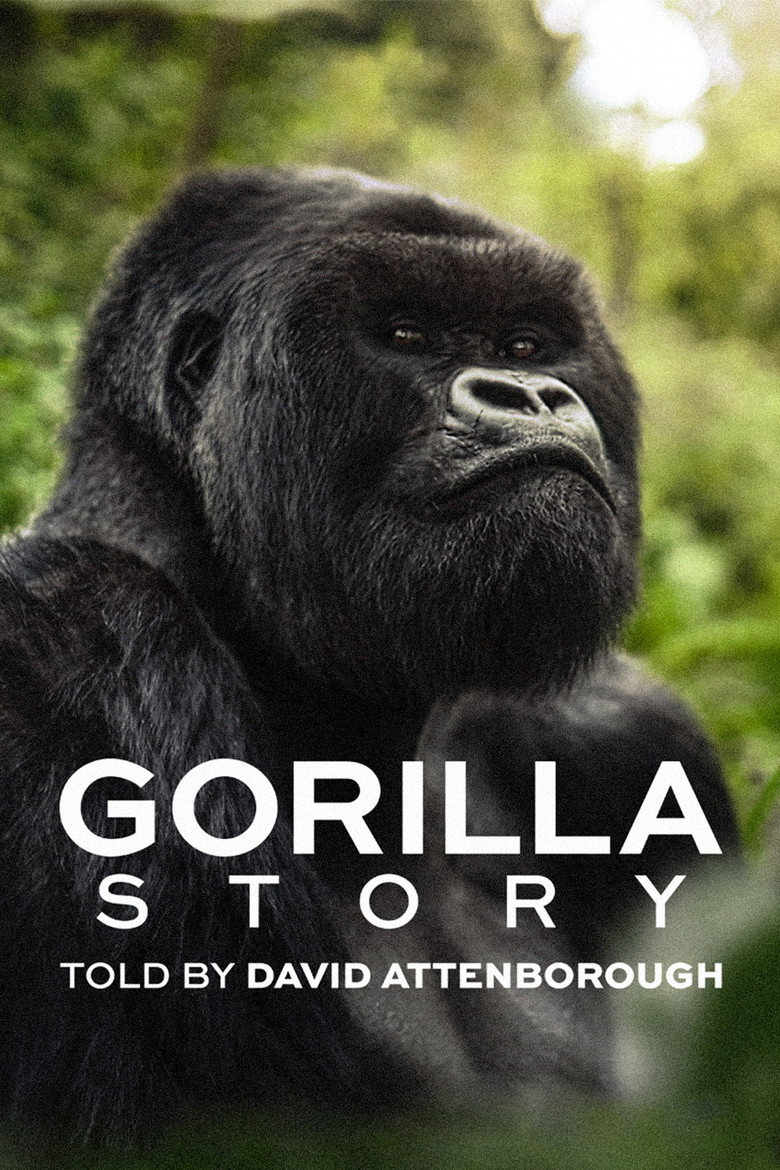
There's a moment early in A Gorilla Story: Told by David Attenborough that stops you cold. The archive footage of a young Attenborough, sitting amongst mountain gorillas in the Rwandan Virungas in the 1970s, a juvenile called Pablo clambering over him with the casual confidence of someone who owns the place. It is genuinely magical, and the film's central idea, of returning to Rwanda decades later to find Pablo's descendants and trace what has become of that family, is a lovely one. As hooks for a conservation story go, it is hard to beat. I just wish the film had done a bit more with it.
James Reed directs, the same James Reed behind My Octopus Teacher, which won the Oscar for best documentary feature and earned every bit of the praise it received. That film worked because it was genuinely surprising, a story you had never quite seen told in quite that way. A Gorilla Story has a similarly affecting premise but, for a long-time Attenborough viewer, something keeps getting in the way of it landing with full force.
The problem is the recycling. A significant chunk of what Reed threads through the new footage is archival material, and if you have followed Attenborough's career with any devotion, a fair portion of it will feel awfully familiar. You have seen these shots before, in one form or another, across several decades of natural history television. The present-day footage of the current gorilla group is remarkable when it arrives, genuinely fresh and often beautiful. But it has to share screen time with a lot that simply isn't new, and that imbalance is hard to shake.
My reservation here is the same one I keep coming back to with these Netflix Attenborough productions. David Attenborough: A Life on Our Planet got away with leaning heavily on archive because it was, at heart, a memoir, a reckoning, almost a farewell. The personal framing justified looking backwards. Here the same approach feels less earned, because the ostensible subject is the gorillas and their future, not Attenborough's past. When the film cuts away from Pablo's descendants to remind us, yet again, of what Rwanda's forests looked like in the seventies, you feel the storytelling stall.
None of that is to say it does bad work, because it doesn't. On conservation, it is honest and specific. It lays out the real, measurable progress that has been made in protecting mountain gorillas without papering over the threats that still hang over them. Habitat pressure, political instability, the proximity of human communities, all of it is addressed with clarity and without sentimentality. As an awareness piece it is good and noble and entirely worth your time if the subject is new to you. If this is your first proper dose of Attenborough you may well be spellbound, and I would not blame you for a second.
But judged as a documentary in its own right, rather than as a cause, it does not quite justify its own existence alongside everything that has come before it. A genuinely fresh extended look at this present-day gorilla family, with the archive kept as seasoning rather than bulk, could have been something special. What we have instead is warm, well-meaning, and doing important work in the world. I just find myself respecting the message rather more than the film.
Two and a half stars, and honesty compels me to admit that at least one of those belongs to the gorillas themselves.
Rating: ★★½ | Year: 2026 | Watched: 2026-08-23
Where to watch
Watch in the UK
Stream: Netflix · Netflix Standard with Ads
Physical: Amazon UK · Zavvi
Watch in the US
Stream: Netflix · Netflix Standard with Ads
Physical: Amazon US
Affiliate disclosure: Movies With Macca may earn a small commission on purchases or subscriptions started via these links. It costs you nothing extra.