
Under the Shadow (2016)

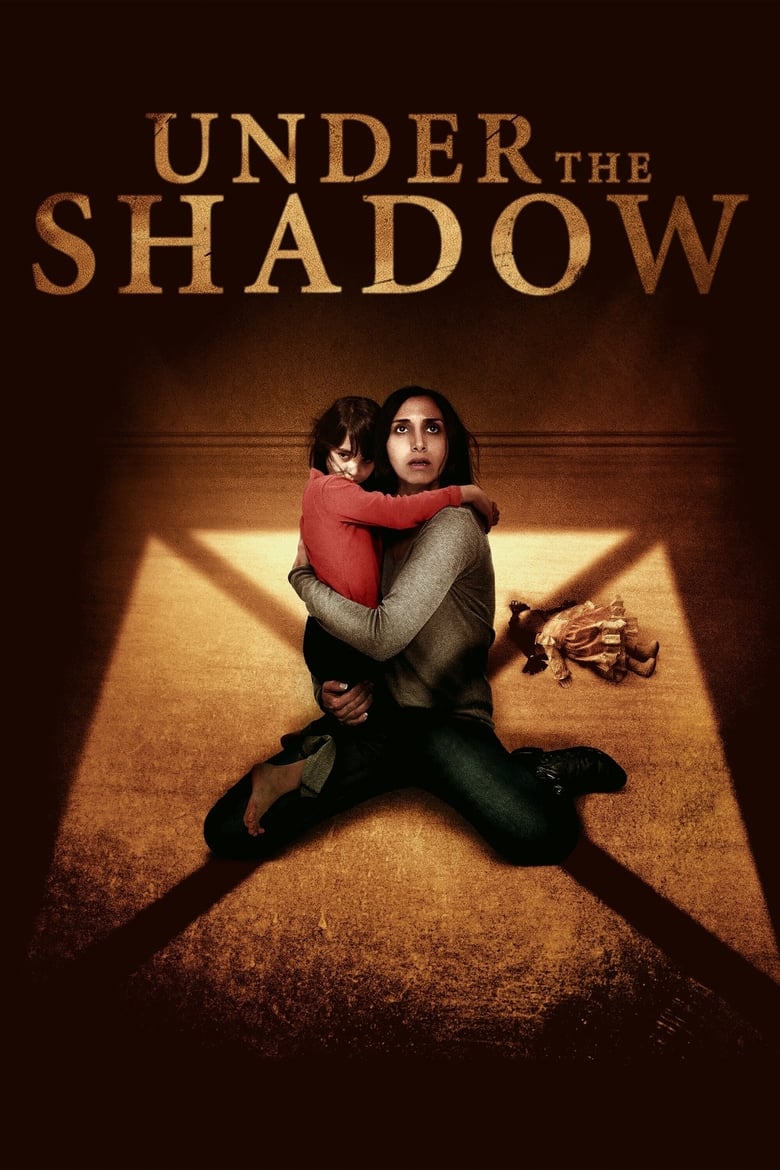
The premise sounds corny, I'll be straight with you. A djinn unleashed by a missile strike into a Tehran apartment block during the Iran-Iraq War. On paper, that reads like the kind of horror concept you might pitch as a joke. But Babak Anvari's Under the Shadow earns your patience, and I'm genuinely glad I stuck with it, because there's something quietly remarkable going on here.
It's not often you come across a horror film from the Middle East, and it's even rarer to find one produced out of Jordan, so this one stood out to me from the off. The setting alone gives it an immediate, visceral weight that most supernatural horror films simply don't have. The terror of living under constant threat of aerial bombardment, the paranoia, the sirens, the sprint to the shelter when the bombs start falling, all of that is so grounded and so human that it creates a foundation of dread before the supernatural has shown a single frame of itself. Anvari understands that the most effective horror sits alongside something real and raw, and the reality here is devastating enough on its own.
The first hour is largely a slow burn. We're getting to know Shideh, played brilliantly by Narges Rashidi, a woman caught between the suffocating restrictions of life in wartime Tehran and the strain of a marriage that's quietly coming apart at the seams. Her husband leaves. She stays, with their young daughter, in an apartment building that's been partially struck by an Iraqi missile. A missile that, crucially, didn't explode. And then the neighbours start whispering about djinn, malevolent spirits from Middle Eastern folklore, and whether the missile brought something in with it.
The slow build isn't for everyone, and I won't pretend there aren't moments where you're willing the film to get on with it. But the payoff, when it comes, is worth it. The supernatural elements seep in rather than crash in, which is exactly right. There's a specific scene involving a bed that genuinely caught me off guard and left me unsettled in a way I wasn't expecting. Anvari has a real feel for atmosphere, and for using confined, familiar spaces to make you feel trapped. The flat stops feeling like a home and starts feeling like a place you'd want to escape.
Where the film stumbles is in its final stretch. Just as it's building towards what should be a suffocating climax, the narrative starts to lose its grip a bit. The resolution feels messy and doesn't land with the terrifying punch that such a carefully constructed buildup deserves. It's frustrating, because you can feel the film working so hard to earn that moment, and then it doesn't quite get there. The final reel lets the side down.
Still, I think it's worth your time. Anvari does something genuinely difficult here: he blends political and personal trauma with folklore horror in a way that never feels exploitative or gimmicky. The war isn't a backdrop for the sake of exoticism, it's the whole point. The djinn and the bombs are expressions of the same dread, the same sense of forces beyond your control closing in around you. If you're drawn to world cinema that uses its specific cultural and geographic setting to do something fresh with genre, this pairs well with Theeb, which is another film that finds its tension in a very particular time and place.
Three stars. A solid, atmospheric piece of horror that proves the genre can thrive well outside Western conventions. It doesn't quite stick the landing, but what it gets right, it gets very right.
Rating: ★★★ | Year: 2016 | Watched: 2026-06-15
Where to watch
Watch in the UK
Stream: Netflix · Netflix Standard with Ads
Rent: Apple TV Store · Rakuten TV · Amazon Video · Sky Store
Buy: Apple TV Store · Rakuten TV · Amazon Video
Physical: Amazon UK · Zavvi
Watch in the US
Stream: Netflix · Netflix Standard with Ads
Rent: Amazon Video · Apple TV Store · Fandango At Home
Buy: Amazon Video · Apple TV Store · Fandango At Home
Physical: Amazon US
Affiliate disclosure: Movies With Macca may earn a small commission on purchases or subscriptions started via these links. It costs you nothing extra.



