The Seasons (1975)

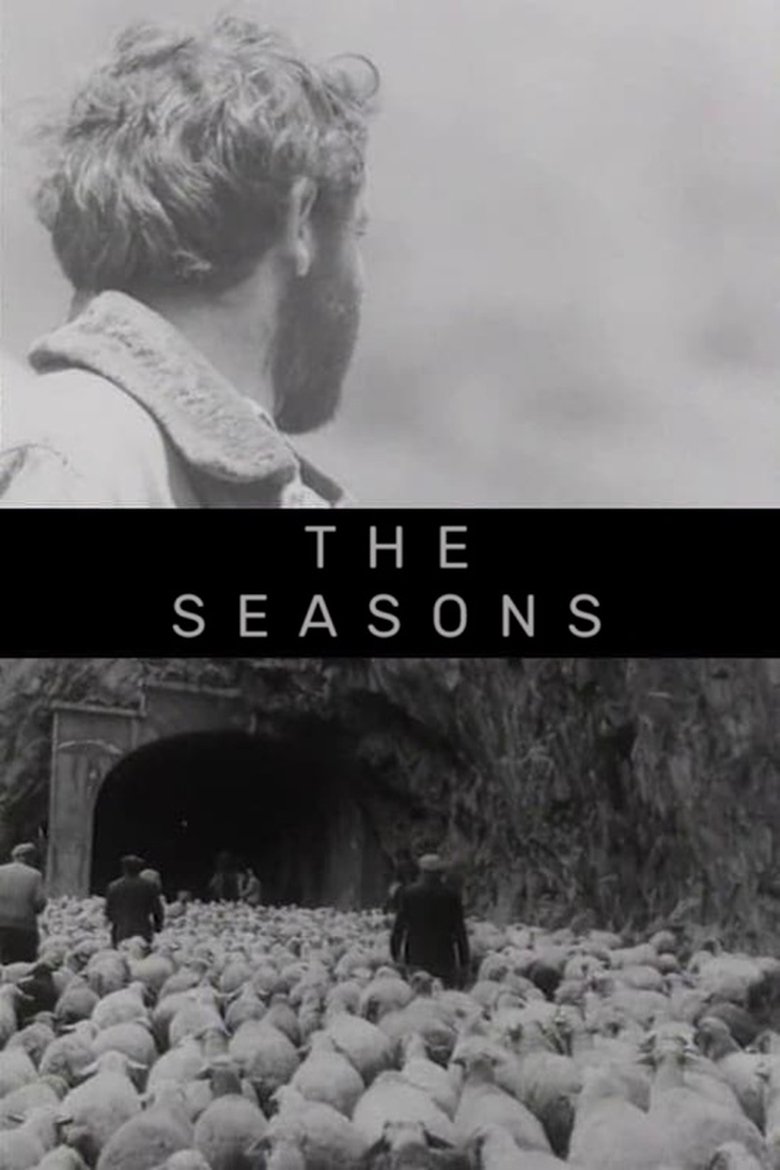
There's a version of The Seasons that I could imagine loving. Shepherds in the Armenian highlands, a brutal and beautiful landscape, Vivaldi's Four Seasons rolling underneath it all. On paper, that's genuinely poetic. In practice, I sat there waiting for something to happen, and nothing ever did.
Artavazd Peleshian's 1975 film-essay is, as far as I can tell, well regarded in the circles that care about avant-garde documentary filmmaking. And I'll be honest with you: I'm not really one of those people. I try to be. I want to be. But The Seasons pushed me to my limit, and I came out the other side with a star and a half and a mild headache.
Let me give credit where it's due first, because there genuinely is credit to give. The cinematography from Mikhail Vartanov, in what was his final collaboration with Peleshian, is often stunning. The Armenian landscapes are rugged and raw, and there are individual shots here that carry real weight. Shepherds hauling themselves through snow, animals scattered across hillsides, the sheer physical grind of that way of life captured with a gritty, unvarnished eye. Vartanov clearly knew how to point a camera at something real and make it feel significant. I won't take that away from him.
The Vivaldi, too, is obviously gorgeous. It's Vivaldi. You can't go wrong. But here's my problem: the music is doing absolutely everything emotionally. The visuals are just sort of... there alongside it. Rather than the two elements genuinely working together, it feels like someone laid a masterpiece of classical composition over a collection of footage and called it a marriage. It's more like a beautifully scored slideshow. The auditory experience is often brilliant. The overall experience is something else.
And this is where I have to be straight with you. I know this is very much a "me" problem in some respects. Peleshian isn't trying to tell a story. He's not interested in characters, conflict or resolution. He's after something more elemental, a kind of rhythm between human life and the natural world, cyclical and ancient and indifferent to whether I'm engaged or not. I understand the ambition. I respect it intellectually. I just found it deeply unengaging to actually sit through.
There are no people here to latch onto, no thread to follow. It's sheep. It's snow. It's more sheep. It's more snow. Occasionally it's very beautiful. Mostly I was checking how much time was left. I had a similar experience with The Color of Pomegranates, another piece of Soviet-era Armenian cinema that operates in a register that demands a certain kind of patience I clearly don't always possess. That film at least gave me extraordinary imagery to wrestle with at every turn. The Seasons gives me long stretches where I genuinely wasn't sure what I was meant to be feeling.
For fans of poetic, observational documentary filmmaking, this is probably essential viewing. It occupies a similar space to something like Man with a Movie Camera, films that treat the camera itself as the argument rather than a tool for conveying one. I admire that tradition even when it loses me. And The Seasons loses me.
Peleshian and Vartanov were clearly committed artists, and this is a genuine piece of Soviet-Armenian cinematic history. There's something meaningful in the fact that they were documenting a way of life already beginning to vanish, and the care taken to capture it is obvious. I don't want to be dismissive of that. But care and commitment don't automatically translate into an engaging watch, and for me, at least, this one doesn't get there.
One and a half stars. Technically proficient, occasionally striking, and thoroughly hard work.
Rating: ★½ | Year: 1975 | Watched: 2026-07-09