
The Royal Tenenbaums at Twenty-Five: A Look Back
The Royal Tenenbaums (2001) at twenty-five: a look back at the film, its making and its legacy.

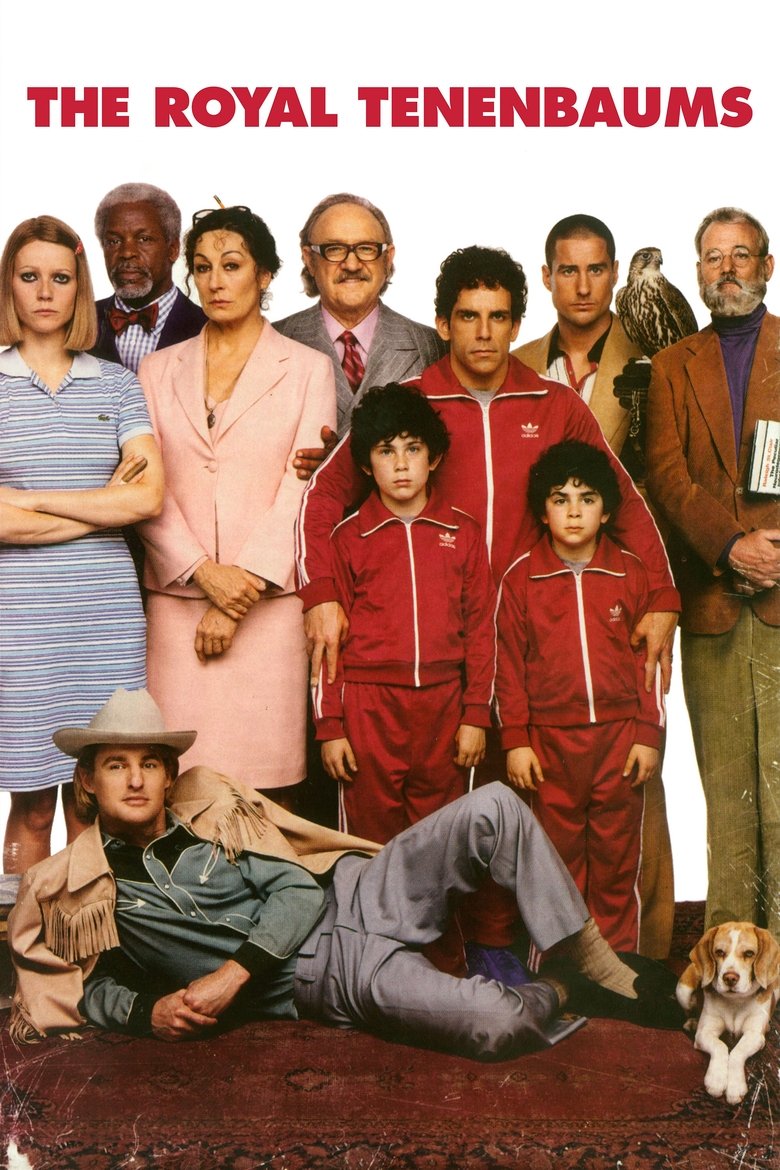
Twenty-five years ago this week, Wes Anderson's The Royal Tenenbaums arrived in cinemas, and film suddenly felt a lot more like a meticulously arranged dollhouse. The film opened on 5 October 2001, at a moment when American cinema was still processing the shock of September and looking for different ways to tell stories. Here was Anderson, barely thirty years old, offering audiences something that was simultaneously intimate and theatrical, funny and melancholic, entirely its own thing. The film starred Gene Hackman as a fraudulent patriarch returning to his estranged family, alongside Anjelica Huston, Ben Stiller, Gwyneth Paltrow, Luke Wilson, and Owen Wilson, in a property that felt less like a conventional narrative and more like an illustrated memoir of dysfunction.
What made The Royal Tenenbaums remarkable in its moment was how confidently Anderson committed to his visual language without apology. This wasn't indie film trying to scrape together authenticity on a shoestring; this was a deliberate aesthetic choice, from the symmetrical framing to the pastel colour palette to the archival photograph sequences that opened each family member's story. The production design felt almost perverse in how much effort went into creating a world that looked both whimsical and sad. At the time, the film arrived amid a wave of American independent cinema that had already shifted considerably from the 1990s. Anderson was working at a bigger scale than his debut, Bottle Rocket, but he hadn't compromised his sensibility. The soundtrack, featuring everyone from The Rolling Stones to Elliott Smith, added another layer of control to a film that could have easily tipped into excessive. Critics at the time recognised something unusual was happening, even if not all of them were entirely convinced.
What's striking about The Royal Tenenbaums now is how influential it became without ever chasing influence. The film's aesthetic and structure have been genuinely transformative in how younger filmmakers approach production design and visual storytelling, for better and occasionally for worse. It established several of Anderson's recurring ideas about family, failure, and the fictions we construct about ourselves that he'd return to across subsequent films. More importantly, the film has aged by continuing to reveal new textures. It's simultaneously one of his warmest films and one of his coldest, a contradiction that makes it endlessly rewatchable. A quarter-century later, it remains proof that the most personal films, executed with enough rigour and vision, somehow become part of the furniture of cinema itself.
Read Macca's full review of The Royal Tenenbaums (2001): The Royal Tenenbaums (2001) ★★★½
Related on Movies With Macca: more Comedy films · more United States Of America films · Macca's Must Watch · more articles



