
Rocky II (1979)

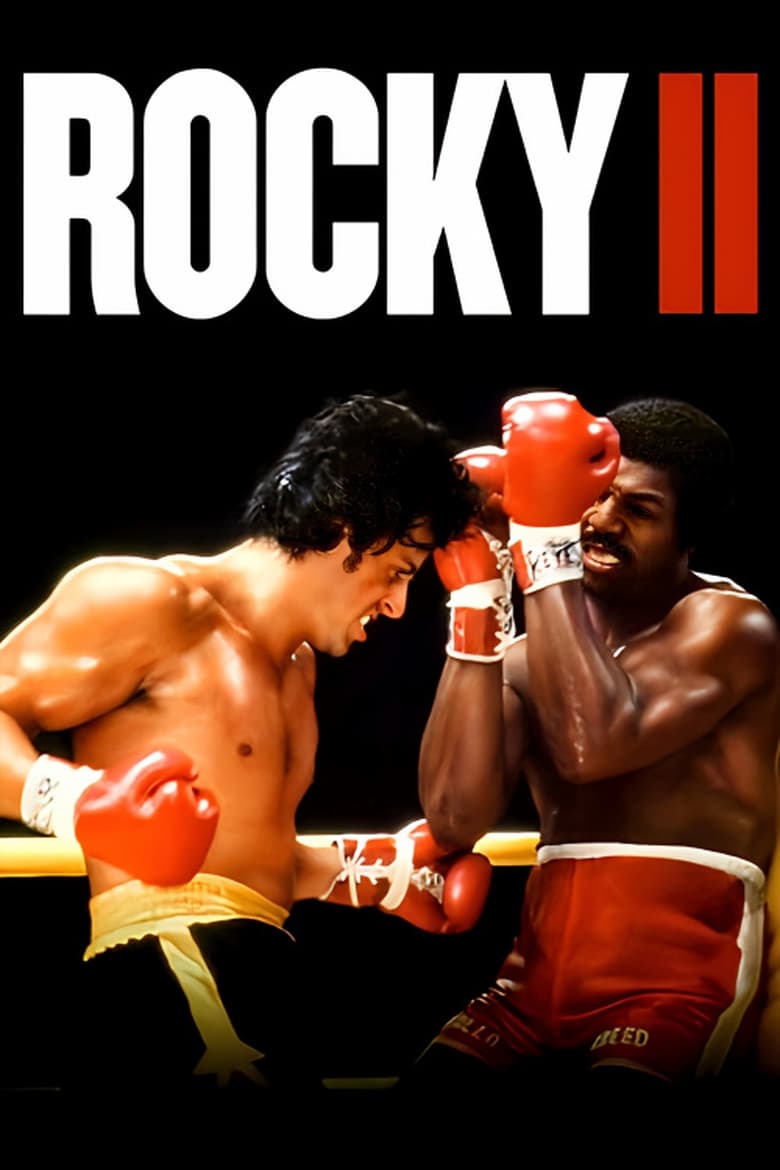
When Rocky arrived in 1976, it was one of those films that seemed to come from nowhere and land everywhere. Made on a budget that barely registered by Hollywood standards, written by and starring a virtually unknown Sylvester Stallone, it won three Academy Awards including Best Picture and turned its leading man into one of the most bankable names in the industry overnight. A sequel was, commercially speaking, inevitable. What was less predictable was that Stallone would again write and this time also direct the follow-up himself, taking on a degree of creative control that was, for a second major studio picture, a genuine statement of intent. (I covered the original in some detail, and my review of Rocky (1976) sets out why I think it sits close to the top of the American sports drama canon.)
Rocky II arrived three years later through United Artists and Winkler Films, the same production partnership that had backed the original. The premise picks up almost exactly where its predecessor left off: Rocky Balboa has gone the full fifteen rounds with heavyweight champion Apollo Creed, lost by a whisker on the judges' scorecards, and now has to work out what his life looks like on the other side of that extraordinary night. For Creed, the problem runs in the opposite direction. A fight he was supposed to win handily now looks like a blemish, and he wants the rematch. The film spends a good chunk of its 119-minute runtime in domestic territory before the two men find themselves pointed back at each other and back towards the ring. Stallone, as writer and director, is working with a structure that is deliberately slower in its build than the original, leaning on the characters and their circumstances before it allows itself the release of the climax.
The cast reassembles almost entirely intact. Stallone leads, of course, with Talia Shire returning as Adrian, Burt Young as the reliably abrasive Paulie, Carl Weathers as a Creed given considerably more screen time and dimension than the first film afforded him, and Burgess Meredith reprising Mickey with the same gravelly authority. Weathers in particular brings a layered restlessness to Creed, a man whose pride is doing battle with his better judgement, and the dynamic between him and Stallone has genuine charge. Meredith, for his part, was one of those actors who could deliver absolute conviction in almost any register, and he anchors the training sequences with a no-nonsense warmth that the film depends on.
Behind the camera, cinematographer Wilmer Butler gives the film a look that sits comfortably within the working-class Philadelphia palette established by the original: close, a little grainy in the quieter moments, then opening up when the action demands it. The boxing sequences in particular have an immediacy and physical texture that feels earned rather than choreographed. Editors Janice Hampton and Stanford C. Allen handle the cutting across a film that shifts gear several times, and the rhythm they find in the fight sequences is brisk without sacrificing the weight of individual blows. Bill Conti returns to compose the score, and his work here is exactly what you would expect in the best sense: the orchestral swells are familiar, the training montage music is propulsive, and the whole thing is calibrated to push the emotional temperature at precisely the moments the film needs it. Conti had of course scored the original, and his themes had already taken on a life of their own in popular culture by the time this sequel arrived.
It is worth noting that Stallone as director was, at this stage, genuinely unproven in that chair, and Rocky II represents a significant test of whether his authorial instincts extended beyond performance and the page. For those interested in how his directorial career developed, see also my review of Cobra (1986), which finds him in considerably leaner, more stylised territory. And for a sense of how his screen persona fared under someone else's direction in a parallel franchise, First Blood (1982) makes for an instructive companion piece.
The strange thing about Rocky II is that the very quality I loved in the first film turned round and annoyed me in this one.
In Rocky, Stallone's mumbling, soft-hearted lug was understated and rather touching; here, especially in the long early stretch where a newly flush Rocky goes splashing his winnings around, that same shtick is cranked up to eleven, all strangled diction and "eeurrrggh", until he tips over from endearing into grating. You know exactly the sound I mean. It is signature Stallone, just far too much of it, and that whole nouveau-riche section drags on well past the point of awkwardness.
It is a shame, because when the film stops fussing about money and gets back to the boxing, it is really good. The scenes with Carl Weathers's Apollo Creed are exciting and tense, and the fight itself is everything you want it to be. Less sure-footed is the domestic drama. Talia Shire was, for me, the very soul of the first Rocky, the single biggest reason I rated it as highly as I did, so it pains me to say the subplot here, Adrian and the coma and all of it, tips into melodrama, and even an actress I admire as much as her cannot quite sell it.
So it lands as a clear step down from a film I think is close to perfect. It is still, I should stress, a very good film; the boxing delivers, the heart is in the right place, and the Rocky story has far too much goodwill in the bank to fail. It just cannot get near the original, and a fair share of that comes down to Stallone overplaying the one note that worked so beautifully the first time. Three and a half stars, a good sequel that mostly suffers for standing next to a great film.
Rocky II is the kind of sequel that carries the weight of its predecessor on every frame, and that weight is both its fuel and its burden. Films that follow something close to perfect have an almost impossible job, and what this one manages, despite its unevenness, is to keep the essential warmth of these characters alive and to deliver the boxing when it counts. The debate around where it sits in the franchise is one that has run for decades, and it is a debate worth having, not because the answer is simple, but because the original set a bar that made the argument worthwhile. A good film in the shadow of a great one is still, in the end, a good film.
Rating: ★★★½ | Year: 1979 | Watched: 2026-09-25
Trailer
▶ Watch the official trailer for Rocky II (1979) on YouTube
Where to watch
Watch in the UK
Stream: ITVX Premium
Rent: Apple TV Store · Rakuten TV · Amazon Video · Google Play Movies
Buy: Apple TV Store · Rakuten TV · Amazon Video · Google Play Movies
Physical: Amazon UK · Zavvi
Watch in the US
Stream: MGM+ Amazon Channel · Paramount Plus Premium · Paramount Plus Essential · Philo
Rent: Amazon Video · Apple TV Store · Google Play Movies · YouTube
Buy: Amazon Video · Apple TV Store · Google Play Movies · YouTube
Physical: Amazon US
Affiliate disclosure: Movies With Macca may earn a small commission on purchases or subscriptions started via these links. It costs you nothing extra.



