
Mother and Son (1997)

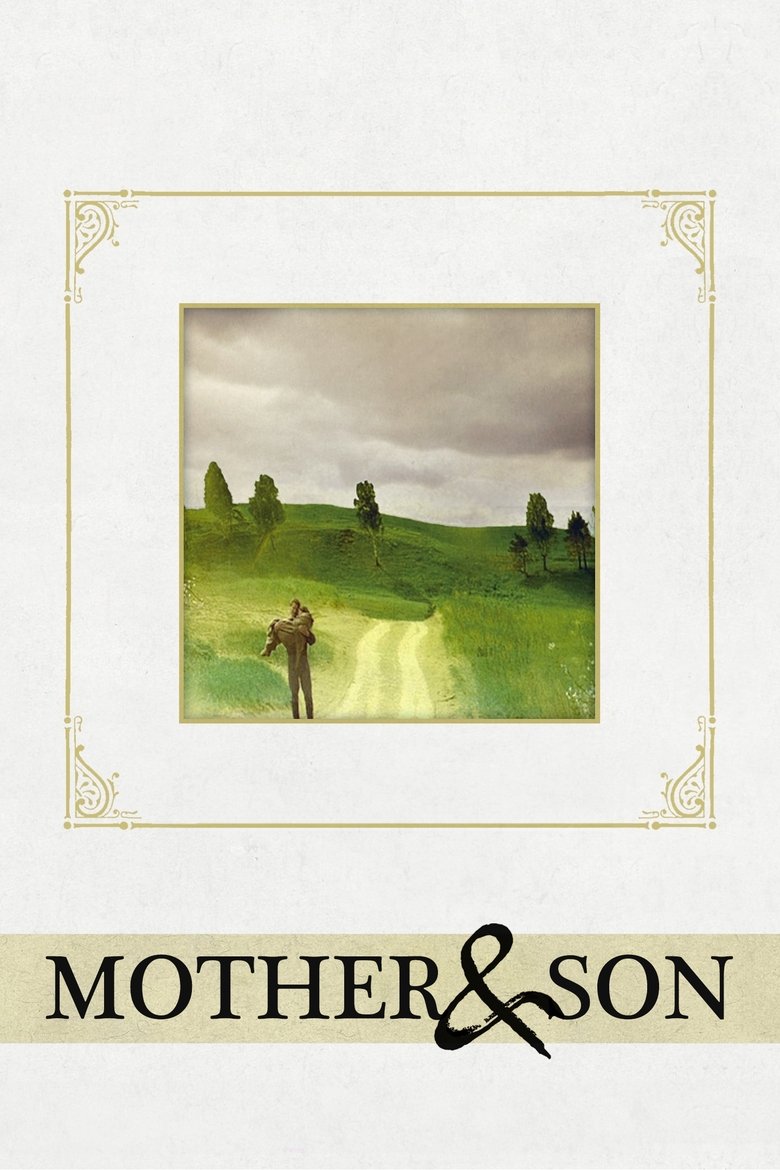
There is a moment in this film that I keep turning over in my mind. A young man lifts his mother, frail and fading, and carries her out into the landscape she has always loved, giving her one last look at the world she is about to leave. On paper, that should have broken me. What is strange, and a little troubling to admit, is that it did not, quite.
Aleksandr Sokurov's film follows those two figures, a son and his dying mother, over the course of a single day in a remote cottage. The subject is about as elemental as cinema gets. Losing a parent is one of the hardest passages any of us will ever face, and the intimacy of the setting, the smallness of the world Sokurov builds around them, promises something almost unbearably tender. I went in expecting to be floored. What I got instead was something cooler, stranger and, for me at least, more frustrating than I had hoped.
For all their physical closeness, mother and son rarely feel like two people sharing their final hours together. They feel more like two solitary figures who happen to occupy the same frame. There is a formal distance between them that I do not think is accidental. Sokurov is clearly not interested in the kind of warm, kitchen-sink intimacy you might find in, say, The Straight Story, where a man's slow journey becomes deeply, quietly human. He is working in a more rarefied register entirely, and the effect is that the warmth I expected simply never arrived.
I should say something about the look of the thing, because it is striking and, I suspect, easy to misread. The images are grainy, blurred and washed-out, and if you came to this cold you might wonder whether the print had been damaged in the vault or whether the production could not afford decent equipment. Neither is true. Sokurov shot through distorting lenses and painted glass to make his frames resemble living Romantic paintings, all smeared light and hazy, indistinct landscape. It is a genuinely bold idea, and I can admire the artistry behind it. Sokurov's love of painting is something he shares with other directors who blur the line between cinema and the gallery, and if you have spent time with his A Visit to the Louvre you will recognise the same sensibility at work. But here, for me, the technique mostly kept me at a remove rather than pulling me closer. Where it is meant to feel dreamlike, I too often just found it murky.
And that is the honest heart of my reservation. The idea at the centre of this film is profound and deeply moving. But I came away feeling that most of the emotion I actually experienced came from me, from my own imagination of what losing a mother would mean, rather than from anything the film had earned on screen. It handed me a subject of enormous weight and then asked me to do the heavy lifting myself.
I do not want to be too dismissive. I can see exactly why this film has its devoted admirers, and I think that if you have lived this particular grief at close quarters, if you have sat beside someone as they go, it may land with a force I simply could not access. There is something genuinely beautiful in what Sokurov is reaching for, a tone poem about tenderness and loss and the way the natural world carries on regardless. It is not a film I regret watching. It is a film I wish had trusted me enough to let me in.
Two and a half stars. A painterly, deeply sad idea that moved me rather less than my own memories of the thing it is about.
Rating: ★★½ | Year: 1997 | Watched: 2026-09-02



