Grand Prix (1966)

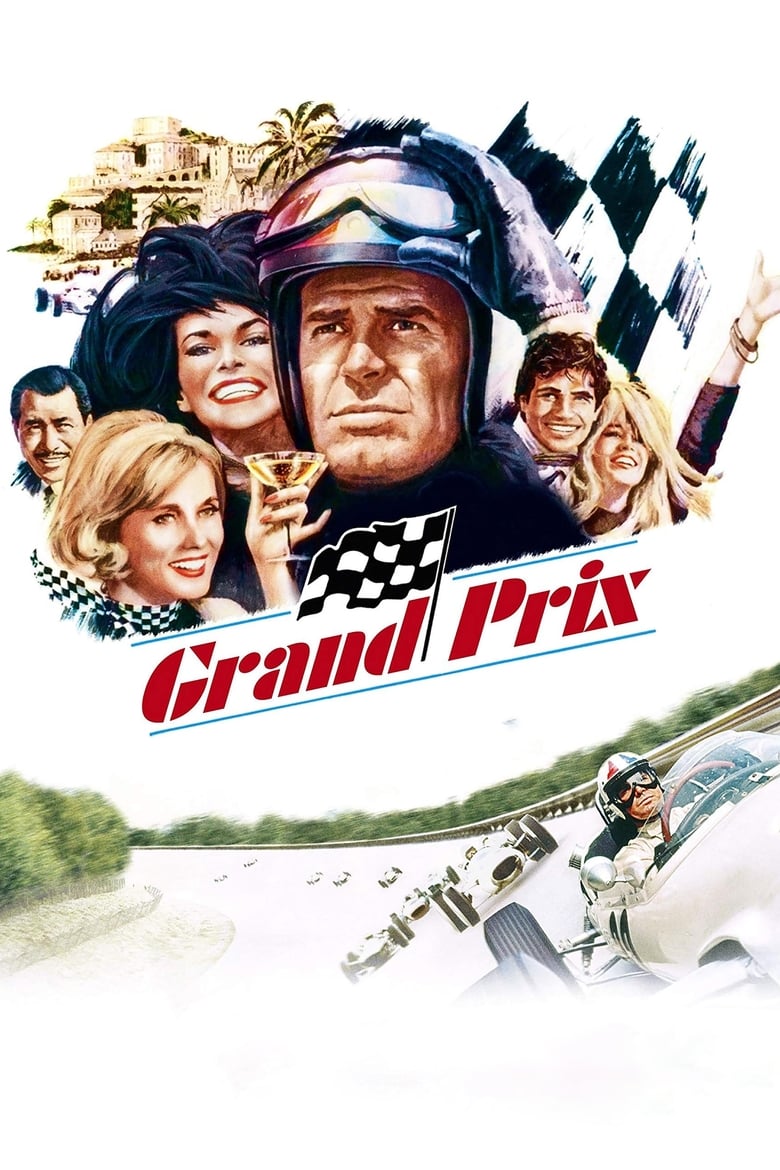
There's a moment watching Grand Prix where you stop thinking about cinema entirely and just grip the armrest. John Frankenheimer mounted cameras directly onto the cars, put you inside the cockpit, and suddenly you're not sitting in a darkened room anymore. You're hurtling around Monaco at speeds that make your palms sweat. That's the kind of filmmaking that earns its reputation, and Grand Prix has earned every bit of its status as the Ben-Hur of racing pictures.
It's a colossal production in every sense. The sheer scale of what Frankenheimer pulled off here is staggering. Split-screen sequences that felt genuinely revolutionary for 1966, practical effects that still hold up today, and location shooting at real circuits that gives the whole thing an authenticity no studio backlot could ever fake. The film picked up three Academy Awards for its technical work, and you can see exactly why. When those cars tear through Monza or wind through the tight streets of Monaco, you feel the speed, the vibration, the controlled chaos of it all. It makes you understand, viscerally, what these drivers were risking every single weekend just by showing up.
What really anchors all that spectacle, though, is the ensemble cast. James Garner and Yves Montand bring genuine weight to the on-track rivalries, and the film is smart enough to let those rivalries breathe. But the real revelation for me was Toshiro Mifune. Mifune is, quite simply, the greatest screen actor who ever lived, and seeing him here, sharing space with Garner and Montand, adds a gravitas that a lot of sports films simply never achieve. There's a stillness to him that commands every frame he's in. It lifts the whole picture.
I should mention that the tension Grand Prix generates reminded me, in a different register, of The Wages of Fear (1953). That film builds dread through patience and precision, and there's something of that same nerve-shredding quality in the best racing sequences here. The danger feels real because Frankenheimer never lets you forget the consequences.
If I'm being honest, the film isn't without its soft patches. The romantic subplots that run alongside the racing do drag things out in places. The personal lives of the drivers and their partners get a fair amount of screen time, and not all of it earns its place at the table. There are stretches where the pacing dips noticeably, and at nearly three hours, you feel the length during those quieter domestic passages. That said, I don't think the drama is bad, not at all. It adds genuine emotional stakes to what's happening on the track. You care about these men because you've been shown who they are away from the cars. The gripe is more about proportion than quality.
For anyone who loves the craft of large-scale filmmaking, Grand Prix is essential viewing. Frankenheimer was working at the absolute top of his game, and this sits proudly alongside the best work of his career. If you've enjoyed his later Ronin (1998) and its extraordinary car chase through Paris, coming back to Grand Prix shows you just how consistent his obsession with vehicular tension really was, and how brilliantly he served it across three decades.
Four stars. A roaring, beautifully made epic that sets the gold standard for its genre. See it on the biggest screen you can find.
Rating: ★★★★ | Year: 1966 | Watched: 2026-06-13
Where to watch
Watch in the UK
Rent: Apple TV Store · Amazon Video · Google Play Movies · Sky Store
Buy: Apple TV Store · Amazon Video · Google Play Movies · Sky Store
Physical: Amazon UK · Zavvi
Watch in the US
Rent: Amazon Video · Apple TV Store · Google Play Movies · YouTube
Buy: Amazon Video · Apple TV Store · Google Play Movies · YouTube
Physical: Amazon US
Affiliate disclosure: Movies With Macca may earn a small commission on purchases or subscriptions started via these links. It costs you nothing extra.