Animal Kingdom (2010)

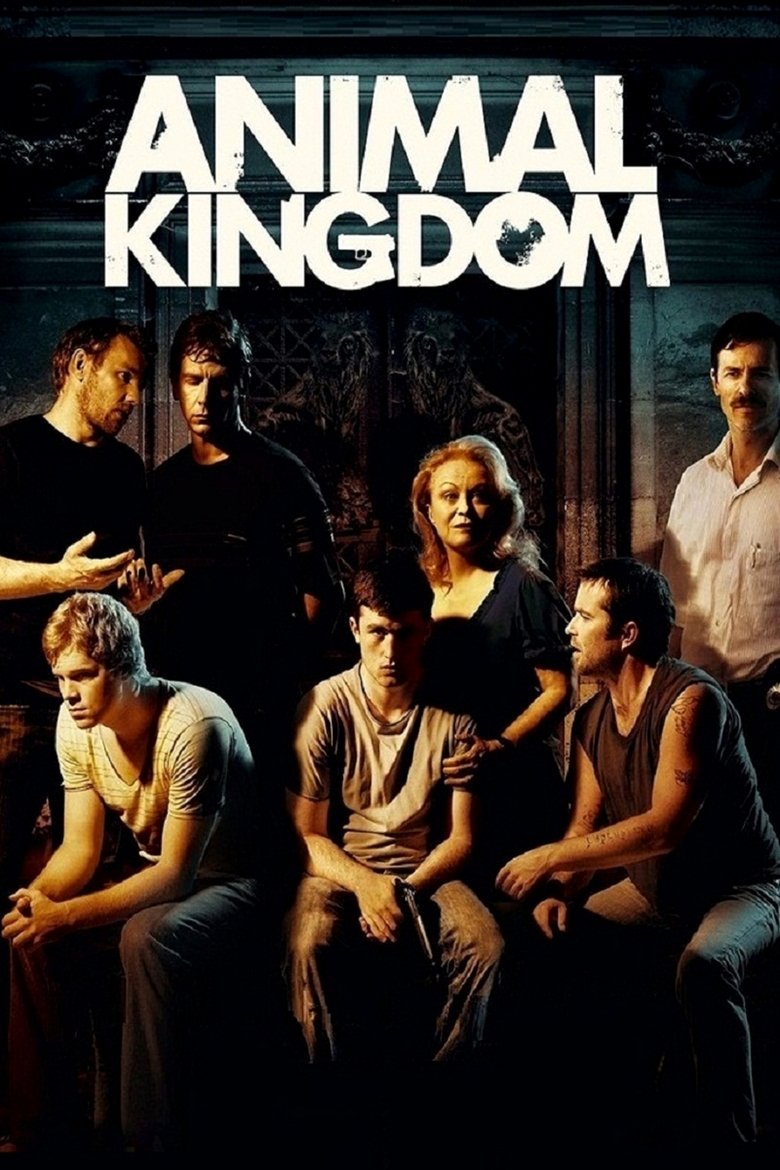
Australia has a long tradition of crime fiction that feels genuinely local, rooted in the scrubby suburbs and particular social textures of its cities rather than borrowed from American or British templates. Animal Kingdom, released in 2010, sits comfortably in that tradition while doing something a little more unusual: it frames a gangland story not through the eyes of the criminals who run it, but through a teenage boy who wanders into it largely by accident. The film opens with seventeen-year-old Joshua, known as J, sitting beside his mother as she dies of a heroin overdose, the television still on in the background. From that quiet, almost mundane catastrophe, he is absorbed into the extended family of the Codys, a Melbourne criminal clan whose grip on the city is loosening under sustained police pressure, and whose internal tensions are every bit as dangerous as anything outside the front door.
Animal Kingdom was written and directed by David Michôd, then making his feature debut having come up through the short film circuit and the loose collective of Australian filmmakers known as Blue-Tongue Films (a group that also included Joel Edgerton, who appears here in front of the camera). It is worth pausing on that debut status, because nothing about the film feels like a first feature. Michôd builds pressure patiently, scene by scene, with a confidence that many directors take years to develop. The script is his own, and it is organised around an understanding that the most frightening criminal environments are not the loudest ones. The film was produced through Porchlight Films with support from Screen Australia, Film Victoria, and Screen NSW, on a budget that required considerable economy, and that economy shows in ways that actually serve the material: there is no excess here, no scene that is not doing a job. The film won the Sundance World Cinema Grand Jury Prize in 2010, an early signal that it would find an audience well beyond its home country.
The ensemble Michôd assembled is what gives the film its particular weight. Ben Mendelsohn plays Craig, the most overtly volatile of the Cody brothers, polished but unremarkable on the surface until he suddenly is not. Joel Edgerton brings a coiled intelligence to his role, and Guy Pearce, an actor whose career has included some of Australian cinema's most memorable performances (I also reviewed L.A. Confidential, in which Pearce announced himself to international audiences, if you want a useful point of comparison), appears here as a detective trying to offer J a route out. Luke Ford takes the central role of J himself. And then there is Jacki Weaver as Smurf, the matriarch, a performance so precisely calibrated that it earned her an Academy Award nomination for Best Supporting Actress, something that almost never happens for actors in Australian crime films with limited international distribution. Weaver plays the warmth and the menace as inseparable, which is very hard to do without tipping into caricature.
Cinematographer Adam Arkapaw shoots Melbourne in a register that feels familiar and airless at once, residential streets and fluorescent kitchens that offer no particular beauty but accumulate a kind of dread. The images are close, unhurried, comfortable with the discomfort of staying in a room a beat longer than you might expect. Arkapaw would go on to shoot the first series of True Detective a few years later, and that instinct for environmental menace is already evident here. Antony Partos's score sits beneath the surface rather than announcing itself, the kind of music that you feel rather than consciously register, adding to a texture of unease without steering the audience's emotions too explicitly. Editor Luke Doolan works at a pace that suits the material: this is not a film that hurries, and the cutting reflects a confidence that the tension being built on screen does not need artificial acceleration.
See also my review of Black Mass, another crime film built around a similarly suffocating family structure and the problem of the person on the periphery who does not quite belong. And for another Australian film of this period that does something unexpected with tone and setting, Sleeping Beauty is worth a read as a companion piece, even if the genre territory is quite different.
Here is a crime film that runs almost entirely on menace rather than mechanics. Animal Kingdom is a low-budget Australian story about J, a young man who, having watched his mother die of a heroin overdose, is taken in by the only family he has left. That family happen to be criminals, and the house he moves into turns out to be a nest of them. I actually came to it the back way round, having watched the American television remake first and only later discovering this was where it all began.
What makes it work is the clan itself. Each member is drawn as a distinct, coldly dangerous presence, and you are never quite sure which of them is about to turn. Pope in particular is a deeply unsettling creation, the sort of character whose stillness frightens you far more than any amount of shouting would. Presiding over all of them is a scheming matriarch who runs the family with a smile that never quite reaches her eyes.
If there is a weak link, and there is, it is J himself. The young man at the centre is probably the worst thing in the film, barely acting so much as mumbling and drifting through scenes that everyone around him is busy electrifying. He is nowhere near the equal of his American counterpart, and there are stretches where you wish the camera would leave him and follow anyone else in the room.
Happily, it usually does. The ensemble around him is electric, and the film has a handful of shocking, out-of-nowhere moments that jolt you upright and reset the whole temperature of the thing. Four stars. A lean, nasty and superbly acted piece of Australian crime cinema, let down only by the one performance it could least afford to get wrong.
Animal Kingdom arrived at a moment when Australian cinema was beginning to attract serious international attention again, and it remains one of the more quietly confident crime films of its decade. It is not interested in glamourising what it shows, nor in tidying it up for audiences who want their genre pleasures uncomplicated. What stays with you is the ensemble, the atmosphere, and a particular understanding that in a family like this, the most dangerous person in the room is rarely the one making the most noise. For a debut feature, that is quite a calling card.
Rating: ★★★★ | Year: 2010 | Watched: 2026-11-07
Trailer
▶ Watch the official trailer for Animal Kingdom (2010) on YouTube
Where to watch
Watch in the UK
Stream: Studiocanal Presents Amazon Channel
Rent: Apple TV Store · Amazon Video · Sky Store · YouTube
Buy: Apple TV Store · Amazon Video · YouTube
Physical: Amazon UK · Zavvi
Watch in the US
Rent: Amazon Video · Apple TV Store · Google Play Movies · YouTube
Buy: Amazon Video · Apple TV Store · Google Play Movies · YouTube
Physical: Amazon US
Affiliate disclosure: Movies With Macca may earn a small commission on purchases or subscriptions started via these links. It costs you nothing extra.