Ali and Nino (2016)

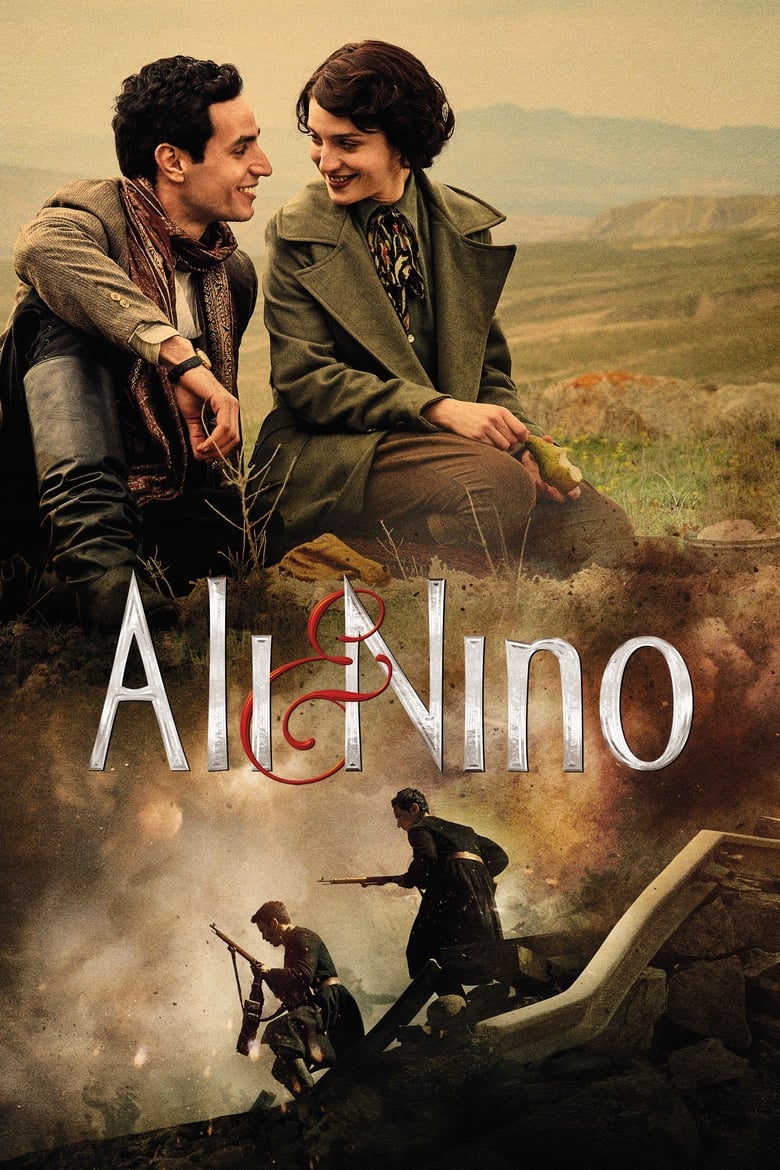
There's a moment in Ali and Nino where the sweeping score swells, the landscape opens up, and you think: yes, this is exactly what historical epic romance is supposed to feel like. Then the scene ends, and you remember that the two people at the centre of it all don't quite convince you they're in love. That tension, between a film that looks and sounds extraordinary and one that never quite earns its emotional ambitions, is what defines Asif Kapadia's 2016 picture for me.
I'll be honest: I went in knowing very little about Azerbaijan's role in the First World War or the geopolitical scramble for Baku's oil fields. On that front alone, Ali and Nino genuinely delivers. There's something fascinating about seeing a corner of history that rarely gets a look-in on screen, and Kapadia frames it with real confidence. The setting is rich, the context is genuinely interesting, and the film taught me things I didn't know, which is never a bad quality in a piece of cinema.
The technical craft here is hard to fault. The cinematography is consistently stunning, making gorgeous use of the landscapes and period detail, and the musical score is an outright highlight. Sweeping, stirring, doing a lot of the heavy emotional lifting that the script sometimes can't manage on its own. If you closed your eyes and just listened, you'd think you were watching something truly special.
Open them again, though, and the cracks start to show. The story plays out like a grand Romeo and Juliet: two lovers from different worlds, different faiths, different sides of a widening conflict, trying to hold onto each other while history conspires against them. It's a time-honoured template, and there's nothing wrong with using it. The problem is in the execution. The relationship between Ali and Nino is rushed along by montage after montage, so that by the time the film expects you to be invested in their love, you've barely had a chance to believe in it. They feel less like two people genuinely, desperately in love and more like figures being arranged across a beautifully dressed backdrop.
The lead actors don't help matters. The chemistry between them never quite simmers the way it needs to. A romance like this lives or dies on whether you feel the pull between two people, and here I often felt the distance instead. The action sequences, when they arrive, are sparse and don't add much momentum. And the ending, though undeniably tragic, is telegraphed so early that when it comes, you've already processed the grief and moved on. From the first shots of war, you know exactly where this is heading. The film does nothing to surprise you.
What you're left with is something I'd describe as a decent watch rather than a great one. Visually gorgeous, musically brilliant, historically illuminating, and narratively frustrating in equal measure. It has the bones of something genuinely moving, and occasionally, when the score kicks in over a particularly beautiful shot, you catch a glimpse of the film it could have been. But the emotional core doesn't hold the way it should, and a romance that leaves you a little cold is always going to struggle to fully land its tragic ending.
Two and a half stars. Worth your time if you're drawn to the period or the setting, just don't go in expecting your heart to be broken.
Rating: ★★½ | Year: 2016 | Watched: 2026-06-30
Where to watch
Watch in the UK
Rent: Apple TV Store · Amazon Video · Sky Store
Buy: Apple TV Store · Amazon Video · Sky Store
Physical: Amazon UK · Zavvi
Watch in the US
Stream: Philo · AMC Plus Apple TV channel · AMC+ Amazon Channel · AMC+ Roku Premium Channel
Rent: Amazon Video · Apple TV Store · Google Play Movies · YouTube
Buy: Amazon Video · Apple TV Store · Google Play Movies · YouTube
Physical: Amazon US
Affiliate disclosure: Movies With Macca may earn a small commission on purchases or subscriptions started via these links. It costs you nothing extra.