A Tail: Rosie Gaunt-Mathieson & Hayley Morris on mermaid tails, body horror and the female experience

There are few premises at this year's festival circuit as gloriously, defiantly bonkers as the one at the heart of A Tail: a woman wakes on the morning of a crucial job interview to find she has grown a mermaid's tail overnight. Director Rosie Gaunt-Mathieson, working from a script by Finola Waller, takes that absurd image and grounds it in a very real, faded, blue-toned British seaside world, turning it into a wry and surprisingly moving allegory for the female experience. When I reviewed it I wanted its heroine, Gemma, to triumph, and it turns out that was rather the point I was meant to wrestle with.
I was lucky enough to put some questions to Rosie, and to her extraordinary lead Hayley Morris, about tone, metaphor, latex tails and the business of making something this ambitious on a short's budget. My thanks to both of them, and to Casa Leo PR, for such generous and candid answers.
In conversation with Rosie Gaunt-Mathieson (director)
A Tail takes such a bold, surreal premise, a woman who wakes with a mermaid's tail on the morning of a job interview, and grounds it in a very real, provincial seaside world. What first drew you to Finola Waller's script, and what did you see in it as a director?
I just loved how everyday and normal it was, and how completely bonkers at the same time. Here we are in the real world, but there's this whole mermaid issue to get around. I was sold on the short synopsis alone, and the ending made me laugh out loud. It was such a big "fuck you" to convention, like a hardcore punchline.
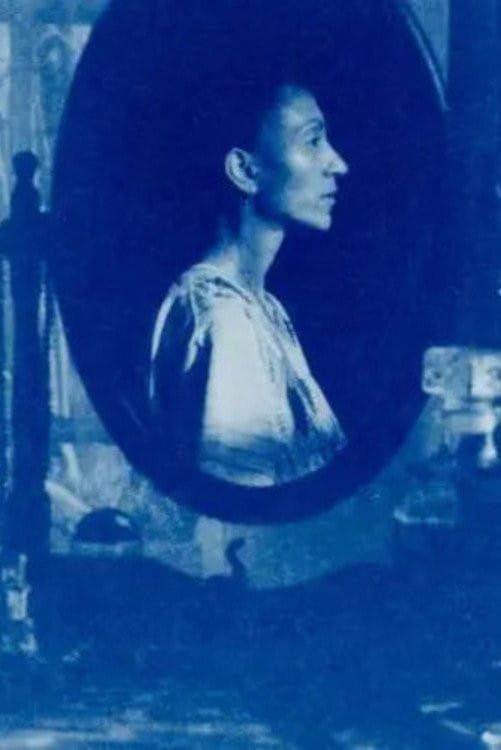
Finola's writing is excellent. It's so uniquely British, wry and offbeat, but with these wonderfully unconventional elements. It felt like it tapped into the best of my own humour, while giving me a darker tone and a high-concept edge to grapple with as a director. I opted to set it in Brighton. I live here and love the seafront, particularly its aquamarine ironwork, which fitted our palette. Brighton is known for its colour and progressiveness, but it also has a very grand Regency side, alongside a more faded, provincial quality, and I really wanted to zero in on that slightly tired, blue-toned seaside world.
Worthing Town Hall is institutional, Art Deco and looming. It gave us such high production value, whilst some good friends lent us their flat and garden, and the swimming pool was at a local school. It all helped ground this utterly absurd story in a very recognisable British world.
You've described the tail as "an accessible allegory for the female experience", a burden and a thing of beauty and power all at once. How did you want that metaphor to land, and how did you keep it from becoming too literal or on the nose?
I think it spoke very directly to both my sense of humour and my own experience as a woman. If anything, it became more pertinent as the years went on. I'm a woman. I have cycles, and they often land at the most inopportune moments. As a director, I'm also often spoken about as being "brave" or "bold", but sometimes with this oddly patronising or underhand tone.
I've had some incredible female mentors and cheerleaders in the industry, but equally, some of the worst people I've worked with have been women. There's often a lot of fake allyship, or lip service paid to supporting women, when in reality we're frequently set against one another. I think we're often put in positions where we're encouraged to compete rather than support each other. All of that resonated with me in the script, but we deliberately didn't name exactly what the film was about, and I think that allows it to speak to people in different ways.
For Finola, the starting point was the female cycle, but you don't need to have periods to understand the film. It's enough to see a human being struggling with a massive fishy appendage. It's both extraordinary and completely inconvenient, and I hope we've made that struggle feel universal and accessible without being too prescriptive about what it means. One person told us it spoke to them as a trans individual, while another asked whether it was about endometriosis. We absolutely welcome those interpretations. The film isn't depicting a literal real-life experience, but it does invite reflection on real ones.
A lot of credit also goes to Hayley and Letty for their wonderful characterisations and interaction with the latex tail prop. They really helped make it feel like a character in its own right, a physical reality rather than just a metaphor.
The film dances between physical comedy, absurd social satire and genuine body horror. How did you manage that tonal tightrope on set, and were there moments where the balance was tricky to strike?
I really like this question, because it's actually quite hard to answer. I think so much of it is instinct. The key, for me, was that everything had to be played completely straight, and you have to buy into the journey and the struggle. The comedy works because what's happening is absurd, but the characters themselves are utterly believable.
That's down to our brilliant cast. Shout out to Emma Garrett, our casting director, and to our interviewers played by Lisa Allen and Tia Dunn, and the whole supporting cast. They're fantastic character actors and performers, and they absolutely got the memo. Then you've got Finola's dialogue, and everyone's openness to improvising and finessing things, which gives you such a strong backbone to the world.
The body horror was a first for me, and I was genuinely a bit tearful watching Hayley screaming in pain as Gemma on the floor, with Letty looking utterly devastated. You're not necessarily expecting that level of anguish to hit you in a film about a woman with a mermaid's tail, but it really does. I think you can push tone quite far when you fully believe in the people, the world and its rules. Once you've established that trust with the audience, you can take them to some very strange places. Not forgetting composer Karina Byrne's strange, beautiful and unsettling score, which really cements the tone and world of the film.
The ending takes a darker, more ambiguous turn than some viewers might expect. Without putting words in your mouth, what did you want audiences to feel and take away from where Gemma ends up?
I know you wanted Gemma to win in your review, Ross, but I'd argue that giving her a neat, empowering victory would have been the real cop-out! The neat, satisfying version is that Gemma prevails, embraces her tail and turns it into her superpower. But that's the convention we were deliberately trying to subvert. And to me, that's not really how the world works.
The tail is cyclical. It's a metaphor for the female experience, and cutting it off doesn't magically solve anything. It gives Gemma some temporary relief, but at a pretty horrific cost. The problem hasn't gone away. What I really wanted audiences to take away was the bond between Gemma and Anna. That final moment is one of sheer exhaustion and brief peace. They've survived this round, but they both know they'll have to fight it again another day.
For me, that's very true of being a woman today. We seem to be shouting about inequality and the poor treatment of women from the rooftops, but far too much stays the same. There's this constant cycle of fighting, making progress, being pushed backwards and having to start all over again. So yes, the ending is deliberately unsatisfying in a conventional sense. I didn't want to tie everything up with a neat, empowering bow, because that would feel dishonest to the experience we're talking about. There's a very particular feeling of semi-relief in that last shot. Nothing is fixed, but for a moment they're together, and they can rest. I think a lot of women will recognise that feeling. And I'd argue there's something quite powerful in that, even if it isn't the victory we might want for Gemma.
Hayley is extraordinary in a rare leading film role. What made her the right person to carry this, and what was she like to direct?
I've been a huge fan of Hayley's work and humour for a long time, particularly because so much of it touches on the same themes as A Tail. I'd met Hayley some time before the shoot through a female comedy platform run by producer Gina Lyons. I'd been really keen to talk to her and reached out to her directly. At that point, we already had our lead attached, so the timing hadn't quite aligned. Hayley later told me she'd been disappointed we hadn't crossed paths sooner, which was lovely to hear.
Then, quite unexpectedly, our original lead sadly had to withdraw due to illness. We couldn't postpone the shoot because, being a short film, it was largely running on well-timed favours. So I messaged Hayley, and she jumped at it incredibly last minute. She even came back from Cannes early! Directing Hayley was a total dream and a joy. I really wanted to push her vulnerability and subtlety in the part, and she absolutely nailed it. She has such a deep understanding of comedy, she's smart as hell, and there's zero ego. When I first saw her willingly throwing herself in and out of frame, I knew we were onto a great thing.
Practically, the tail involved prosthetics, VFX, underwater filming and stunt work, all on a short's schedule. What were the biggest challenges in bringing it to life over your four days in Brighton and Sussex?
The biggest challenges on low-budget projects are usually logistical, and this was no exception. You absolutely can't scrimp on things like safety and insurance. Those costs are unavoidable, however small your budget, and then with all the locations and the size of our cast, we found ourselves with quite a large unit and cohort of people. I had a moment on day two when I looked around at our crew and all the gear and suddenly realised quite how big an undertaking this was for a short. I remember thinking, "What are we doing? We're insane!"
Hilariously, getting Hayley around in the tail required her to be carried, which our crew very kindly did, and was quite the spectacle. The tail was a faff to get on and generally incredibly cumbersome. The swimming pool scenes were a first for me, particularly working with our wonderful professional stunt mermaid, Grace Page. I enjoyed collaborating with Simon Lodge, our underwater cameraman, and his partner Sacha, who were both incredibly generous. I knew we had a very finite amount of time in the water, and because of the last-minute recast, we hadn't been able to have the rehearsal we'd planned. So I'd come prepared with a guide edit of the swimming and stunt sequences to make sure we could get the shots we needed. There wasn't much room to experiment, and I'd have loved more time, but we managed to get enough. Luckily, it turned out Hayley was pretty amazing in the water too!
We actually ran out of time for the BBQ scene because day one had been such a challenge. We shot it in the dark and you couldn't see anything, so we had to pick that up in November. Then there was the VFX. Despite all our best intentions and diligent conversations beforehand about recording lens sizes and all the necessary information, the reality was that we simply didn't have time to capture everything properly. So a huge shout-out to Freefolk for doing such beautiful work with what we gave them.
I think the key is having a team who back you 200 per cent, who genuinely want to make it work and are happy problem-solving with you along the way. Nearly all my heads of department were people I work with regularly, so we have a real shorthand, and they were incredible. The other thing is time. If you don't have much money, projects like this need loads of it. Nick Leadbitter, our brilliant producer, and I started prepping around June or July for an October shoot.
Your work often centres female voices and lived experience with a wry, peculiar eye. Where does A Tail sit in that for you, and what's next?
A Tail feels like a real culmination of my work and my voice, but with the added scale, pun absolutely intended, and high-concept elements. It feels like an exciting calling card for what I can do, especially when it comes to tone and creating weird worlds. Having been attached to it for five years, actually getting it made feels like an incredible achievement. I'm currently developing a feature with Finola, and I really hope A Tail is just the start of an incredible creative relationship. I'm also talking to Hayley about shooting more scripted narrative work together, which I'm really excited about. I think the film also helped me secure a place on a High-End TV Directors scheme with a major streamer, which is brilliant. Otherwise, I'm directing a couple of commercials too, so it's busy and feels like things are happening. I'm looking forward to seeing what builds from here.
In conversation with Hayley Morris (Gemma)
A Tail is a standout leading film role for you. What drew you to Gemma and to this strange, brilliant script?
Rosie and I had met a year earlier at a little bar in St Pancras to discuss how we could work together. I had just finished a round of four self-funded short films, and was looking for some new directors to work with, when Rosie came my way. I loved her previous work and was really keen to see what we could make together. Rosie had told me about her plans for an upcoming short film, A Tail, which she had already cast. When she told me the premise, I thought it sounded fantastic and was gutted we hadn't met earlier, it was definitely a script I would have wanted to be part of.
Months later, I got a call from Rosie, telling me the actor who was supposed to be playing Gemma could no longer do the short. She'd asked if I could make the dates and I leapt at the opportunity. It was such a unique script and I loved how ambitious it was.
You've built a huge audience turning the awkward, taboo realities of women's bodies and minds into comedy. How did it feel to bring that same candid honesty to a character whose body quite literally betrays her overnight?
It was fun to bring Gemma to life, but also quite emotional, compared to the sketches I've done. The sketches I do are really just trying to normalise the stuff that happens to someone with a uterus and finding the funny in it. But like my sketches, it needed honesty to connect, because it's something women know so well. There isn't a woman I know who hasn't woken up with that feeling Gemma had, realising your body chose the most important day in your calendar to let you down.
The role asks for slapstick indignity and real emotional weight, often in the same breath. How did you find the balance between the comedy and the vulnerability underneath it?
It was something Rosie and I spoke about before getting to set. We agreed Gemma needed to be played as straight as possible, because the comedy wasn't Gemma, it was the absurdity of waking up with a tail, how Gemma manoeuvres herself around, as if it were completely normal for her. Just another day, with a tail. In the moment the physicalness of the tail didn't feel like I was trying to balance the two, because it was all just quite real to the character. Although of course throwing myself off a chair, whilst donning a massive mermaid tail, was overtly funny to me.
Physically, dragging that tail through the world can't have been easy. What was the experience of performing in the prosthetic, and the underwater and stunt work, actually like?
I haven't ever had to wear anything like that before and who knows if I'll ever get the opportunity again. Before arriving on set I hadn't seen the tail, so had no idea what to expect, but it blew me away, it was incredibly well made. If I saw that washed up on Brighton beach, I'd be convinced. It was quite the ordeal to get in and out of, so I tried to stay in the tail as much as possible. I had to be carried or wheeled around whilst wearing it, because it was too heavy for me to bunny hop around in, which felt very Cher of me. I also couldn't really stay flat with it on, because of the weight of it on my ankles, but I think that kind of added to how I got into Gemma's character.
I wish I could take credit for the mermaid swimming, but thankfully we had Grace Page, who was doing the majority of the mermaid swimming. She's a professional mermaid and actually made the tail, so it was very cool to see her swim in it. I got in after her with the tail and was far less elegant. She made it look easy, but it takes a lot of work to swim in a tail that big and heavy. It was very fun though, it's not every day you get to say you've been swimming in a mermaid tail. Ten out of ten, would recommend.
You're known for a very self-authored, online voice. How different did it feel handing yourself over to someone else's script and a director's vision for a film like this?
Having already met Rosie and after seeing the script, I knew I was in safe hands. This script wasn't something I had written, nor was it about me, and I loved the writing so much, so it's really easy to hand yourself over. Rosie is an incredible director to work with, she's incredibly supportive and there's a real sense of family amongst the cast and crew. I felt that within moments of getting into Gemma's house. I think I was reeling from the energy of that set for months after we wrapped.
Gemma faces objectification and judgment and is ultimately pushed to extreme lengths to fit in. Did the story's themes resonate with you personally?
It really resonated with me. I grew up with a lot of shame for the body functions I have and often felt like I had to really hide what was happening to my body in order to be taken seriously. That interview scene particularly felt so relatable, the way sometimes it's women who can judge you the most, because the shame runs deep in them too. It shouldn't be that way, and it shows how deeply conditioned we are to find fault and disgust in a bodily function that literally is the reason we have life on this planet. It's a power and privilege that we have been taught to reject.
You're increasingly moving into film and television. What kinds of roles or stories are you hoping to take on next?
If I'm being very specific, Joan Goodwin in the film adaptation of Atmosphere is a dream role. I'm quite keen to play an anti-hero, I think there's something quite fun about a complex character with a lot of layers. In terms of stories, I'm always looking for something that feels a bit different, like, I don't know, a woman who wakes up with a mermaid tail.
My thanks again to Rosie Gaunt-Mathieson and Hayley Morris for their time, and to Casa Leo PR. You can read my review of A Tail elsewhere on the site.